Higher Education Under Fire? Trump Seeks Racial Data from Universities, Sparking Fears
Listen
Share
The Trump administration demands race-based admissions data, raising concerns about potential retaliation against universities following a Supreme Court ruling.
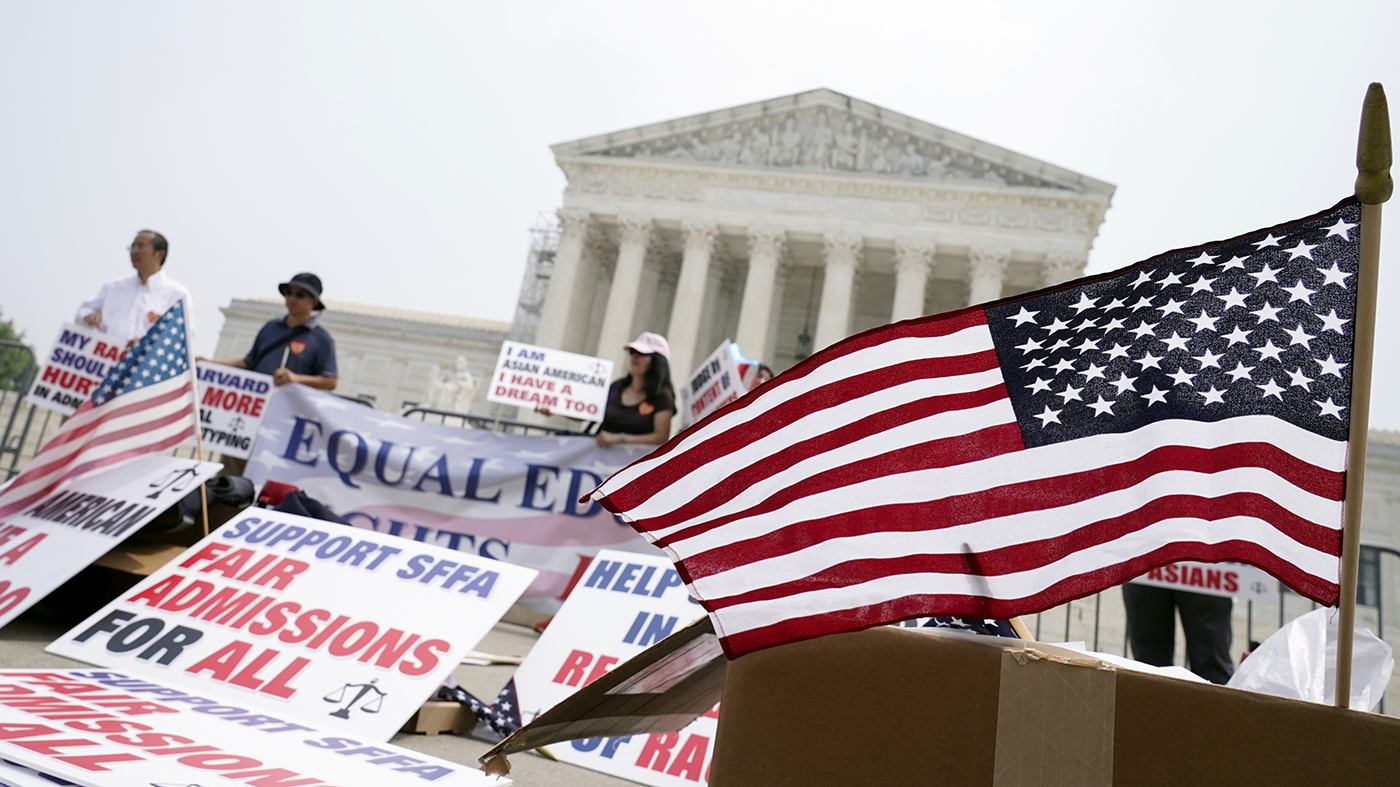
One court case is what stands between the Trump administration and race-based data from colleges regarding admissions. This data could be used to go after schools the federal government perceives as violating a 2023 Supreme Court ruling on affirmative action.
District Judge F. Dennis Saylor this week gave colleges in the states that sued over the demographics demand an extension until April 6 to complete the “Admissions and Consumer Transparency Supplement” (ACTS) as he weighs the legality of the request for seven years of admissions data broken down by race and other factors. The administration argues the call is an extension of other data collection efforts, while plaintiffs say it places an undue burden on universities.
The new requirements build on the Integrated Postsecondary Education Data System (IPEDS), which has been used for years to track data on college graduation rates, degree completions, enrollment, and other general information about an institution.
The Trump administration wants to increase its data demands over concerns universities are not abiding by the Supreme Court decision to ban affirmative action in admissions.
“Although the Supreme Court of the United States has definitively held that consideration of race in higher education admissions violates students’ civil rights, the persistent lack of available data — paired with the rampant use of ‘diversity statements’ and other overt and hidden racial proxies — continues to raise concerns about whether race is actually used in practice,” President Trump wrote in a memorandum directing the Education Department to collect more admissions data last year.
“Greater transparency is essential to exposing unlawful practices and ultimately ridding society of shameful, dangerous racial hierarchies,” he added.
Seventeen Democratic-led states sued to stop the collection of this data shortly before the deadline for the information, arguing the administration is overstepping its authority, the data would be used to attack universities and that many schools do not have all the information the government seeks.
The states argued at a hearing Tuesday that not all the demanded statistics are readily available — and that some in the years-long timeline requested have been tossed in instances where the students never enrolled.
“The challenge is not a lack of willingness — it’s that institutions are being asked to reconstruct datasets that, in many cases, were never collected in this format to begin with or no longer exist,” said Sean Robins, director of advocacy at the National Association for College Admission Counseling.
Robins added that small schools could face staffing constraints on producing the data, while big ones grapple with massive data sets from multiple independent systems that don’t all work together.
The plaintiff said some colleges have seen delays in areas including financial aid because employees had to be shifted to comply with the survey.
“Beyond the operational burden, the biggest issue is how this data could be interpreted and used. ACTS requires highly disaggregated data without providing the full context behind admissions decisions. That creates a real risk of misinterpretation,” Robins said. “This approach could be misleading and potentially harmful. There is concern that the data could be used to justify policies that resemble de facto quotas or penalize institutions for enrolling diverse classes — despite long-standing legal precedent prohibiting those practices”.
The Trump administration has been on a mission to reform higher education since the president took office last year, pulling millions in federal funding to force universities into deals to change their admissions and disciplinary policies to align with the federal government’s priorities.
The Pacific Legal Foundation is challenging admissions policies in Boston and New York at public schools, saying changes such as a ZIP code quota system were used to get more students of certain ethnicities in their classrooms.
“They use like proxies for race to try to determine who gets into their schools and racially balance their programs, and there’s a real fear after Students for Fair Admissions that colleges would start doing that as well,” said Erin Wilcox, senior attorney at Pacific Legal.
And the federal government has admitted the ACTS data could be used to go after universities.
“This data may be used by the Office of Civil Rights to enforce civil rights law,” the Trump administration argued at the Tuesday hearing. “The office has long used IPEDS in enforcement actions”
But some say the administration has offered no evidence it would act in good faith. “I think that the data will end up being used as a political tool. And I also don’t trust the Trump administration to be honest if — even if they did review data — I don’t trust them to be honest, because I don’t think that we have any evidence of honesty across the board with any data that they have,” said Marybeth Gasman, executive director for Rutgers University’s Center for Minority Serving Institutions.