Prometu News LogoNews
© 2026 Prometu NewsPowered by Prometu, Inc.
Politics4 min...

Netanyahu Escalates: Israel Will 'Crush Iran's Terror Regime'

Listen
Share

Israeli Prime Minister Benjamin Netanyahu reaffirms his commitment to continue the military campaign against Iran, escalating tensions in the Middle East.

OMNI
OMNI
#Israel#Iran#Netanyahu#Conflict#Middle East#International Politics
Netanyahu Escalates: Israel Will 'Crush Iran's Terror Regime'

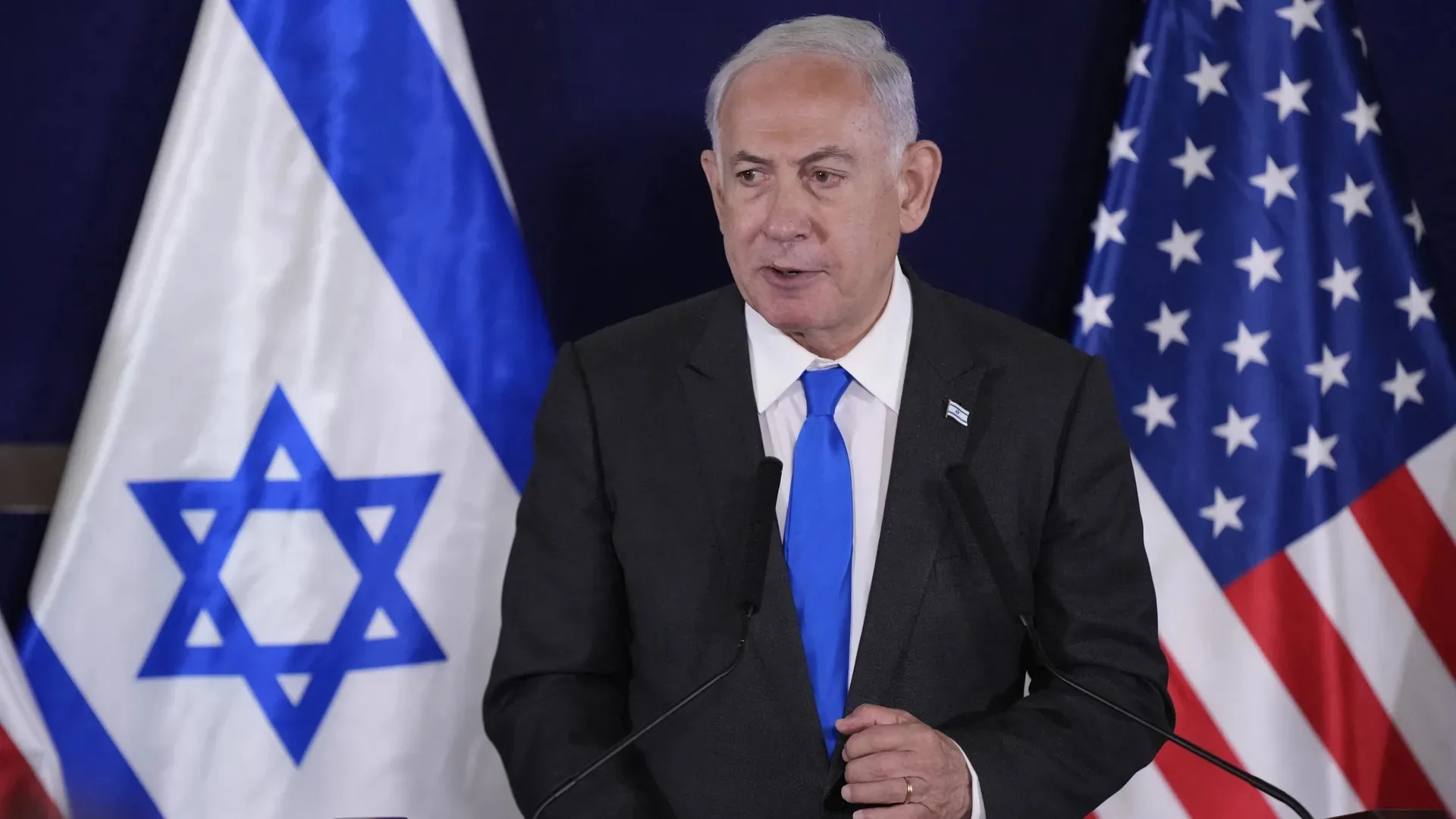
Prime Minister Benjamin Netanyahu said on Tuesday that Israel would continue its military campaign against Tehran, reaffirming its determination to "crush Iran's terror regime." In a televised statement, Netanyahu emphasized that the campaign is not over and that Israel will stand firm in its mission. These statements come at a time of high tension in the region, with significant implications for international politics.
Netanyahu Escalates: Israel Will 'Crush Iran's Terror Regime' - Image 1


Netanyahu's stance underscores the persistent hostility between Israel and Iran, marking a continuation of the confrontational policies that have defined the bilateral relationship for years. The promise to "crush" the Iranian regime reflects a hard-line strategy that seeks to weaken Iran's influence in the region and deter any action that Israel considers a threat.


Netanyahu's statements contrast with those of Iranian President Masoud Pezeshkian, who stated that Iran has the "necessary will" to end the war with Israel and the United States, although it seeks guarantees that the conflict will not be repeated. This divergence of opinions highlights the complexity of the situation and the difficulty of finding a peaceful and lasting solution.

Iran's search for guarantees suggests a desire to avoid future confrontations but also reflects a deep distrust of Israel and the United States. Iran's willingness to negotiate, conditioned on these guarantees, could be a starting point for future talks, although the fundamental differences between the parties remain a significant obstacle.

In his statement, made on the eve of the Jewish Passover holidays, Netanyahu stated that Israel has acted decisively and has changed the face of the Middle East. Despite the ongoing war, Netanyahu asserted that Israel has consolidated itself as a "regional power." These claims reflect Israel's ambition to project power and influence in the region, despite existing challenges and conflicts.

Israel's self-proclamation as a regional power underscores its determination to play a central role in shaping the future of the Middle East. However, this vision is contested by other regional actors, including Iran, which contributes to instability and competition for influence.

Opposition leader and head of the center-right Yesh Atid party, Yair Lapid, criticized Netanyahu and his speech, noting that the prime minister has repeatedly made the arrogant claim that he has changed the Middle East. Lapid questioned the veracity of these claims, suggesting that, in the end, the situation always returns to its original state.

Lapid's criticism reflects an internal division in Israel over Netanyahu's strategy and its results. While Netanyahu seeks to project an image of strength and success, the opposition questions his achievements and warns of the consequences of a continuous confrontation policy.

The conflict between Israel and Iran escalated after an attack on February 28, in which Iran's supreme leader, Ayatollah Ali Khamenei, was killed, triggering a wave of retaliatory attacks throughout the region. This event marked a turning point in the bilateral relationship, exacerbating tensions and increasing the risk of further escalation.

Khamenei's death and the ensuing retaliatory response underscore the volatility of the situation and the need for urgent de-escalation. However, Netanyahu's statements suggest that Israel is unwilling to yield in its confrontation with Iran, raising serious doubts about the possibility of a peaceful resolution in the short term.
Editorial Note

This content has been synthesized and optimized to ensure clarity and neutrality. Based on: The Defense Post