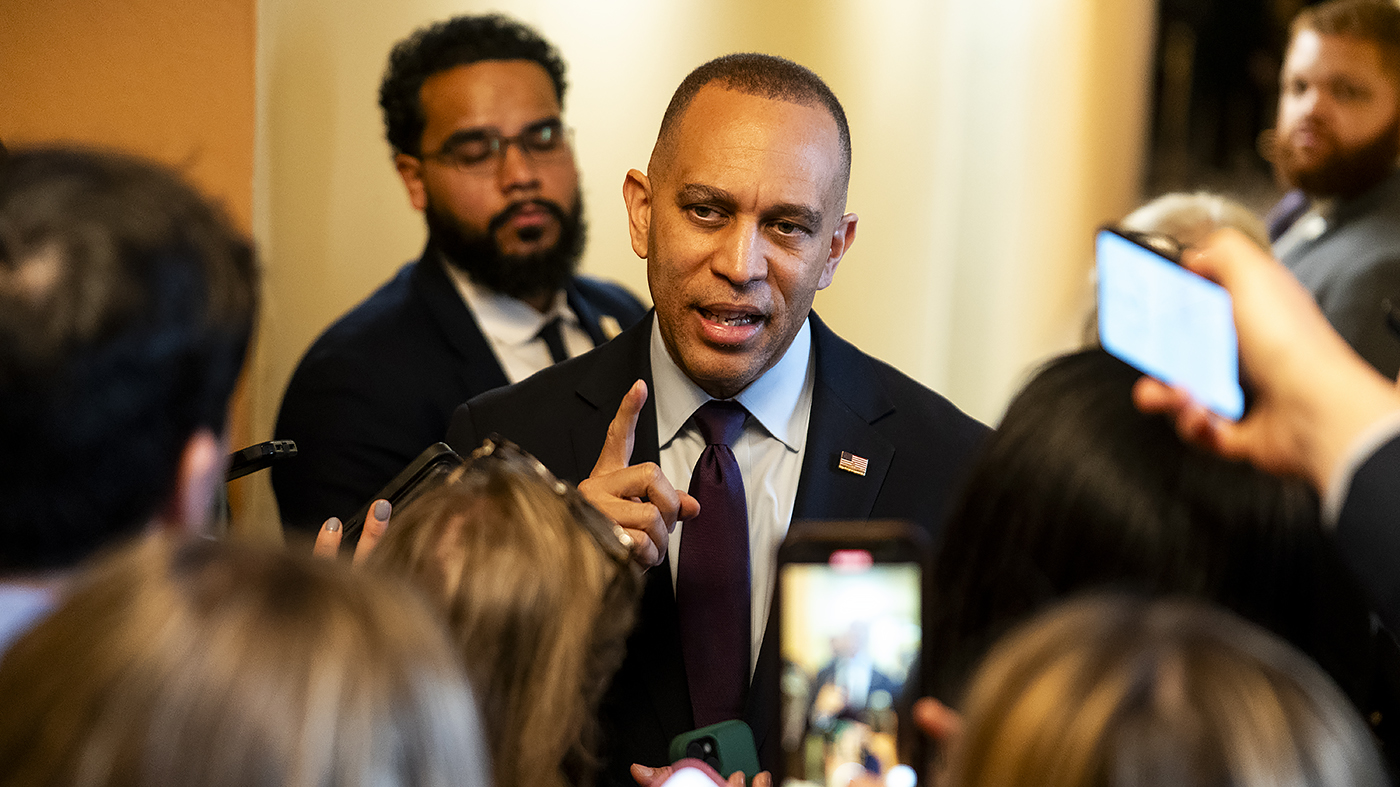
Hakeem Jeffries, the House Minority Leader, urged House Speaker Mike Johnson to bring the Senate bill to the floor "immediately." Jeffries highlighted that the legislation addresses the funding of airport screeners. The Senate bill, already approved, seeks the reopening of DHS, and Jeffries considers it a triumph for Democrats because it funds airport screeners, but not immigration enforcement operations.
Jeffries stated: "There is legislation in front of us right now to end the airport chaos, and House Republicans should stop blocking it." The Democratic leader also left open the possibility that Democrats could help GOP leaders pass a rule, which is unusual. This situation reflects the tense political dynamics surrounding DHS funding.
Mike Johnson is facing a revolt from conservative members of his conference, furious that the Senate bill withholds funding for certain parts of the Immigration and Customs Enforcement (ICE) and Customs and Border Protection (CBP). These members are threatening to block the rule unless those funds are returned to the bill. Rep. Chip Roy (R-Texas) stated: "The rule is not going to pass today as the Senate bill is.".
The situation raises questions about the possibility of Democrats supporting the rule, and Jeffries did not rule out this possibility. Democrats are willing to take action to ensure the payment of TSA agents and avoid inconvenience to citizens. Conservative opposition and potential actions by Democrats complicate the political landscape.
Faced with the conservative protest, Johnson seems willing to completely abandon the Senate bill and, instead, move forward with a stopgap bill to fund DHS, including ICE and CBP, for eight weeks at current levels. This strategy could be well received by conservatives, but it carries significant political risks.
The Senate has already left Washington, which means that even if House Republicans can pass their continuing resolution, the shutdown would continue without an end in sight. Former President Trump intervened to ease the pressure, but the situation remains delicate. Abandoning a bipartisan agreement could harm the Republican Party if voters blame them for the stalemate.
While most Democrats seem ready to support the Senate bill, some express reservations. They argue that, although they achieved a victory by denying more funds for ICE and CBP enforcement operations, they did not obtain any of the safeguards they initially demanded. These demands arose after federal immigration agents shot and killed two U.S. citizens protesting deportations in Minneapolis in January.
Democrats demanded stricter rules for those sub-agencies, including a ban on face masks, new warrant requirements before arrests, and independent investigations in cases of excessive force. Rep. Juan Vargas (D-California) indicated that he might oppose the Senate bill if it reaches the House floor. Jeffries and other Republican leaders downplayed these concerns, arguing that the short-term goal was to prevent ICE and CBP from receiving more funds for enforcement operations.
Jeffries and other Republican leaders assured that the long-term fight to secure safeguards for ICE will continue. Jeffries stated: "We have made it clear that ICE needs to be brought under control." This statement suggests that, despite the progress in funding, the discussion about internal reforms of ICE will continue to be a central theme in the political debate. The focus on ICE's internal reforms reflects a concern about the agency's conduct and the need for greater oversight and accountability.