PrometuNews
© 2026 Prometu NewsPowered by Prometu, Inc.
Technology4 min...

US & Ukraine: Forging the Future of Defense Through Innovation

Listen
Share

The United States should formally partner with Ukraine to build cutting-edge defense technologies, transforming Ukraine into a strategic pillar.

OMNI
OMNI
#Ukraine#US#Defense#Technology#Innovation
US & Ukraine: Forging the Future of Defense Through Innovation

Over the past month, Ukraine's defense innovation capabilities have become increasingly evident.

Kyiv has deployed specialists to five Gulf states to counter Iranian drones.

Additionally, a delegation of Ukrainian defense entrepreneurs from the Brave1 initiative visited six U.S. cities, showcasing their technologies. This initiative challenges the traditional view that Ukraine is merely a victim in need of U.S. aid.

The success of Ukrainian defense technologies highlights a shift that many U.S. officials, including the Pentagon, still underestimate.

Ukraine should be seen as an important source of strategic capability for the West.

Technologies forged and validated in Ukraine are investable, exportable, and strategically relevant, not just wartime improvisations.

It's time for U.S. policymakers to formally adopt a 'qualitative military edge' legal model toward Ukraine.

This involves moving from a donor-recipient mindset to a partnership based on co-development, co-production, testing, procurement pathways, and industrial integration.

The U.S. can partner with Ukraine on autonomous technologies of the future, much as it has with Israel to build its three-tiered missile defense system.

Ukraine has developed an unusually fast loop between frontline need, engineering adaptation, and deployment, something unique compared to peacetime countries.

Battlefield products are judged by their effectiveness in solving real operational problems.

This pressure has accelerated drone production, as well as the development of software, electronic warfare, communications, robotics, navigation, and mission systems, with the goal of building 7 million drones by 2026.

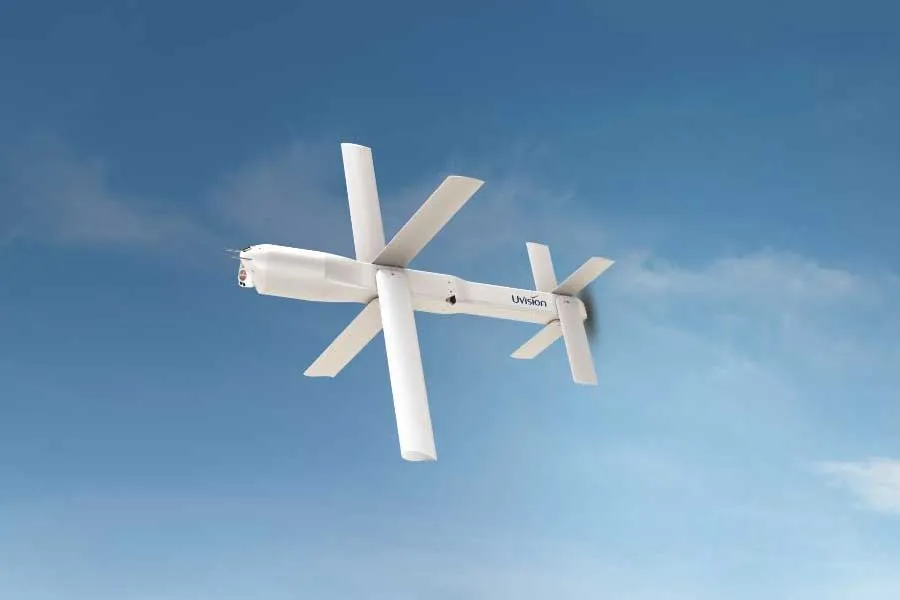
Brave1 and the Ukrainian defense tech ecosystem show that Ukraine's innovation capacity is becoming more organized, scalable, and visible to international partners.

What some observers describe as a collection of wartime startups is, in fact, a real and maturing industrial and technological base.

Ukraine possesses a uniquely relevant modern warfare dataset, combining real operations, rapid iteration, and practical deployment, creating learning conditions difficult to simulate elsewhere.

Ukraine's expertise in defense, especially in air defense, is considered crucial for the future of warfare.

Ukrainian specialists deployed to the region demonstrate the global relevance of Ukrainian know-how.

The United States can validly argue that Ukraine can be an equal defense partner, building cutting-edge technologies as it has with Israel in recent decades.

For Ukraine, this would help convert wartime innovation into long-term economic and industrial strength.

For the U.S. and its allies, it would strengthen the democratic world's defense base with technologies and expertise forged in the most demanding battlefield conditions in Europe since World War II.

It would also help diversify and harden supply chains at a moment when resilience matters more than ever.

Washington should update how it sees Ukraine accordingly.

The right long-term policy is to help integrate Ukraine into the production, data, and supply-chain architecture that will shape transatlantic security tomorrow, not just help Ukraine defend itself today.

Ukraine is far more than a country at war; it is a strategic partner with unparalleled innovation potential.
Editorial Note

This content has been synthesized and optimized to ensure clarity and neutrality. Based on: The Hill