OpenSnow, the snow forecasting app, isn't a government-funded service or a big-name brand, but a startup. It uses government data, its own AI models, and decades of alpine-life experience to deliver the best predictions. This app has proven vital this winter, one of the weirdest on record. The app's forecasters, who sift through reams of data, have gained popularity by writing daily snow reports for locations around the world.
The app has gained significant recognition within the skiing and snowboarding community, who rely on its precise predictions to plan their snow activities. The combination of accurate data, AI models, and the founders' experience has created a valuable tool for winter sports enthusiasts.
The story of OpenSnow is an example of how innovation and passion can lead to success in the tech world, even without the backing of large corporations or government funding.
Research on L. Stephen Coles' frozen brain explores cryonics, the long-term storage of human bodies and brains with the hope of being revived in the future. Although the probability of success is minimal, many people opt for this practice. Interviews have been conducted with individuals who run cryonics facilities, study cryopreservation, or simply wish to be cryogenically stored.
The article explores the motivations behind this choice, including the hope of future resurrection or the belief in the potential of technology to overcome death. Cryonics raises profound questions about the nature of life, death, and the possibility of transcending biological limits.
Despite the scientific and ethical challenges, cryonics remains a topic of interest and debate, driven by the human desire to prolong life and explore the boundaries of science.
Space exploration focuses on the search for life on Mars, the prevention of asteroid impacts, and lunar colonization. Space research provides crucial information about the future of humanity. An interview with Robin George Andrews, award-winning science journalist and author, highlights advancements and possibilities in space exploration.
The efforts of science in space offer a deeper understanding of our place in the universe and the potential to expand human presence beyond Earth. International collaboration and investment in space technology are fundamental to achieving these goals.
Space exploration not only drives scientific and technological advancement, but also inspires new generations to dream about the future and explore the limits of what is possible.
A judge paused the designation of Anthropic as a supply chain risk. Elon Musk lost his lawsuit against the ad boycott on X, with ad revenue down more than 50%. OpenAI indefinitely postponed plans for an erotic chatbot due to internal concerns. A helium shortage is impacting tech supply chains due to the Middle East conflict. Trump appointed 12 tech chiefs and one academic as science advisors.
Anthropic is considering an IPO to compete with OpenAI, while Wikipedia bans AI-generated content. OpenAI generated $100 million in two months with its ad pilot program, and an Irish village is banning phones for children.
A study suggests that interacting with sycophantic AI diminishes kindness. Judge Rita Lin stated that the Pentagon's ban on Anthropic appeared to be an attempt to 'cripple' the company, according to The Verge.
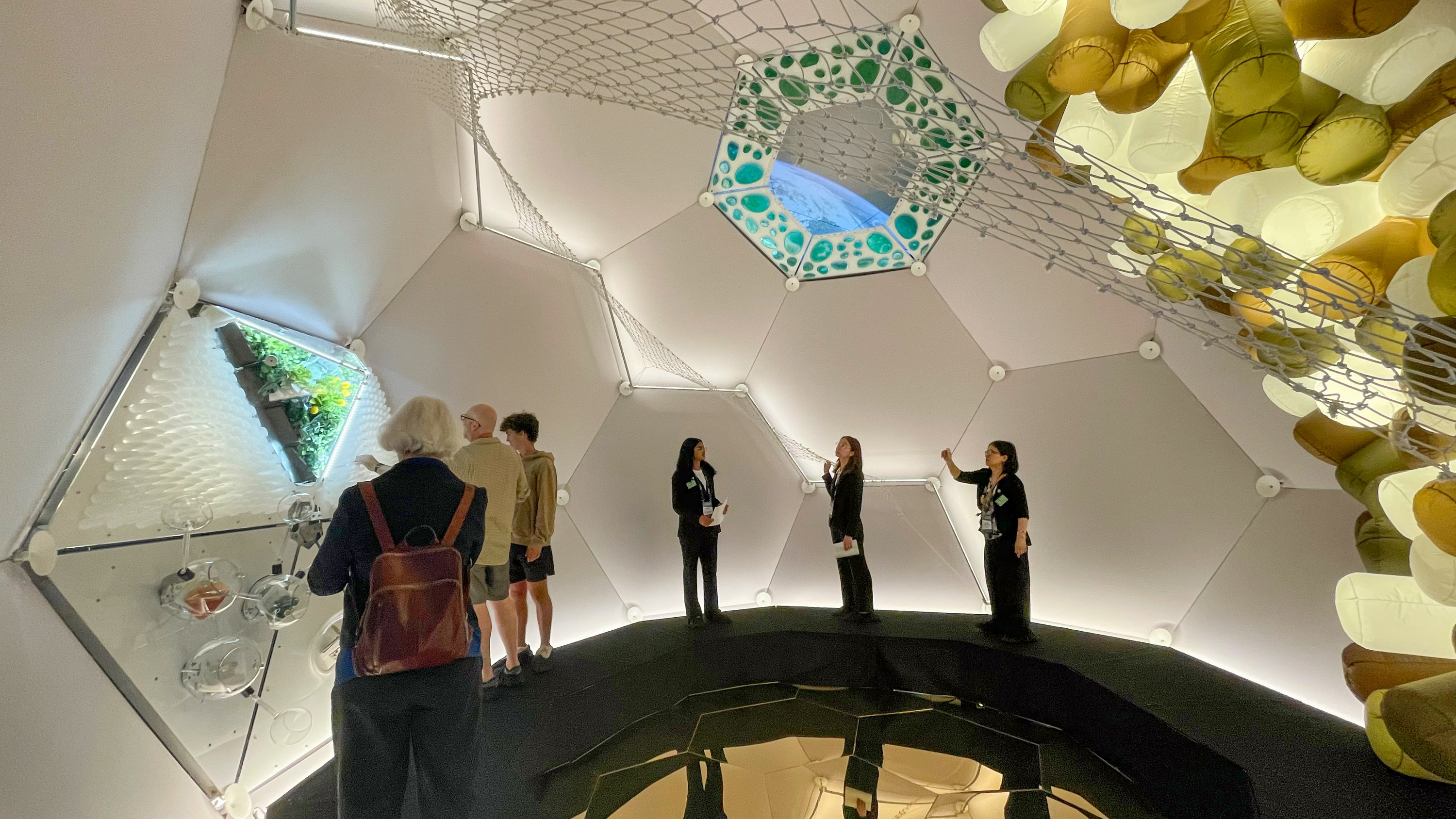
The Aurelia Institute, an architecture R&D lab, is building a space habitat that will automatically assemble in orbit. This concept, which uses compact stacks of flat tiles, has gained support from NASA. The design of the space habitat offers an innovative solution to the growing need for habitable spaces in space, as more people travel beyond Earth.
The Aurelia Institute's design demonstrates how technology and innovation can address the challenges of space exploration, offering an alternative to the International Space Station (ISS), which currently limits the number of astronauts to 11. The project represents a significant advancement in space architecture and self-assembly technology.
The Aurelia Institute's vision highlights the potential for collaboration between science, engineering, and architecture to create a sustainable future in space, opening new possibilities for exploration and space colonization.