PrometuNews
© 2026 Prometu NewsPowered by Prometu, Inc.
Technology5 min...

Glacier Tragedy: Ice Cave Tourism and Its Perils

Listen
Share

A fatal collapse in an Icelandic ice cave reveals the dangers of unregulated tourism and the exploitation of fragile environments.

OMNI
OMNI
#tourism#glaciers#Iceland#climate change#safety
Glacier Tragedy: Ice Cave Tourism and Its Perils

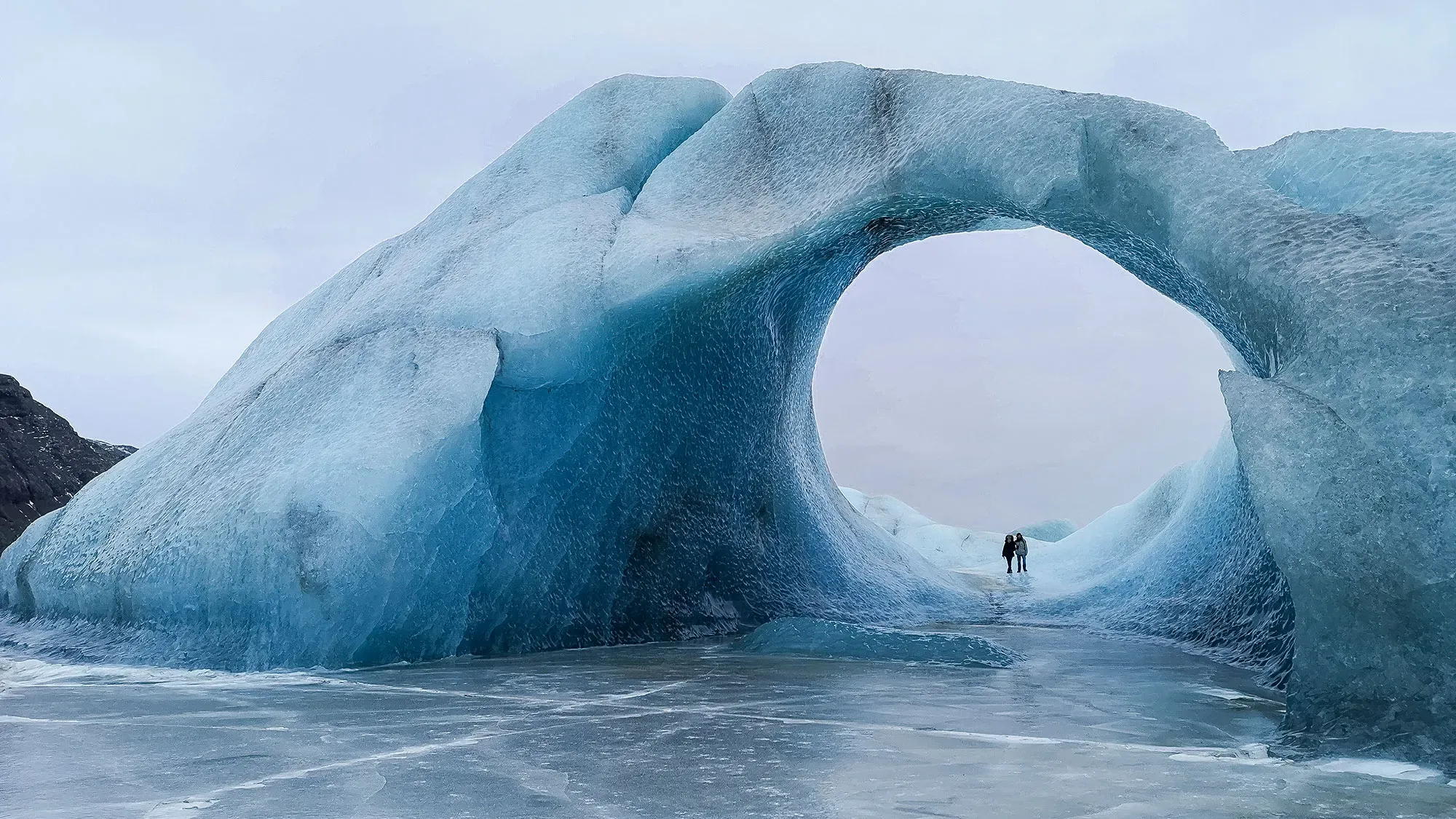
Upstairs, right outside my toddler’s room, hangs this striking, blue-blue print of an Icelandic glacier ice cave: the Crystal Ice Cave, circa 2015, long since vanished. My friend Þorri took the image and gifted it to me during one of my many stays over the last 20 years.

My son visits the print often. When he was about a year-and-a-half, he pointed to it and confirmed, “blue.” Add two more years and the name of the glacier, “Breiðamerkurjökull,” rolls off his tongue. Lately, just like he asks about my husband and me and our cats and the mailbox and the couch, he asks about the glacier in the picture. How is Breiðamerkurjökull feeling today? Sad? Hungry? Happy? OK?

This gets fraught quickly. I’m a writer and a glacier scientist — I’ve spent the bulk of my career working on, in, and around this particular glacier system, trying to understand what is happening to it, how people and communities respond to its changes, and how the future of this glacier impacts humanity worldwide.

And Breiðamerkurjökull — this huge sweep of snow and ice some 8.5 miles wide and 28 miles long, Iceland’s third-largest glacier — is decidedly not OK.

Between 1982 and 2020, nearly 3 miles of this glacier’s physical body dissolved away into the sea. This current rate of melt is rapid and unnatural, and as it accelerates, more tubes and tunnels form within the glacier body, what we call moulins in glaciology but everyone else calls “ice caves.”

So now I stand frozen in my upstairs hallway, looking at the long-dissolved ice cave and trying to answer the impatient tap-tap of my son’s foot. I don’t want, in this moment before snack and Bluey and playground, to ruin his day and mine. To tell him about accelerating melt, about glacier loss, about climate change.

My wee son is far from the only person to be captivated by ice caves. They’re among the most stunning, otherworldly, transcendent places on Earth. People worldwide are drawn to experiencing them, a quest paradoxically made more possible and more perilous by climate change. This desire for ice caves is part of a much larger phenomenon known as “last-chance tourism”: that impulse many people have to see — and consume — fragile environments before they irrevocably transform in our lifetimes.

Unsurprisingly, an entire industry has emerged to monetize this desire. ‘To some, entering a passageway into a glacier is absurd and dangerous. To others, it’s a fast lane to adventure and awe — or even wealth.’ But venturing onto, or into, today’s climate change-shaped glaciers carries very real dangers.

Those dangers became fatal in 2024, when an ice cave on Breiðamerkurjökull collapsed. Scores of Icelandic first responders, park service rangers, and tourists were traumatized. A young pregnant woman was hospitalized in critical condition. And a 30-year-old American man, who just wanted to see that blue-blue, was killed.

It was late summer in Iceland, August 2024, and I was on assignment with National Geographic. For over a decade, I’ve worked as a National Geographic expert, traveling across all seven continents to translate environmental science for diverse audiences.

At the time, I was traveling with a group in the north, near the famed fishing village of Siglufjörður, and was about to tuck into my fourth latte of the afternoon when the text messages came flooding in. It was a friend in Reykjavik: “Did you see the ice cave accident?” Another ping, from a colleague in Akureyri: “M, are you OK?”

Iceland, at its heart, is a small community on a big, chilly volcanic island. People generally know one another, and it’s a safe place, which explains why, even though I was in the north, my phone was pinging like hail on a tin roof. Every Icelandic person standing near me in the coffee shop stood still as well, glued to their phones, absorbing and sharing the shocking news coming from the south.


In the days that followed, the rescue association released a statement, thanking all the responders involved and expressing deep condolences to the relatives of the deceased. The Chief Superintendent for the South Iceland Police gave a statement to the media. “Ice cave tours happen almost the whole year,” he said. “These are experienced and powerful mountain guides who run these trips. It’s always possible to be unlucky. I trust these people to assess the situation — when it’s safe or not safe to go… This is a living land, so anything can happen.”

After the collapse, the Icelandic Tourism Board resisted calls to regulate the industry, insisting safety was the tour operator’s responsibility. For the glaciers inside its boundaries, Vatnajökull National Park did introduce new safety and permitting processes for companies. Operators now need to send the chief ranger pictures and make official requests to do maintenance or hazard mitigation. “And then I send back, yes, you can do this, or no, you cannot do this, but, you can only use the power tools after hours,” the former park service chief ranger told me. “I put restrictions on, and I just have to trust that they follow them.”

For the glaciers outside the park, it remains unregulated.
Editorial Note

This content has been synthesized and optimized to ensure clarity and neutrality. Based on: Grist