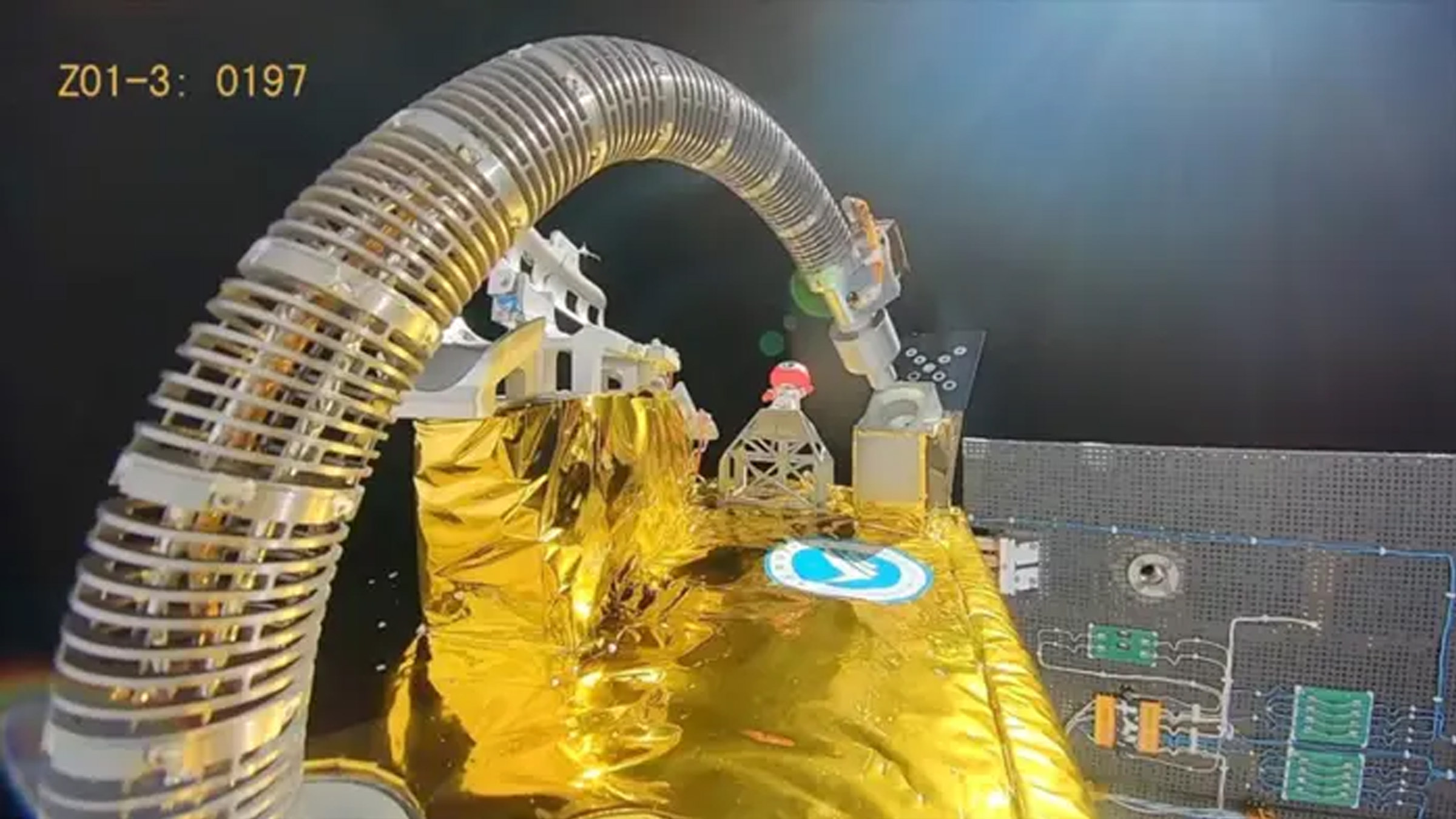
China, with over 1,100 satellites in orbit and ambitious plans for a megaconstellation, is at the forefront of space technology. The Yuxing 3-06 satellite, also known as Hukeda-2, is a promising test in low Earth orbit (LEO). This satellite, launched on March 16, features a robotic 'octopus tentacle' designed to refuel other spacecraft.
According to CCTV, the satellite successfully completed a demonstration of its robotic appendage, including control and refueling tests. The robotic arm inserted a nozzle tip into its own simulated fuel port while traveling at approximately 16,800 miles per hour, as reported by the South China Morning Post. This advancement could revolutionize the space industry.
The robotic arm of the Yuxing 3-06 is composed of spring-loaded tubes, articulated via individually motorized cables, according to SCMP. This configuration allows for precise maneuverability in the microgravity environment of low Earth orbit. The successful demonstration is the first step towards establishing the Yuxing 3-06's fuel-arm platform as a viable aerospace product. This could lead to the world's first operational 'space gas station'.
If this technology becomes technically and financially feasible, it could significantly extend the lifespan of LEO satellites. The first successful demonstration of LEO refueling occurred in 2007 with DARPA's Orbital Express test, which transferred fuel between two experimental spacecraft.
Currently, satellites have a limited lifespan due to the finite amount of fuel needed to maintain their position in LEO. When the fuel runs out, satellites cannot withstand the friction of atmospheric gases, which drags them back to Earth. This generates 'space debris' and represents a significant financial problem, as replacing a single satellite can cost tens of millions of dollars.
Whoever solves the problem of orbital refueling could dominate the airspace at a fraction of the current cost. China's commercial approach contrasts with DARPA's experimental approach, indicating a significant step towards large-scale production of this technology.
Editorial Note
This content has been processed by our team to ensure neutrality and journalistic clarity. Based on:Futurism