War Brewing? Trump Slams Iran's New Supreme Leader Mojtaba Khamenei
Listen
Share
Donald Trump has expressed his rejection and concern over the appointment of Mojtaba Khamenei as Iran's new Supreme Leader, anticipating a potential conflict.
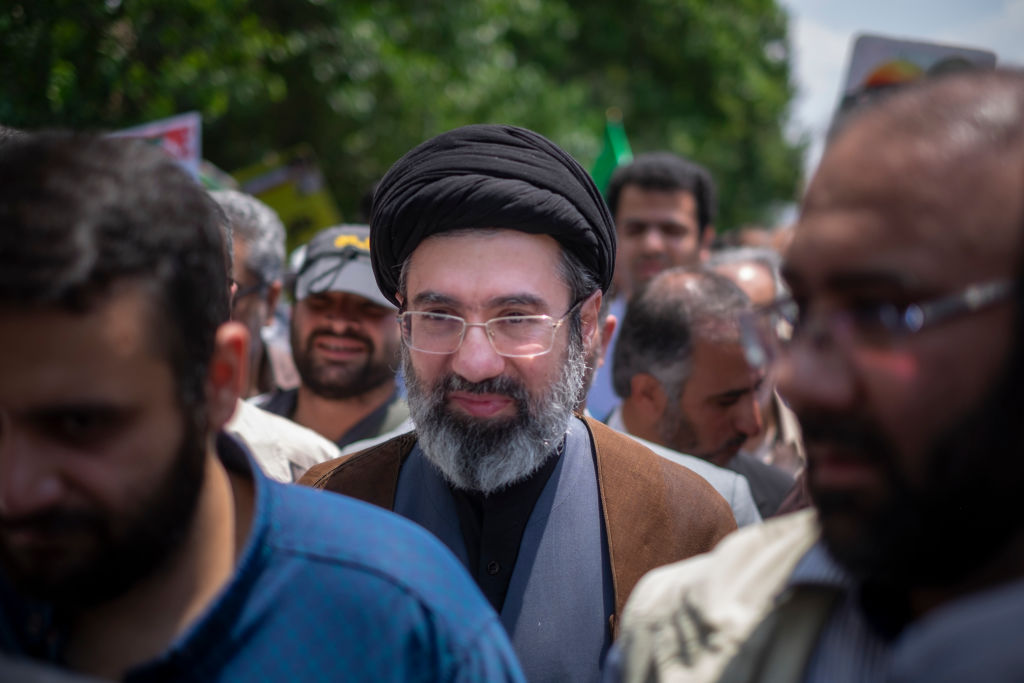
Mojtaba Khamenei, the second son of Ali Khamenei, has been chosen as the new Supreme Leader of Iran, following his father's death. This decision has drawn an immediate reaction from former U.S. President Donald Trump, who has expressed his dissatisfaction and concern. The appointment of Mojtaba, a powerful figure behind the scenes during his father's tenure, seems to strengthen the Iranian regime's resolve against the United States.
The appointment of Mojtaba, 56, comes after the death of his father, Ali Khamenei, and has generated tensions. Trump has made it clear that he disagrees with this choice and has expressed his desire to influence the selection of the successor, seeking a leader who is favorable to the interests of the United States. This stance suggests a potential conflict on the horizon, given that Trump has called Mojtaba an "unacceptable" option. Trump told Axios on Thursday that Mojtaba was unacceptable. "We want someone that will bring harmony and peace to Iran," he said.
Trump has made it clear that he will not accept a leader who continues the hardline policies of the previous Ayatollah, hinting at possible interference in Iran's internal affairs. Trump's demand that the new Iranian leader be 'reasonable' to the United States reflects his desire to influence the country's political direction. In an interview with TIME, Trump expressed his rejection of a new leader who would simply continue the hardline policies of the previous Ayatollah. He accused Iran of "wasting time" with Mojtaba, calling him a "lightweight".
This stance suggests an escalation in bilateral tensions, as Trump seeks a change in Iranian leadership that aligns with his interests. The former U.S. President has argued that he does not want the United States to have to return to Iran in the future, implying a long-term strategy to influence Iranian policy.
Trump has warned that the new Supreme Leader of Iran 'won't last long' if he does not obtain his prior approval, intensifying bilateral tensions. This statement, made to ABC News, underlines Trump's stance of seeking direct influence in Iranian politics. The former president has reiterated his desire to avoid future U.S. interventions in Iran, but his current stance suggests otherwise. Trump added: "We want to make sure we don't have to go back every 10 years, when you don't have a president like me that's not going to do it".
This statement, along with his criticisms of Mojtaba Khamenei, indicates an aggressive strategy towards Iran, which could escalate the conflict. Trump has also expressed his dissatisfaction with Mojtaba's appointment, suggesting that he might take steps to challenge his leadership.
Analysts point out that the possibility of reforms in Iran, such as those initiated by Saudi Crown Prince Mohammed Bin Salman, is now 'impossible' with Mojtaba Khamenei in charge. An analyst told TIME that the loss of his father, mother, wife, and child during the airstrikes has filled Mojtaba "with an undying desire for revenge". This suggests that the new leader could adopt a tougher stance towards the United States and its allies.
The choice of Mojtaba also goes against Trump's demand that Iran choose a successor that is acceptable to the United States. This combination of factors indicates a volatile situation in which tensions between both countries could intensify.
Senior Iranian officials have pledged to continue the fight, challenging Trump's 'unconditional surrender' stance, indicating a firm resistance to the U.S. government. Foreign Minister Abbas Araghchi stated: "We pledge that, in defense of the rights of the great Iranian nation, the advancement of national interests and security, and the realization of the lofty goals of the Islamic Revolution, we shall not falter for a moment".
A statement from the defense council added: "We will obey the commander-in-chief until the last drop of our blood". These statements underline the determination of the Iranian regime to resist pressure from the United States and to maintain its stance in the ongoing conflict.