Prometu News LogoNews
© 2026 Prometu NewsPowered by Prometu, Inc.
Politics8 min...

Trump Signals Support for Senate Bill to Avert Government Shutdown

Listen
Share

Republican sources suggest Trump may back the Senate bill to fund DHS, potentially averting a partial government shutdown.

OMNI
OMNI
#Donald Trump#Mike Johnson#Government Shutdown#DHS#Politics
Trump Signals Support for Senate Bill to Avert Government Shutdown

Senate Republican sources suggest that President Trump might endorse a Senate-passed bill to fund the Department of Homeland Security (DHS), excluding funding for Immigration and Customs Enforcement (ICE) and Border Patrol. This move aims to end a tense standoff with House Speaker Mike Johnson, threatening to prolong a partial government shutdown for weeks. Trump's potential approval is seen as a quick way to resolve the current impasse.

Several Republican insiders familiar with White House discussions anticipate Trump will greenlight the Senate bill, despite its lack of ICE funding. They believe it's the fastest route to end the shutdown and begin work on a second budget reconciliation package to fund immigration enforcement and possibly the Pentagon as well.

Senate Majority Leader John Thune engaged in discussions with Trump on Monday to find a way out of the existing deadlock with House Republicans. Sources caution that while Trump is now open to endorsing the Senate bill, potentially giving Johnson the go-ahead to bring it to the House floor, the president could still change his mind. The situation remains fluid and subject to potential shifts in Trump's stance.

“There’s a lot of pressure on Thune to figure out what our plan is on DHS,” a Senate GOP aide commented. “The base is losing their mind. We’ve got to do something.” The source added that the White House is reconsidering its support for a two-month stopgap measure passed by the House to fund the entire DHS, given that Senate Democrats have vowed to block it. The House approved that stopgap on Friday.

Trump has called on lawmakers to return to Washington from their two-week Easter recess to ensure the funding of the Department of Homeland Security as quickly as possible. White House press secretary Karoline Leavitt told reporters on Monday that the president has “repeatedly” urged Congress to reconvene. According to Leavitt, the president has stated that “he’ll host a big Easter dinner here at the White House if Congress will come back and fight the Democrats on this issue, which we should do, because, again, [the] Democrat Party is in the wrong here.”

Senate Republicans have forced Democrats to vote seven times against a House-passed Homeland Security funding bill that would also fund immigration enforcement, but Senate GOP strategists believe that continuing to hammer that message is having diminished political returns.

Several other Senate GOP sources confirmed that Trump is expected to pivot to the Senate bill after speaking with Thune on Monday and being briefed on the advantages of moving swiftly to a targeted budget reconciliation bill to boost ICE and Border Patrol funding, and possibly also enact elements of the SAVE America Act. However, sources cautioned that Trump could adopt a new strategy if he decides that backing the House bill would cause too many problems with the Republican base voters.

When asked if it would be helpful if Trump encouraged the Speaker of the House and House Republicans to schedule a vote on the Senate-passed Homeland Security funding bill, Senator John Hoeven, a senior member of the Senate Appropriations Committee, replied: “Those are the kinds of things we are working on.”

Trump's intervention would end the awkward standoff between Johnson and Thune, who crafted the agreement to quickly pass legislation to fund the Transportation Security Administration (TSA), the Coast Guard, the Federal Emergency Management Agency, and the Cybersecurity and Infrastructure Security Agency. Pressing House Republicans to present the Senate-approved bill will require persuading Johnson to retract his fiery rhetoric from Friday, when he declared that there is no way Republicans would support any legislation that could be interpreted as defunding ICE.

“Republicans are not going to be part of any effort to reopen our borders or stop immigration enforcement,” Johnson stated at a press conference on Friday. Johnson is communicating to members of the House Republican conference that the House “definitely will not pass the Senate bill,” according to a person informed about a legislator's conversation with the Speaker.

Senate Republicans are quick to point out that the One Big Beautiful Bill Act, which Trump enacted in July, provided four years of funding to ICE and the Border Patrol. They claim that they could act quickly to begin working on a budget reconciliation package to provide more money for the enforcement of immigration laws. They also point out that Senate Democrats have already rejected proposals to fund the entire DHS for a shorter period of time to give negotiators more time to try to reach an agreement on reforms to ICE and the Customs and Border Protection Office.

Republican senators had presented these arguments to Trump last week, and sources familiar with their conversations said that Trump indicated at that time that he would support the Senate's strategy of passing a bill to fund as much of the Department of Homeland Security as possible through the regular appropriations process and then boost ICE and the Border Patrol through budget reconciliation.

A Republican Senate aide said that Trump “changed his mind” from Thursday to Friday after seeing the furious reaction to the Senate bill from House Republicans and the Republican base. “I think Trump was on board with this until he saw the House reject it and then the base went crazy,” the advisor said. “No one changes their mind better than Donald Trump.” Thune has argued that funding large portions of the DHS through a regular appropriations bill will make it much easier to increase ICE and the Border Patrol in a budget reconciliation package, which could be approved with a simple majority vote.

Rachel Snyderman, a budget expert at the Bipartisan Policy Center, said that trying to finance the allocations for multiple agencies through the budget reconciliation process to avoid obstruction in the Senate would be complicated. “You are adding complexity because you are incorporating additional committees, additional interested parties. The DHS is almost like a Swiss army knife of agencies and offices that have very different activities in support of the same singular mission,” he stated.

Trump has urged Senate Republicans to end obstruction in the Senate by setting a new precedent with a majority vote, but Republican Senate aides say that there are only about eight secure “yes” votes to do that and, at most, 20 Republican senators who would be willing to explore that option. Now that the heated Republican reaction to the Senate bill has subsided, Republican Senate leaders are making another attempt to get Trump to support their strategy from last week.

A Republican strategist said that House Republicans reacted so angrily to the DHS bill approved by the Senate on Friday because they felt that their Republican Senate colleagues had taken them by surprise. “I think that in the end [the House] may end up accepting what the Senate approved,” the strategist said. “There is intense frustration [among House Republicans] with the way the Senate Republicans handled themselves. The lack of communication between the House and the Senate is always bad, but it was particularly serious in this case. So they said ‘fuck you’, and they were able to do so because the TSA was financed,” the strategist added.


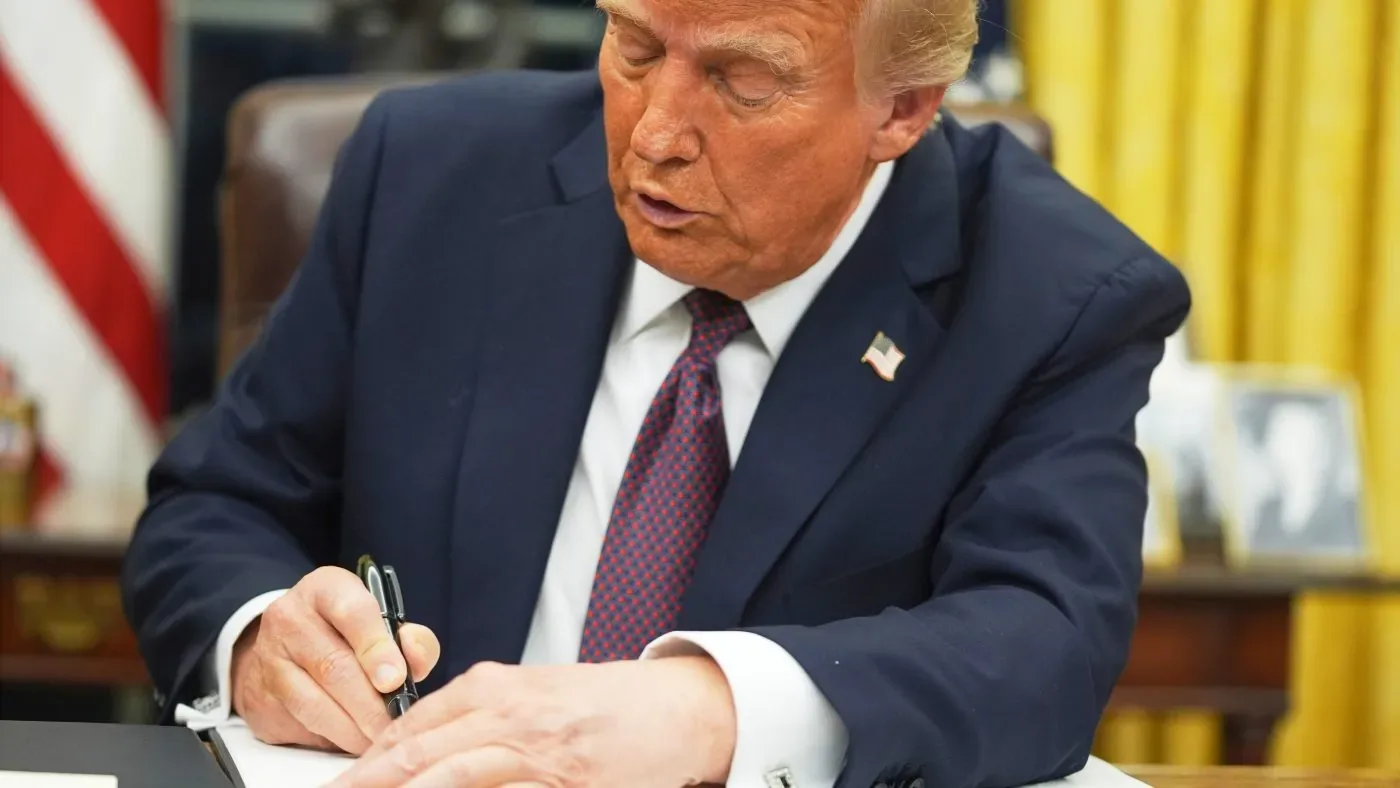
Trump announced on Thursday that he would sign an executive order to pay TSA workers during the Homeland Security shutdown, giving House Republicans more room to maneuver to reject the Senate bill. This action sought to mitigate the impact of the shutdown on TSA employees and, at the same time, allowed House Republicans to maintain their position against the Senate bill without facing criticism for failing to pay essential workers.

The situation remains fluid and negotiations continue to be ongoing. The final outcome will depend on Trump's ability to persuade House Republicans to support the Senate bill, as well as the willingness of Senate Democrats to compromise on an agreement that addresses concerns about funding for ICE and the Border Patrol.
Editorial Note

This content has been synthesized and optimized to ensure clarity and neutrality. Based on: The Hill