#Donald Trump#Congress#Insider Trading#Politics#United States
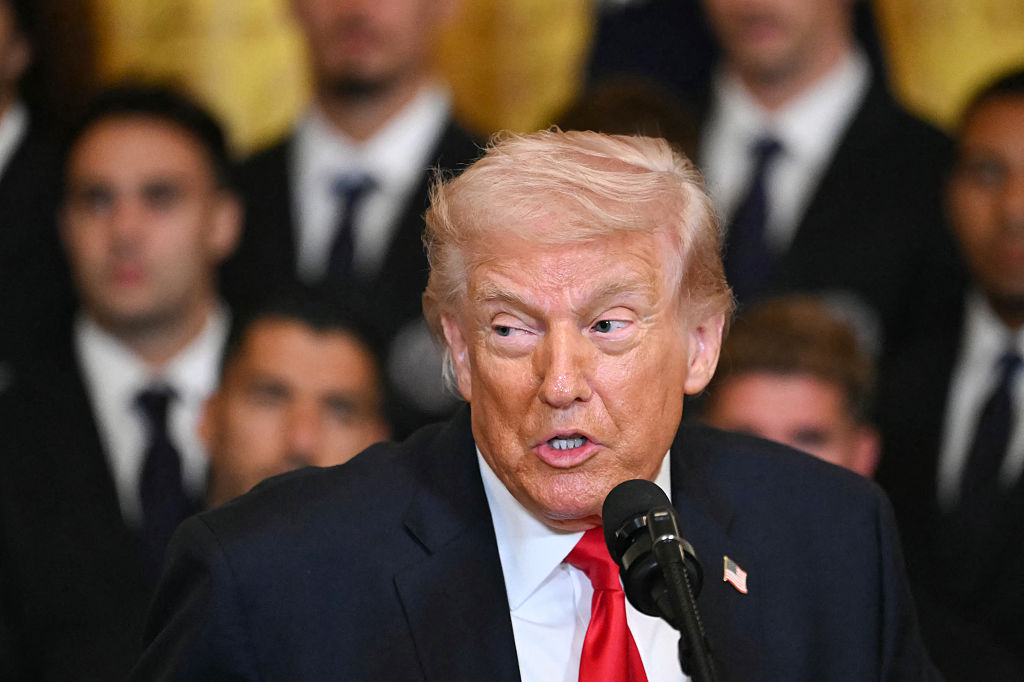
In a speech at the Capitol, Trump urged Congress to pass the Stop Insider Trading Act. However, this bill, which many Republicans are backing over stronger proposals, is riddled with loopholes. These loopholes allow lawmakers to profit from insider information, as long as the profits are reinvested into other vehicles such as bonds, commodities, crypto, or mutual funds.
Rep. Joe Morelle points out that while the title suggests a ban on members of Congress owning stock, it actually doesn't. The bill allows lawmakers to keep the stocks they already own and even sell them with seven days' notice. It also allows lawmakers to buy stocks for their parents, assuming it would be part of their inheritance.
The bill does not address other branches of government, such as the White House and the Supreme Court, where self-dealing actions undermine the credibility of public officials. In addition, it allows lawmakers to make policy decisions that could increase the value of stocks already in their portfolios.
In recent years, some of the biggest problems in Congress have arisen from decisions that had a major impact on their own assets, such as the 2020 Covid pandemic and the 2023 banking collapse. The proposal also does not prevent lawmakers and their kin from investing in private companies such as SpaceX or OpenAI.
Groups like CREW, the Project on Government Oversight, the Campaign Legal Center, and Public Citizen have urged lawmakers to support the Restore Trust in Congress Act. This law would ban all asset trading, not just for lawmakers, but also for the president, vice president, the cabinet, and the Supreme Court. Under this measure, officials could hold assets in qualified blind trusts.
Morelle states that under this law, lawmakers would have to divest everything. A procedural maneuver to bring that legislation to the floor against the wishes of House Speaker Mike Johnson already has 185 signatures, all Democrats, and is still short of the 218 needed to force a vote.
Although the proposed law has shortcomings, it is popular with lawmakers who are seeking to avoid being seen as greedy and selfish. There is a clear appetite for action, as there are too many stories of lawmakers finding ways to avoid disclosures under a 2012 transparency law with ridiculously low penalties.
Rep. Lisa McClain of Michigan, the fourth-ranking House Republican, was late in reporting more than 500 trades worth at least $1.5 million. Republican Senator Markwayne Mullin of Oklahoma reported millions in trades more than a year after they occurred.
However, the details matter, especially when approximately half of Congress already owns stock. The law, despite its title, does not effectively address the problem of insider trading and allows lawmakers to continue to engage in questionable financial practices.