5 Takeaways from Trump's Cabinet Meeting Amidst Iran War: Peace or More Bombs?
Listen
Share
In his 11th cabinet meeting, Trump addressed the war in Iran, revealing a peace plan, an oil 'present,' and a dual message about negotiations and military force.
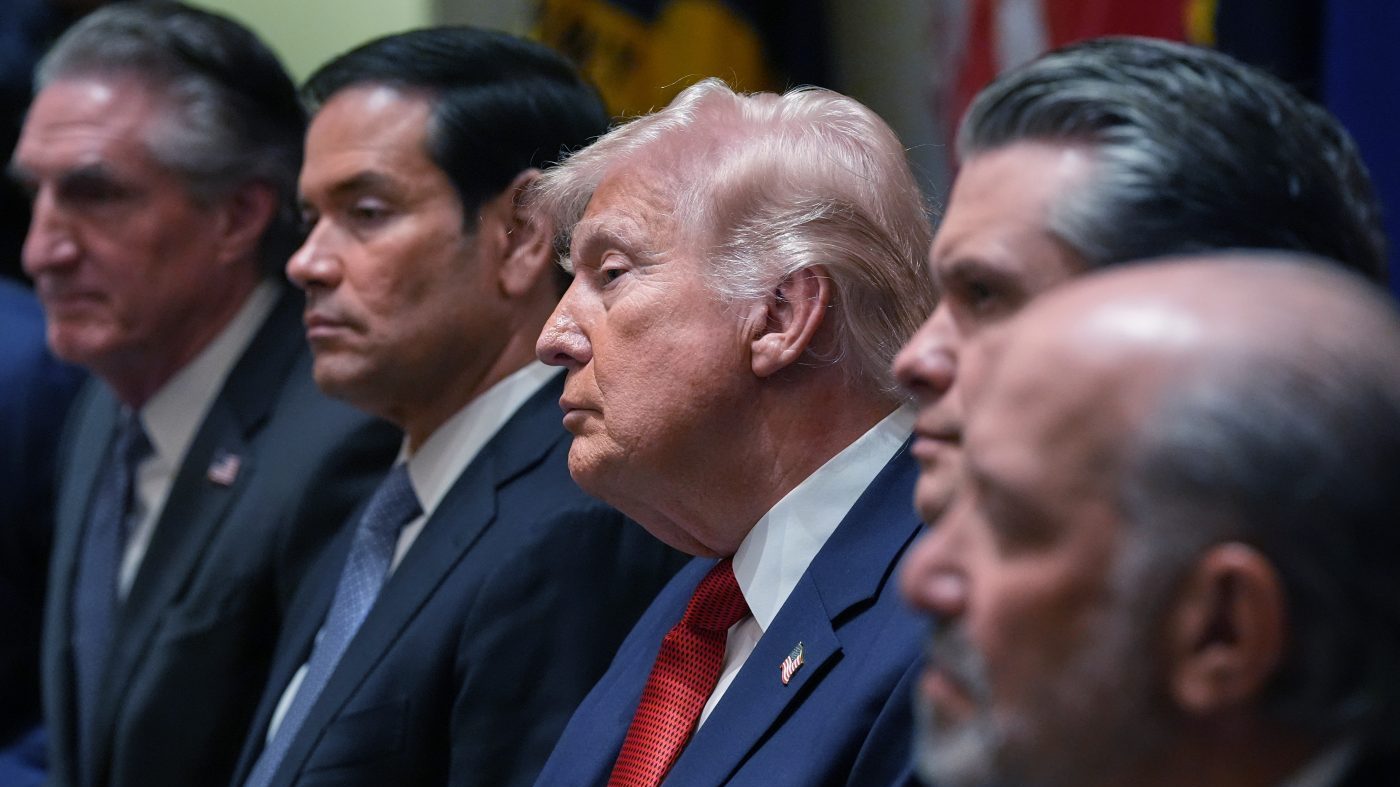
Former President Donald Trump's eleventh cabinet meeting of his second term largely focused on the war in Iran. Unlike previous meetings, this one lasted just over an hour and a half and included interventions from only a few secretaries instead of all the officials present. The meeting was the first for Homeland Security Secretary Markwayne Mullin, who was sworn into office on Tuesday. Trump's special envoy, Steve Witkoff, confirmed a 15-point peace plan presented by the United States to Iran, which Pakistan is mediating. Witkoff described the talks as "sensitive, diplomatic solutions," highlighting that Trump has directed his officials and the administration to "not negotiate with the news media."
Defense Secretary Pete Hegseth also intervened, noting that the United States would continue to use military force against Iran, even if a peace agreement is reached. Hegseth said, "We pray for a deal and we welcome a deal, and we have the ultimate dealmaker to make it happen," referring to Trump. This dual messaging reflects the administration's recent communications about the war, creating uncertainty about the true intentions of the United States.
Steve Witkoff, Trump's special envoy, confirmed the presentation by the United States of a 15-point "action list" that serves as a framework for a peace agreement with Iran. According to Witkoff, the plan has been distributed through the government of Pakistan, which is acting as a mediator, leading to "strong and productive talks." However, Iran responded with its own demands, including an end to the war, payment for damages and reparations, and Iranian sovereignty over the Strait of Hormuz. It is unlikely that the United States or Iran will accept the other party's proposals, further complicating the prospects for peace. White House press secretary Karoline Leavitt emphasized that any unofficial information must be confirmed by the White House before being considered an official announcement.
Defense Secretary Pete Hegseth said that the United States would continue to use military force against Iran. Hegseth stated, "We pray for a deal and we welcome a deal, and we have the ultimate dealmaker to make it happen," referring to Trump. These comments echo recent messages from the administration about the war, including a post from Trump on TruthSocial where he warned that it "wouldn't be pretty" if Iran did not take the negotiations seriously. Leavitt also warned that the United States would increase attacks if Iran did not accept American terms, indicating an aggressive stance despite peace talks. This duality in the administration's message generates uncertainty about the true intentions of the United States and the possibility of a peaceful agreement.
Trump blamed Democrats for the ongoing shutdown of the Department of Homeland Security (DHS), warning that he would take "drastic measures" if the shutdown did not end soon. Trump stated that Democrats were "really punishing the American people," referring to the long lines at airports due to the non-payment of Transportation Security Administration (TSA) employees. The president also revealed that Iran had given the United States a "gift" to demonstrate its seriousness in the negotiations: allowing eight oil tankers to sail through the Strait of Hormuz. Subsequently, Iran allowed two more ships to pass, bringing the total to ten. Trump joked that he hoped he hadn't "screwed up" the negotiations by revealing the gift, demonstrating the complexity of diplomatic and commercial relations amidst the conflict.
Trump discussed projects in Washington, including a 90,000-square-foot ballroom with a capacity for nearly 1,000 people, which is scheduled to be completed in the summer of 2028 and will cost around $400 million, funded by private donors. He also mentioned a planned triumphal arch in Washington's Memorial Circle, called the "Independence Arch," which is expected to be completed before July 4, 2026, the country's 250th anniversary. In addition, Trump addressed the remodeling of the Kennedy Center, renamed in his honor, expressing his honor for the name change. These projects reflect Trump's focus on leaving a lasting mark on the capital and American culture.