
Film & Movies5 minMar 27, 2026

Dark Transformation? Deep Dive into the 'Dhurandhar' Duology and Bollywood's Radical Shift

Listen
Share

Aditya Dhar's 'Dhurandhar' duology marks a concerning shift in Bollywood, blending violent action with blatant political propaganda.

OMNI
OMNI
#Bollywood#Indian Cinema#Aditya Dhar#Dhurandhar#Film Review#Propaganda
Dark Transformation? Deep Dive into the 'Dhurandhar' Duology and Bollywood's Radical Shift
The spy series 'Dhurandhar', which began as a single film, has become a box office success, with its sequel poised to equal or surpass the achievements of the first installment. This transformation could signal a potentially permanent shift in the tastes of the Bollywood audience. The saga, bold and bloody, exploits jingoistic sentiment and fawns over government power. However, it is not without its merits as a work of cinematic sensationalism, which makes it unique even in an industry that has cozied up to Prime Minister Narendra Modi and his ruling party, the BJP.

The film addresses political and social issues directly, even in the first half of the film, characters are shown constantly praying for a new leader willing to take bold action against enemies at home and abroad. The second half almost features Modi as a supporting character through endless news snippets. Even the series' most voracious supporters would have a hard time denying its status as propaganda.
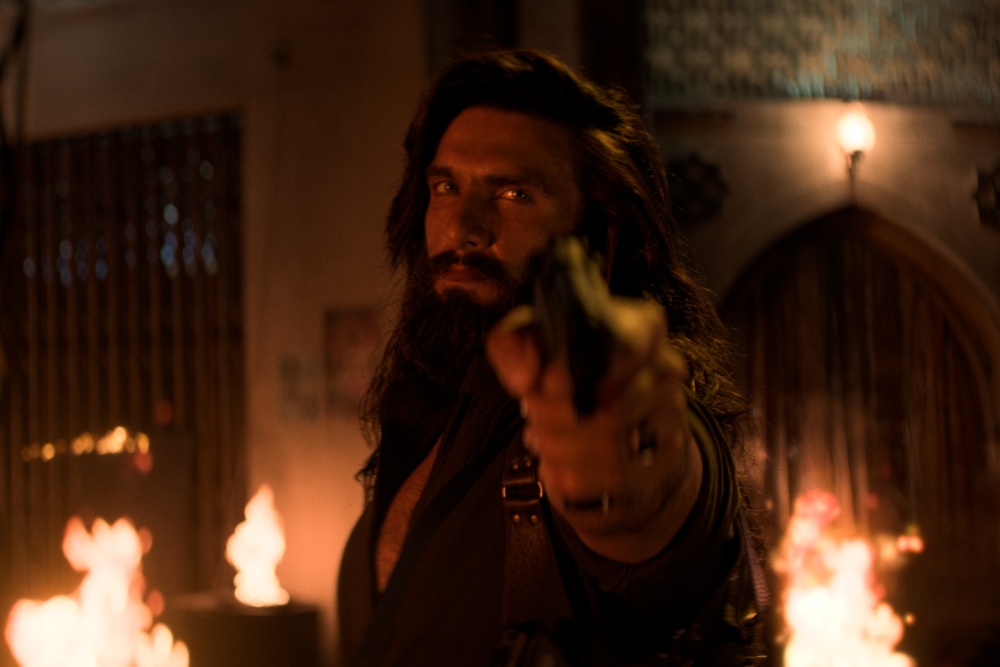
The film is a response to the growing Islamophobia in Indian cinema. The film contrasts with productions like 'The Kashmir Files', 'The Kerala Story', and 'The Taj Story', which rewrite Indian history to favor Hindus. The first film begins with a real-life hijacking that prompts Indian intelligence leader Ajay Sanyal (R. Madhavan) to activate the 'dhurandhar' project, where an Indian soldier is hidden in enemy territory in Pakistan. The hero, Hamza Ali Mazari (Ranveer Singh), infiltrates the world of organized crime in Karachi.

As Hamza gets closer to corrupt politicians and mobsters, he is given carte blanche for brutality, leading to impactful action scenes. The film exploits violence as a tool, satisfying both the 'masters' in Pakistan and the Indian audience, which perceives it as a means of dismantling extremist terrorist networks. The film takes its time, with a duration of 214 minutes, using a mix of Bollywood classics with modern rhythms.
The film bases part of its plot on real events, such as the 2008 Mumbai terrorist attacks. The villains are inspired by real-life figures, which increases the emotional impact. The film's editing juxtaposes real recordings of terrorism victims with dramatizations where Hamza encounters the perpetrators during the Muslim call to prayer, portraying the enemy as Islam in general. This fuels the patriotic sentiments of modern India, where the Hindu majority (through an ethnonationalist movement known as Hindutva) has free rein.

The film focuses on violence as a patriotic duty, in line with the Hindu concept of dharma, while Muslim villains are portrayed with simplified hatred towards Hinduism. The first film stands out as a revenge thriller about a double agent. The second film, 'Dhurandhar: The Revenge', focuses on the consequences of the 2008 attacks, with a less subtle narrative.
The sequel, with a duration of 229 minutes, focuses on revenge and violence, with emotional details replaced by on-screen text, decreasing the dramatic impact. The sequel seems incomplete at times, sacrificing music, action editing, and coherent sound design. The simplified story is driven by political proclamations that frame any opposition to the BJP as funded by terrorist cells, while Hamza fights for political power.

The narrative is based on the manipulation of volatile political sentiments, assuming that the audience is riled up enough by their basic instincts to not need a coherent story. 'Dhurandhar: The Revenge' is a cinematic disaster, but its success lies in distorting reality to serve political agendas. The film becomes a political rally screened in cinemas around the world, including nearly a thousand screens in the United States.
The tone of successful Indian cinema has changed in recent years, with films like 'RRR' contrasting with gloomier hits like 'K.G.F: Chapter 2' and 'Pushpa 2: The Rule'. The 'Dhurandhar' films share a worship of masculine heroism and violence as a sacred duty. Dhar's cinematic approach channels these tropes through the lens of propaganda, with party slogans and political buzzwords reminding viewers that this is the new India. The film, with military training scenes that look like recruitment ads, suggests that the sequel's success lies in the manipulation of reality to suit political agendas.

The film's success is based on the manipulation of reality to suit political agendas, reframing criticized legislation as 5D chess moves to secretly cripple terrorism. The result is a nearly 4-hour experience that is more of a political rally than a film.