Is Being a CEO a Dream Job? Oura's $11 Billion Boss Reveals the Hard Truth
Listen
Share
Tom Hale, CEO of Oura, the $11 billion smart ring company, reveals that the job is far harder than he imagined, highlighting the inherent responsibility and stress.
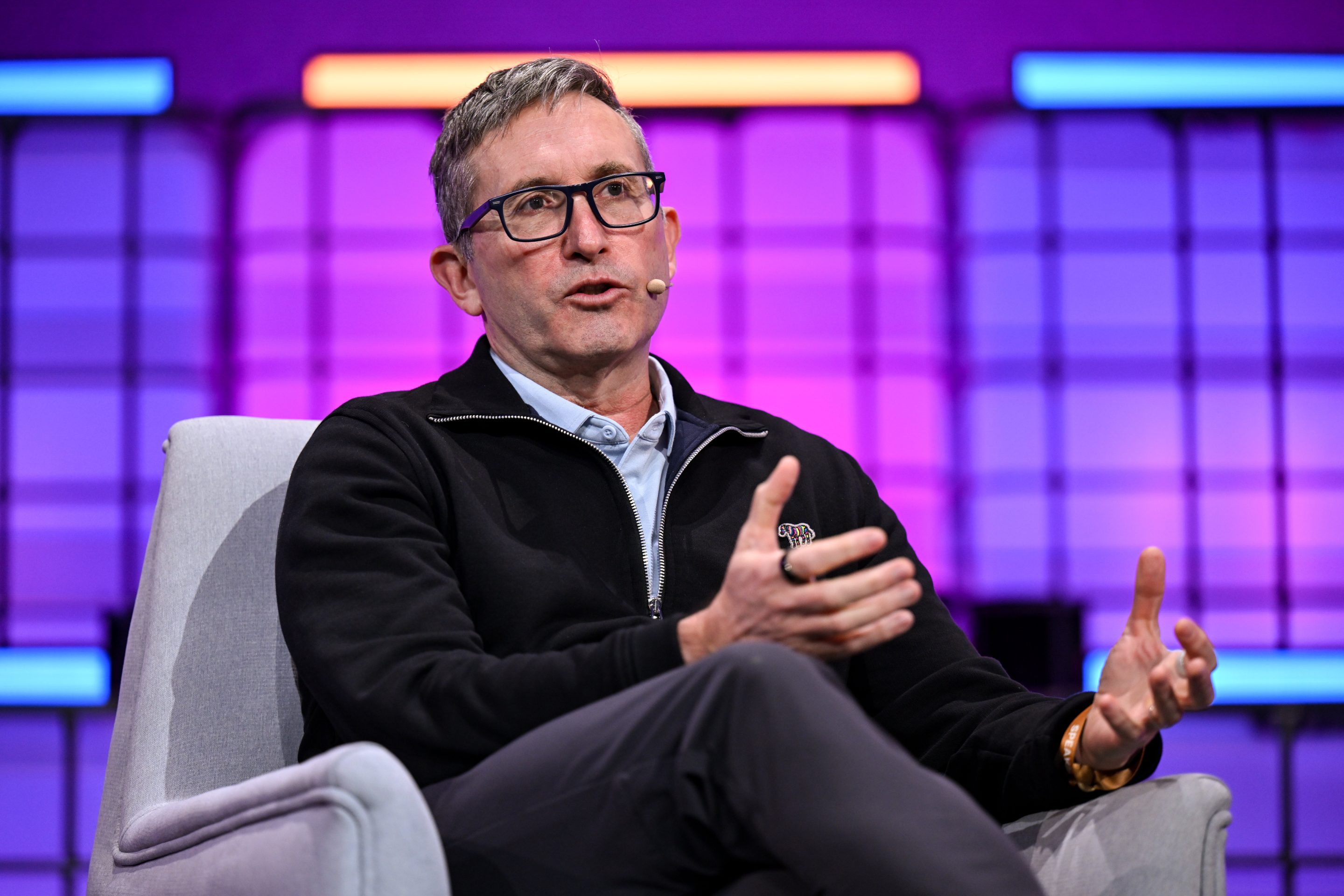
Tom Hale, the CEO of Oura, the $11 billion smart ring company, has revealed that being a CEO is "much harder than I thought". Hale, who took on the role nearly four years ago, after holding high-level positions at technology and consumer product companies like Momentive and HomeAway, shared his experiences on Sequoia Capital's Long Strange Trip podcast. Despite his more than 30 years of experience and multiple executive roles, Hale confesses that the psychological load of the position is considerable. Stress and responsibility are key factors in this perception.
The executive emphasizes that the responsibility and stress are much greater than he anticipated. This includes constant worries, such as waking up at 4 a.m. wondering if everything will work. Hale stresses that the pressure and responsibility rest on him, especially considering the faith the team has placed in his leadership. Despite the benefits, Hale points out that success is due to the team, but the consequences of failures fall on the CEO.
Brian Chesky, co-founder and CEO of Airbnb, has stated that his mental health deteriorated upon assuming leadership of the short-term rental company, valued at $76 billion. Chesky recounted how isolation became a challenge, especially when distancing himself from his co-founders, whom he considered his "family". In an interview on the On Purpose podcast in 2023, Chesky commented that no one warned him about the loneliness he would experience.
Indra Nooyi, former CEO of PepsiCo, valued at $209 billion, has also highlighted the loneliness inherent in the position. Nooyi explained that it is difficult to share concerns with her spouse, friends, or even with the board of directors and staff, due to confidentiality and hierarchy. Michel Doukeris, CEO of Anheuser-Busch InBev, valued at $124 billion, has pointed out the uniqueness of the position, which involves balancing the expectations of multiple stakeholders.
Hale mentions that CEOs are often held culpable for the decisions that lead to problems. According to Hale, people often have an idealized view of the position, without fully understanding the reality. The CEO of Oura highlights that the proportion between rewards and difficulties favors the latter.
The CEO position entails significant benefits, including multi-million dollar salaries and recognition in the business world. However, it also presents unexpected challenges, such as loneliness and isolation. Hale's experience reflects a trend in which leaders of large companies reveal the difficulties inherent in the position, beyond the apparent benefits.
Michel Doukeris, CEO of Anheuser-Busch InBev, emphasizes the need to manage the expectations of different stakeholders, from employees and customers to the board of directors and investors. Doukeris highlights the importance of balancing time and priorities to meet all responsibilities. This vision highlights the complexity of the CEO role, which requires exceptional organization and time management to achieve success.
In an interview with Fortune in 2022, Doukeris emphasized the uniqueness of the CEO position, which involves dealing with all stakeholders. Success requires listening to consumers, but also to the board of directors and investors, carefully balancing time.
Hale points out that people often misunderstand the CEO job, thinking it's more fun than it really is. Although he acknowledges that there are moments of fun, he emphasizes that the proportion of "kibble" (dog food, figuratively) exceeds that of "champagne". This perspective contrasts with the glamorous image often associated with the position.
The experience of Hale and other CEOs reveals that the path to business success is full of unexpected challenges, which go beyond economic benefits and public recognition. Loneliness, stress, and responsibility are fundamental aspects of the reality of business leadership.