Prometu News LogoNews
© 2026 Prometu NewsPowered by Prometu, Inc.

'Yes, Minister' Creator Ends Franchise, Criticizes Trump-Era Satire

Listen
Share

Jonathan Lynn, creator of 'Yes, Minister,' critiques the impossibility of political satire in the Trump era and announces the closure of the franchise with 'I'm Sorry, Prime Minister'.

OMNI
OMNI
#theater#satire#politics#johnathan lynn
'Yes, Minister' Creator Ends Franchise, Criticizes Trump-Era Satire

Jonathan Lynn, recognized for his work on 'Yes, Minister' and 'Yes, Prime Minister', has expressed his frustration with political satire today. Lynn, 82, believes that American political reality has surpassed any attempt at satire. The BAFTA-winning writer and director made these comments in anticipation of the final weeks of 'I’m Sorry, Prime Minister', the concluding chapter of his beloved political comedy franchise, which has been playing to sold-out audiences at London's Apollo Theatre since its late-January opening. The play closed on May 9.

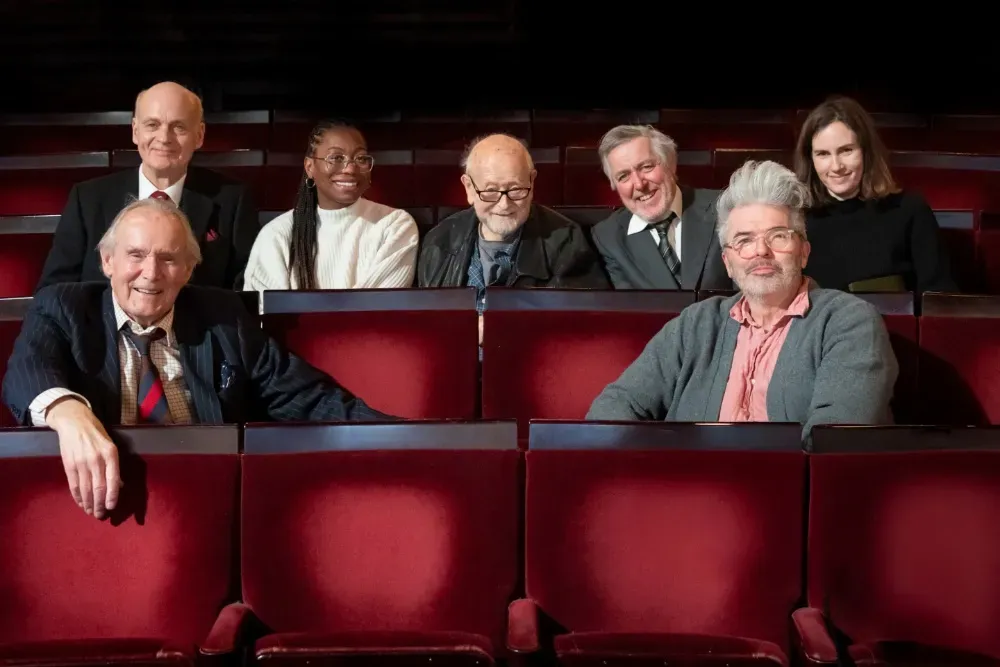
The West End production - the first such transfer for Barn Theatre, Cirencester, where it was tried out a year ago - stars Griff Rhys Jones as retired Prime Minister Jim Hacker and Clive Francis reprising his Barn Theatre performance as Sir Humphrey Appleby, the two iconic figures from the original BBC series now navigating old age, irrelevance and an unsympathetic college committee at Hacker's Oxford bolthole. The production is co-directed by Michael Gyngell and also features William Chubb and Princess Donnough.

The new play is the latest stage of a franchise that began in 1976, when Lynn's writing partner Antony Jay proposed creating a comedy series about the British civil service. The two buried themselves in research and, as Lynn writes in the production's program notes, found that government reality proved more absurd than anything they might have invented. 'Yes, Minister', which followed career politician Jim Hacker's perpetual battles with his formidably obstructive Permanent Secretary Sir Humphrey Appleby, ran for three seven-episode series on BBC2 between 1980 and 1984.

A sequel, 'Yes, Prime Minister', in which Hacker ascended to Downing Street with Sir Humphrey in tow, followed for 16 episodes between 1986 and 1988. The BBC, always nervous about the license fee, refused to air even the pilot episode until after a general election for fear of accusations of bias, a caution that proved entirely unnecessary. The series won multiple BAFTAs and became, improbably, Prime Minister Margaret Thatcher's favorite television program. As Lynn notes, the show inadvertently gave politicians across the spectrum a useful alibi: for the first time, voters could understand that, when the government failed to keep its promises, the civil service might well be the reason.


Lynn, who wrote the play before COVID delayed its path to the West End, is characteristically unsparing about the state of satire on both sides of the Atlantic. On America, he is particularly pointed, arguing that efforts to silence comedians and pull critical programming represent a genuine threat to free expression. Lynn states: «I believe in a free society where people are free to make political comments without the risk of losing their jobs or being put into prison».

He is more measured about Britain. «The politicians here, although many of them are massively incompetent, they don't seem to be wicked in the same way as some of Trump's people», he says. As for whether the BBC would today commission a show like 'Yes, Minister', Lynn is equally direct. He doesn't think they would. «I think they'd be too scared of losing all or some of their license fee», he says, arguing that the corporation's anxiety about government interference has grown substantially since the 1980s.

Brexit is the only overtly contemporary reference in the new play, and Lynn has not moderated his view of it. He considers it a disaster, and believes the British public is gradually arriving at the same position. In the play, Jim Hacker, like Boris Johnson before him, is portrayed as having been for and against Brexit simultaneously, ultimately voting against it and regretting it deeply.

The play's deeper subject, however, is less political than personal. Lynn says he wanted to write about old age and loss: loss of power, loss of friends, the question of what to do with yourself when you are pushed out of a job you loved while you still have the capacity to work. «It doesn't just apply to a Prime Minister», he says. «It applies to many millions of people».

At 82, Lynn is candid that this is likely his last major work. He has a couple of screenplays he hopes to see produced, but says he does not have the energy for new writing projects. Asked whether he would consider passing the 'Yes, Minister' intellectual property to other writers, the response is immediate and unequivocal: he would not dream of it. When the idea of a ghost-written continuation of the companion book series was raised years ago, he refused and wrote the book himself. «Tony and I have our own voice», he says.

Lynn spent a significant stretch of his career in Hollywood, directing films including 'My Cousin Vinny', 'The Whole Nine Yards' and the 1985 cult comedy 'Clue', which flopped on release but has since become, by his account, the most-produced stage play in the US. «That's very gratifying. 40 years later», he says. «It wasn't very gratifying the week it opened».
Editorial Note

This content has been synthesized and optimized to ensure clarity and neutrality. Based on: Variety