PrometuNews
© 2026 Prometu NewsPowered by Prometu, Inc.

Fribourg Film Festival: 5 Key Takeaways from its 40th Anniversary

Listen
Share

The Fribourg International Film Festival celebrated its 40th anniversary, highlighting its commitment to political cinema, audience engagement, and diversity.

OMNI
OMNI
#film#festival#fribourg#politics#documentaries
Fribourg Film Festival: 5 Key Takeaways from its 40th Anniversary

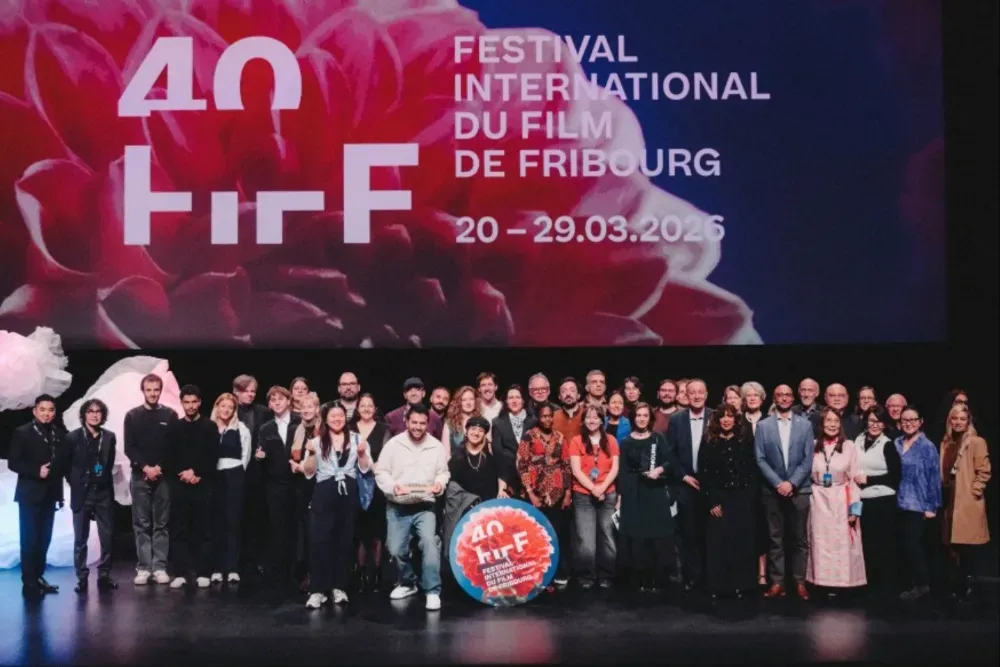
The Fribourg International Film Festival (FIFF) celebrated its 40th edition, reaffirming its essence: a loyal audience, politically engaged programming, and a deep interest in underrepresented cinema in Europe.

This year's edition, which took place from March 20 to 29 in the Swiss city, attracted over 51,000 attendees to in-person and online screenings, in a city with a population of only 40,000. This demonstrates the festival's strong relationship with its local audience. FIFF continues to operate as an audience-focused and curation-driven festival, where films are seen, shared, and debated in theaters and throughout the city.


The festival's programming focused on films from underrepresented regions of the world on European screens, especially Africa, Asia, and Latin America, including a spotlight on Colombian cinema. There was also room for works emerging from conflict zones and politically fragile contexts.

Artistic director Thierry Jobin stated that the festival was born as a window to the world, especially to the Global South, seeking films that 'had to be made'. The impact of FIFF on participants over the years was evident in the videos sent by filmmakers from Iran, Morocco, India, and China during the closing ceremony.

The introduction of the Fribourg Cinema Award was a clear sign of the festival's evolution. This lifetime achievement award, along with an honorary doctorate, seeks to recognize filmmakers whose work addresses contemporary social and political issues.

Tunisian director Kaouther Ben Hania ('The Voice of Hind Rajab') was the first recipient, reflecting the festival's commitment to cinema that addresses relevant issues. Ben Hania, who describes herself as an 'eternal student', stated that she makes films 'to learn... each film is like doing a PhD'. The award signals FIFF's growing ambition to stand out locally and internationally, considering cinema not only as an art form but also as a tool to study and examine contemporary issues.

FIFF is distinguished by its relatively compact programming. In recent years, the festival has reduced the number of films screened, which has increased the visibility of each title.

By not competing with dozens of overlapping premieres, films tend to circulate more widely among the audience, creating a common point of reference. Thierry Jobin noted that by presenting fewer films, the festival achieved a larger audience, allowing each film to have a more valuable place. This was evident with the audience award winner, 'DJ Ahmet' by Georgi M. Unkovski, which generated strong word-of-mouth and will premiere in Swiss cinemas next week.

FIFF is distinguished by its jury structure. In addition to the international jury of industry experts, the festival has a youth jury, a seniors' jury, an ecumenical jury, and juries composed of students and artists from other disciplines, many of whom are not industry professionals.

This mix of perspectives shapes a prize list that goes beyond insider opinion. The result is a range of winners that do not always align, demonstrating how films impact differently depending on who is watching. At a festival built around its audience, this feels intentional. The festival builds audience reaction directly into the process.

The awards reflected the tone of this year's programming, with several major prizes going to films shaped by political pressures. The Grand Prix went to Ali Asgari's 'Divine Comedy', a satirical look at censorship and bureaucracy in Iran, while the Special Jury Award honored 'My Father’s Shadow' by British-Nigerian filmmaker Akinola Davies Jr.

Ukrainian cinema also stood out, with Zhanna Ozirna's 'Honeymoon' picking up both the critics' choice and youth jury awards. In the short film competition, 'Prehistoric' by Iranian filmmaker Armin Etemadi took the top prize, continuing a winning streak for Iranian short films at the festival. In accepting their awards, several filmmakers spoke directly about the situations in their home countries, whether in Iran or Ukraine. Asgari, who was unable to attend the festival, sent a video message asking for a minute of silence for the victims of political violence in Iran instead of applause.
Editorial Note

This content has been synthesized and optimized to ensure clarity and neutrality. Based on: Variety