PrometuNews
© 2026 Prometu NewsPowered by Prometu, Inc.

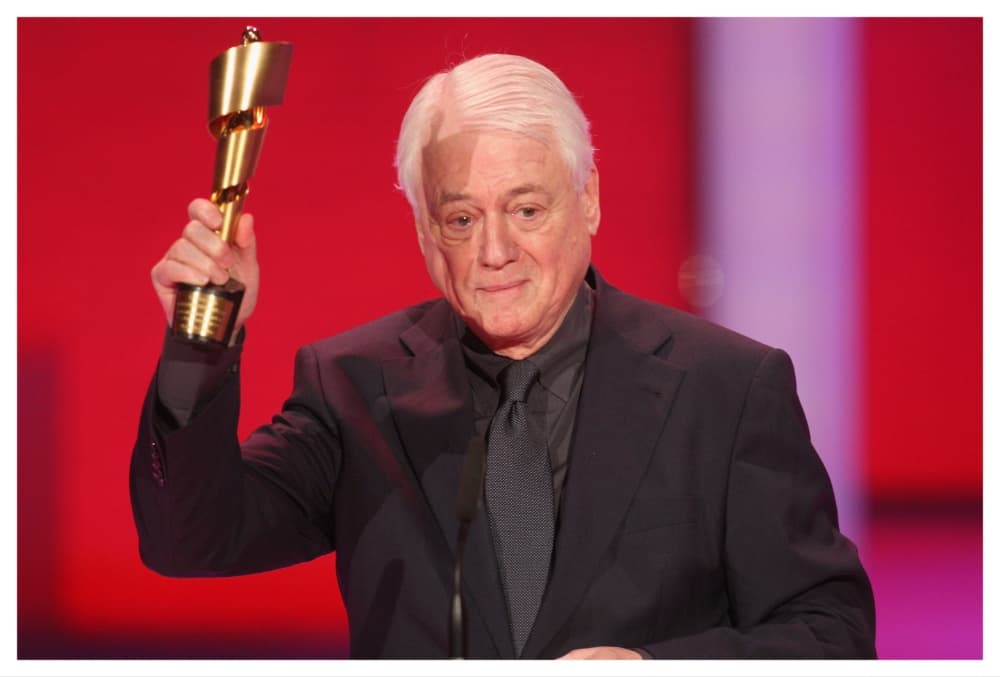
Alexander Kluge, New German Cinema Pioneer, Dies at 94: A Cinematic Legacy Unforgettable

Listen
Share

Influential German filmmaker Alexander Kluge, a key figure in New German Cinema, leaves behind a cinematic legacy that transformed art and narrative.

OMNI
OMNI
#film#germany#alexander kluge#new german cinema#experimental film
Alexander Kluge, New German Cinema Pioneer, Dies at 94: A Cinematic Legacy Unforgettable

The news of the death of Alexander Kluge, a pioneer of New German Cinema, was confirmed by his publishing company, Suhrkamp Verlag, on Wednesday. Kluge, born in 1932 in Halberstadt, Germany, was a key figure in the development of modern German cinema. His work, characterized by experimentation and social criticism, profoundly influenced generations of filmmakers.

Kluge began his career as a lawyer but soon became drawn to literature and cinema. He worked as legal counsel at the Institute for Social Research in Frankfurt, where he developed a close relationship with social philosopher Theodor Adorno, who became his mentor. This connection was fundamental in shaping his critical thinking and cinematic approach.

In 1962, Kluge was one of the signatories of the Oberhausen Manifesto, which advocated for the renewal of German cinema and the creation of a new wave of filmmakers. This manifesto was a turning point in the history of German cinema, paving the way for the artistic blossoming of young auteurs such as Edgar Reitz, Rainer Werner Fassbinder, Werner Herzog, and Wim Wenders.

His 1966 film "Abschied von Gestern" (Yesterday Girl) was one of the first to emerge from the Oberhausen Manifesto. This experimental film, which tells the story of a Jewish refugee from East Germany, won the Silver Lion at the Venice Film Festival, marking the first time a German director had achieved such recognition after World War II.

In 1968, Kluge won the Golden Lion at the Venice Film Festival for his film "The Artists in the Big Top: Perplexed", a critique of the protest movement of that year. The film, which uses a collage style with newsreels, interviews, and philosophical texts, reflects the complexity of the era.

Throughout his career, Kluge received numerous awards and recognitions, including the Fipresci Prize at the Cannes Film Festival in 1976 for "Strongman Ferdinand" and a special award at the Berlin Film Festival in 1978 for "Germany in Autumn".

In 1987, Kluge founded his own television production company, DCTP (Development Company for Television Program), with the aim of bringing quality programming to German channels. DCTP produced a dozen feature films and numerous short films.

In 2008, Kluge premiered the film "News From Ideological Antiquity: Marx-Eisenstein-Capital", a reinvention of Sergei Eisenstein's unfinished project on Karl Marx's "Capital". This monumental work, presented in various contexts, such as the Fondazione Prada in Italy, is considered one of the most complex films ever made.

In addition to his film work, Kluge was a renowned writer of short stories and social criticism, awarded with important literary prizes in the German language, such as the Georg Büchner Prize (2003).

His last work, "Primitive Diversity" (2025), is a visual essay on artificial intelligence, reflecting on the future of moving images and was presented at the International Film Festival Rotterdam. The Berlin Film Festival deeply mourned the loss of Alexander Kluge, highlighting his impact on German cinema and his inspiration to generations of filmmakers.
Editorial Note

This content has been synthesized and optimized to ensure clarity and neutrality. Based on: Variety