
Balcony Solar Spreads in US, Fueled by Legislation and Energy Crisis
Balcony solar, popular in Germany, is expanding across the US, driven by favorable legislation and rising energy costs.

#solar energy#renewable energy#balcony solar#Illinois#Enphase
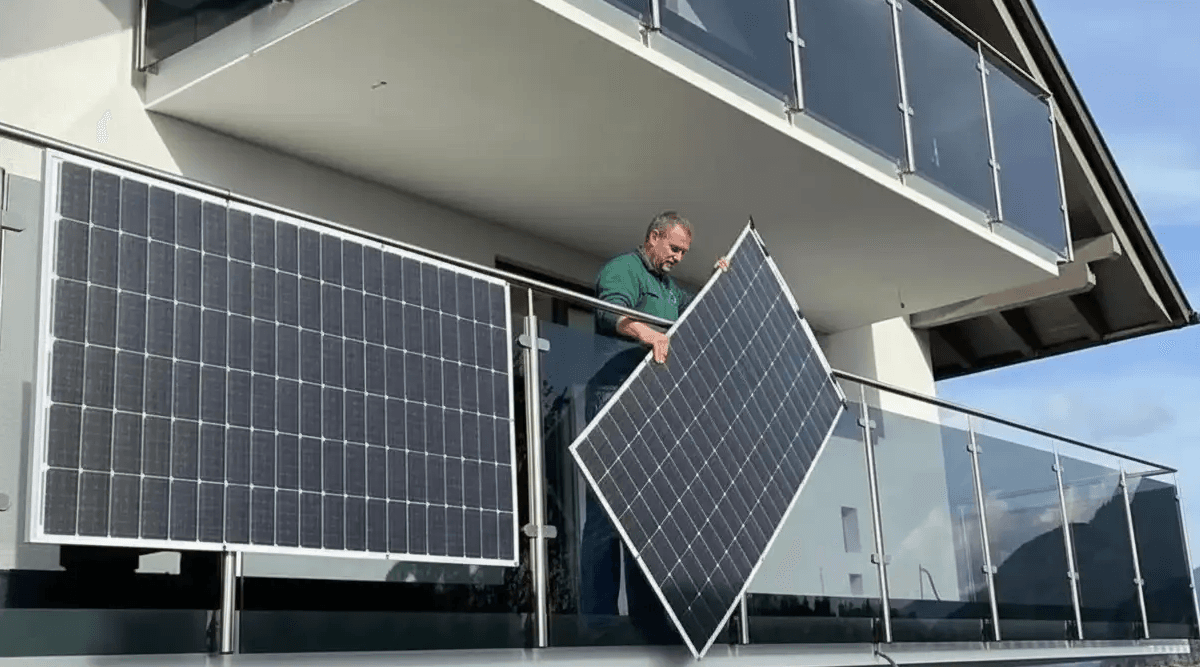
The balcony solar trend, popular in Germany, is beginning to expand in the United States, offering an accessible alternative for consumers. These systems, which consist of solar panels that plug directly into an outlet, allow users to offset their electricity costs in a simple way. Unlike traditional solar systems, balcony panels are portable, meaning they can be easily moved from one home to another.

This approach has gained popularity in response to the energy crisis and the rising prices of fossil fuels, such as coal, oil, and natural gas.
The balcony solar movement began to take shape about four years ago, with Ukraine as a pioneer in the adoption of plug-in solar panels, especially after the Russian attacks on its power plants. Germany was another country that quickly adopted this technology, taking advantage of government subsidies. According to SolarPower Europe, German households registered 276,000 balcony panels in 2023, adding 435,000 units in 2024 and exceeding one million last year.
The balcony solar movement began to take shape about four years ago, with Ukraine as a pioneer in the adoption of plug-in solar panels, especially after the Russian attacks on its power plants. Germany was another country that quickly adopted this technology, taking advantage of government subsidies. According to SolarPower Europe, German households registered 276,000 balcony panels in 2023, adding 435,000 units in 2024 and exceeding one million last year.
The German market has attracted the interest of US companies, such as Enphase, based in California. In 2023, the company launched its 'Enphase® IQ® Balcony Solar System' for German households, designed for plug-and-play installation, allowing apartment residents and homeowners with limited roof space to generate their own clean energy from balconies, patios, and small outdoor areas. This initiative seeks to facilitate access to renewable energy and reduce dependence on traditional energy sources. The expansion of this technology in the United States represents an opportunity to diversify energy sources and promote sustainability.
In the United States, balcony solar has faced two main obstacles: the absence of state legislation that allows the injection of electricity into the home system without prior authorization from the utility company, and the restrictions of owners and homeowners associations.
In the United States, balcony solar has faced two main obstacles: the absence of state legislation that allows the injection of electricity into the home system without prior authorization from the utility company, and the restrictions of owners and homeowners associations.
Illinois is leading the way in the United States, with the proposed SB 3104 bill, which seeks to eliminate the prior authorization requirement and replace it with a simple notification to the utility company. This law would also prohibit additional fees or installation expenses and prevent owners and homeowners associations from imposing unreasonable obstacles. Representative Daniel Didech (D-Buffalo Grove), sponsor of the bill, stated that this legislation 'makes solar energy more accessible, affordable, and achievable for everyone'.
Senator Rachel Ventura (D-Joliet), the main sponsor, emphasized that plug-in solar are 'small, low-cost solar panels that plug directly into a standard outlet and help offset energy use'. She added that it does not require 'expensive installation, no major construction, no waiting months for approval'.
Senator Rachel Ventura (D-Joliet), the main sponsor, emphasized that plug-in solar are 'small, low-cost solar panels that plug directly into a standard outlet and help offset energy use'. She added that it does not require 'expensive installation, no major construction, no waiting months for approval'.
Bill SB 3104 would establish more relaxed rules for small balcony solar systems, generally covering those in the 300 to 400 watt category, although it also provides for additional restrictions for larger systems of up to 1,200 watts. In addition, the law requires that these systems be certified by a nationally recognized laboratory. UL Solutions, a certification laboratory based in Illinois, announced in January the launch of a new certification program focused on balcony solar systems. This program is based on the UL 3700 standard, which defines the construction, performance, and labeling criteria tailored to plug-in solar systems, offering manufacturers a reliable basis for designing products that meet safety and performance requirements. Ken Boyce, UL's Vice President of Principal Engineering, highlighted that UL 3700 helps mitigate potential risks and opens the way for more people to access resilient solar power.
The war in Iran, driven by the policies of the Trump administration, has disrupted global commodity markets, raising the prices of coal and other fossil fuels. This, in turn, has increased interest in energy alternatives, such as balcony solar. Utah is the only state that has passed a comprehensive balcony solar law for systems up to 1200 watts. Other states, such as Maryland, Minnesota, New Hampshire, New York, Pennsylvania, Vermont, and Virginia, are considering similar legislation.
The rise in coal prices, partly due to the disruption of natural gas supplies from the Middle East, has affected both imported and domestically produced coal. Transportation accounts for more than 41% of the cost of coal delivered to power plants in the United States, and these costs are rising along with the increase in the price of diesel. The U.S. Energy Information Agency emphasizes that increases in oil and diesel prices can significantly affect the cost of transportation and, therefore, the final price of coal.
The rise in coal prices, partly due to the disruption of natural gas supplies from the Middle East, has affected both imported and domestically produced coal. Transportation accounts for more than 41% of the cost of coal delivered to power plants in the United States, and these costs are rising along with the increase in the price of diesel. The U.S. Energy Information Agency emphasizes that increases in oil and diesel prices can significantly affect the cost of transportation and, therefore, the final price of coal.
Related Stories