Tensions in the Strait of Hormuz, stemming from Iran's blockade, have highlighted the fragility and essential nature of the global maritime economy. This event has led to a surge in oil prices and exposed the dependence of modern economies on maritime infrastructure.
In the United States, a quiet crisis is unfolding in the shipbuilding industry: a shortage of 200,000 to 250,000 workers in the next decade, according to a McKinsey analysis. This situation encompasses critical roles like welding, soldering, and frontline management, adding to an aging workforce, where 27% of shipbuilders are 55 or older.
The decline in U.S. shipbuilding is the result of a decades-long generational shift. Throughout the 20th century, fewer young workers, especially millennials, pursued careers in trades. Many were drawn to college degrees and white-collar careers, influenced by the perception that blue-collar jobs were grueling and unstable.
Now, with the retirement of the older generation, the pipeline of young workers is thin. This vulnerability, however, presents an unexpected opportunity, especially for Gen Z workers seeking stable careers.
Traditional entry-level corporate roles are becoming harder to land as companies pull back hiring amid economic uncertainty and advances in artificial intelligence.
Fraser Patterson, CEO of Skillit, an AI-powered hiring platform, told Fortune: "This is absolutely a rare window for young workers because the demand is real, funded, and seemingly long-term." These jobs are tied to multi-decade investment cycles and offer a path to strong earnings, skill development, and stability without requiring a traditional four-year degree.
The shipbuilding industry has experienced a significant drop in the production of commercial vessels. The U.S. has gone from producing about 5% of the world's ocean-going commercial vessels in the 1970s to just 0.2% today.
The average annual wage for ship and boat building workers is about $67,000, while ship engineers can earn six-figure salaries. Business leaders are pushing to rebuild domestic manufacturing and reduce reliance on foreign shipyards, which implies increasing the competitiveness of jobs, starting with wages.
Former U.S. Navy Secretary John Phelan stated in his confirmation hearing that Trump's focus for the Navy Department was "shipbuilding, shipbuilding, shipbuilding," and raising workers' wages has been a priority.
The former president signed an executive order with the goal of "Restoring America's Maritime Dominance." Phelan commented that the issue of wages is crucial, as employees can earn a similar salary working at Amazon or Buc-ee's gas stations.
Unionized workers at Huntington Ingalls Industries shipyards in Pascagoula, Mississippi, announced a new contract that will grant an immediate 18% base wage increase, with a total wage increase projected between 35% and 47% over the next five years. This is the largest wage increase in Ingalls Shipbuilding history.
HII is the largest military shipbuilder in the U.S. and the largest source of manufacturing in the state of Mississippi.
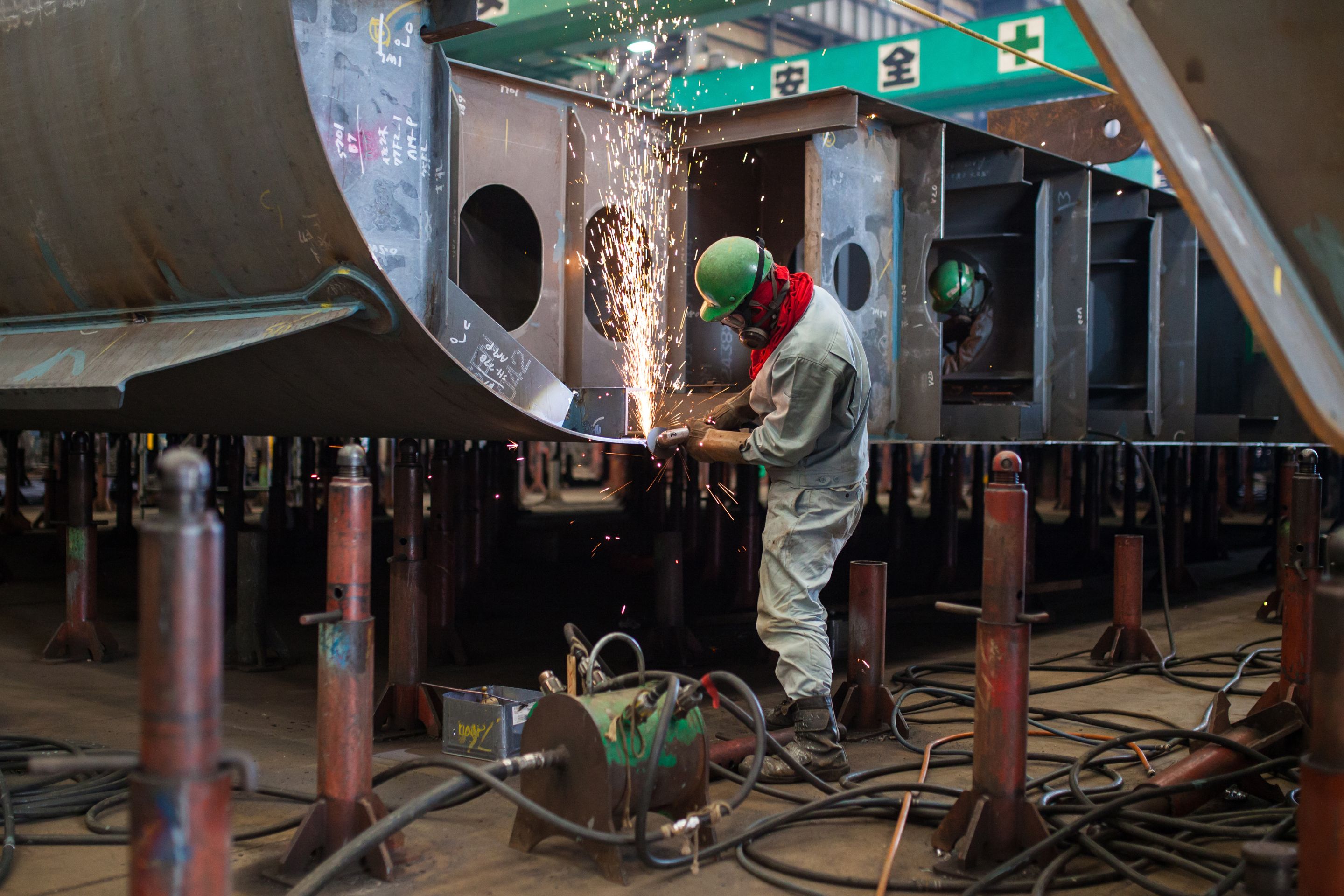
Shipbuilding encompasses a wide range of trades, requiring workers from almost all skilled trades, such as welders, electricians, pipefitters, and machinists, roles that demand precision and are less exposed to automation.
To attract workers, companies have begun to expand apprenticeship programs and invest in training pathways that reduce barriers to entry. For many roles, workers are paid while they learn on the job, often without incurring student debt.
Apprentices interviewed by 60 Minutes at a Philadelphia shipyard said that the roles outperformed their previous jobs, from Amazon grocery picking to cake decorating, not only in terms of salary, but also in long-term prospects.
One apprentice commented: "I would tell my friend that instead of paying out of pocket to go to a trade school, you're getting paid while you learn here the whole time."