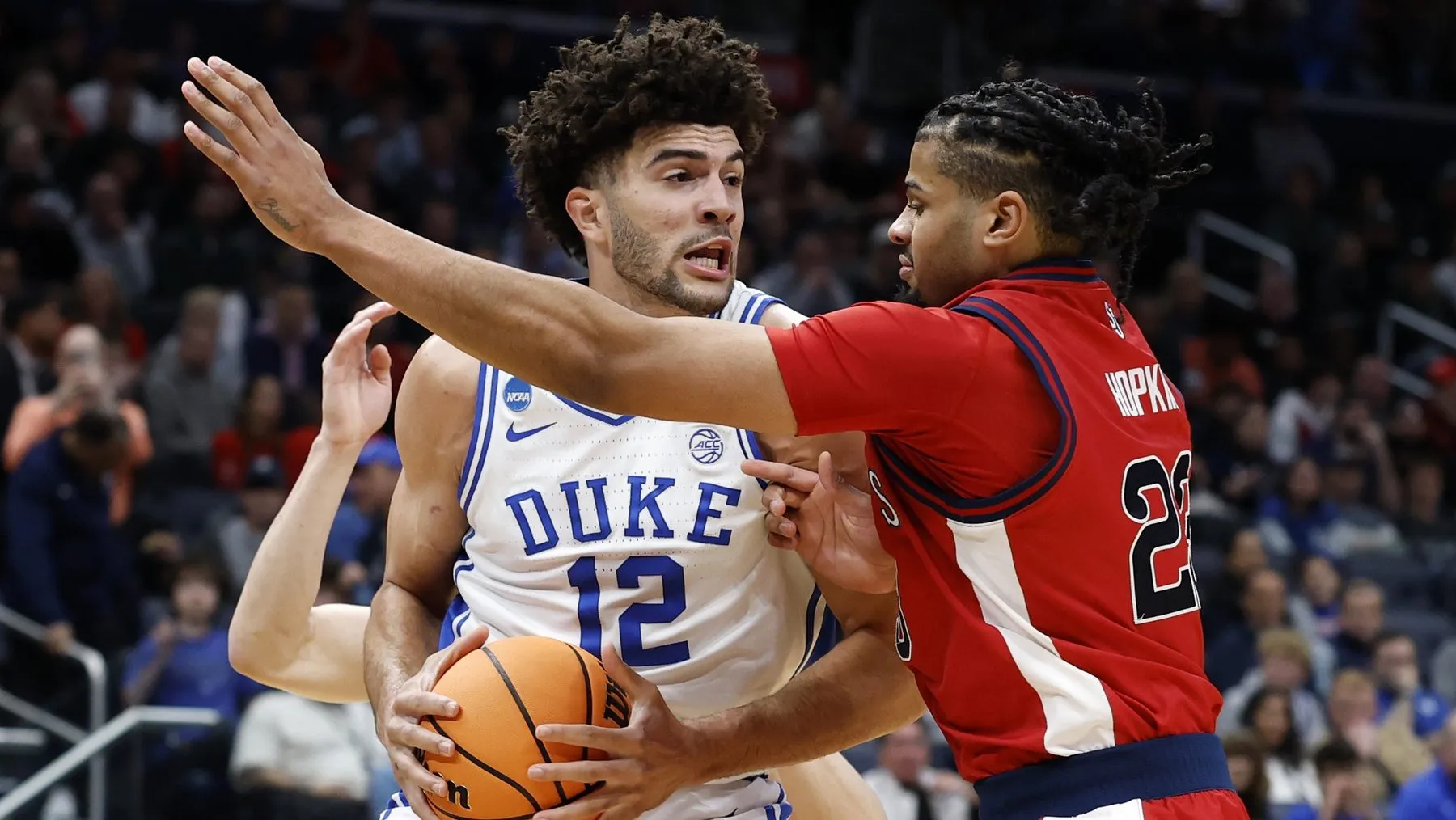
In the context of the new era of college basketball, Duke and St. John's faced off with opposing approaches to their roster composition. St. John's, under the direction of Rick Pitino, embraced the strategy of recruiting transfer players, taking advantage of unrestricted free agency and the possibility of unlimited transfers. This tactic strongly contrasts with Duke's, led by coach Jon Scheyer, who continued to bet on youth, building his team around star freshmen like Cameron Boozer.
Duke's 80-75 victory in the Sweet 16 in Washington D.C. demonstrated the effectiveness of their strategy, with key players like Isaiah Evans and Cameron Boozer leading the attack. The game was marked by a constant alternation in the score, evidencing the competitiveness between both teams. Duke's victory highlights the importance of strategy and talent management in contemporary college basketball.
Jon Scheyer, who took over as coach in 2022, has maintained a recruiting strategy that prioritizes young talent and internal development, unlike St. John's tactic. Scheyer, a Duke alumnus, has navigated the changing landscape of college basketball, including the NIL (Name, Image, and Likeness) era and the possibility of unlimited transfers. The retention of key players and the incorporation of new talent, such as the Boozer brothers, have been fundamental to Duke's success.
Scheyer's strategy differs from that of other coaches who have chosen to rebuild their teams through the transfer portal. Duke, with its prestige and financial resources, has managed to maintain a solid core of players, attracting young promises and competing at the top of college basketball.
The participation of Caleb Foster, despite a foot injury, was a determining factor in Duke's victory. Foster, a key player who suffered a fracture in the last game of the regular season, returned to the team as a last-minute addition. His experience and leadership, although limited by the injury, were essential for the team, according to coach Scheyer.
Foster, who had been in doubt for the game, demonstrated his commitment to the team by coming off the bench and contributing 11 points. Coach Scheyer's emotion when talking about Foster reflects the importance of the player and his impact on the Duke team. The victory highlights the importance of team cohesion and fighting spirit.
Duke's victory over St. John's, driven by its young talent and the leadership of key players, raises the question about the sustainability of its strategy in the long term. Although the team has demonstrated its ability to compete at the highest level, the inexperience of some players could be a limiting factor in their quest for a championship.
Duke's ability to reach a second consecutive Final Four and win the championship will depend on its ability to maintain team cohesion and the development of its young talents. Scheyer's strategy, based on youth and internal development, will be put to the test in the next rounds of the tournament.
Editorial Note
This content has been processed by our team to ensure neutrality and journalistic clarity. Based on:FrontOfficeSports