#NIH#scientific research#collaborations#science#United States
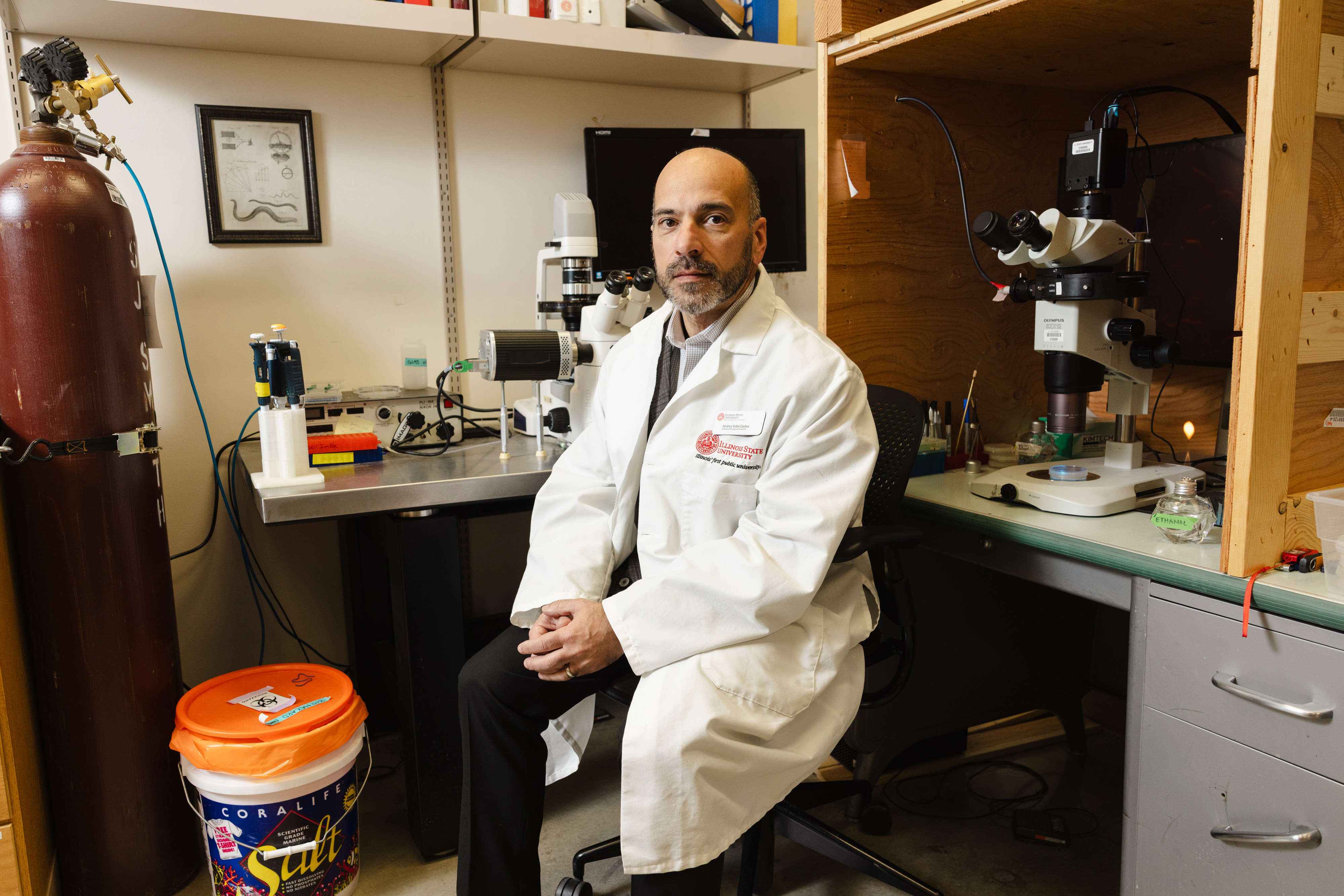
Andrés Vidal-Gadea's neuroscience research, a molecular neuroethologist at Illinois State University, was affected by NIH restrictions. His work focuses on studying the function of genes and finding ways to stop the progression of Duchenne muscular dystrophy.
Vidal-Gadea used nematodes for his experiments, allowing him to study muscle behavior by eliminating genes. Despite obtaining funding from the National Institutes of Health and publishing regularly, he faced criticism from grant reviewers.
These reviewers indicated the need to move from nematodes to mice to validate their findings in animals closer to humans, a crucial step to advance towards clinical trials.
To advance his research, Vidal-Gadea needed to collaborate with institutions that had the right types of mice and the ability to perform the necessary experiments. This led him to seek collaborators who could offer him the tools and resources needed for his studies.
The search for collaborators intensified due to the need to advance research, but was hampered by the restrictions imposed by the NIH. Collaboration with foreign institutions became crucial to access the necessary resources and knowledge.
This situation underscores the impact of policies on the ability of scientists to conduct critical research and advance scientific knowledge.
NIH restrictions on collaborations with foreign institutions directly impact access to crucial resources and knowledge for scientific research. This limitation affects the ability of scientists to conduct exhaustive studies and advance in their fields.
The need for access to specific animal models, such as mice, and the expertise of international collaborators, becomes more critical. Restricting these collaborations can significantly delay scientific progress.
Vidal-Gadea's situation is an example of how policies can hinder research and limit the potential for discovery in areas crucial to human health and well-being.