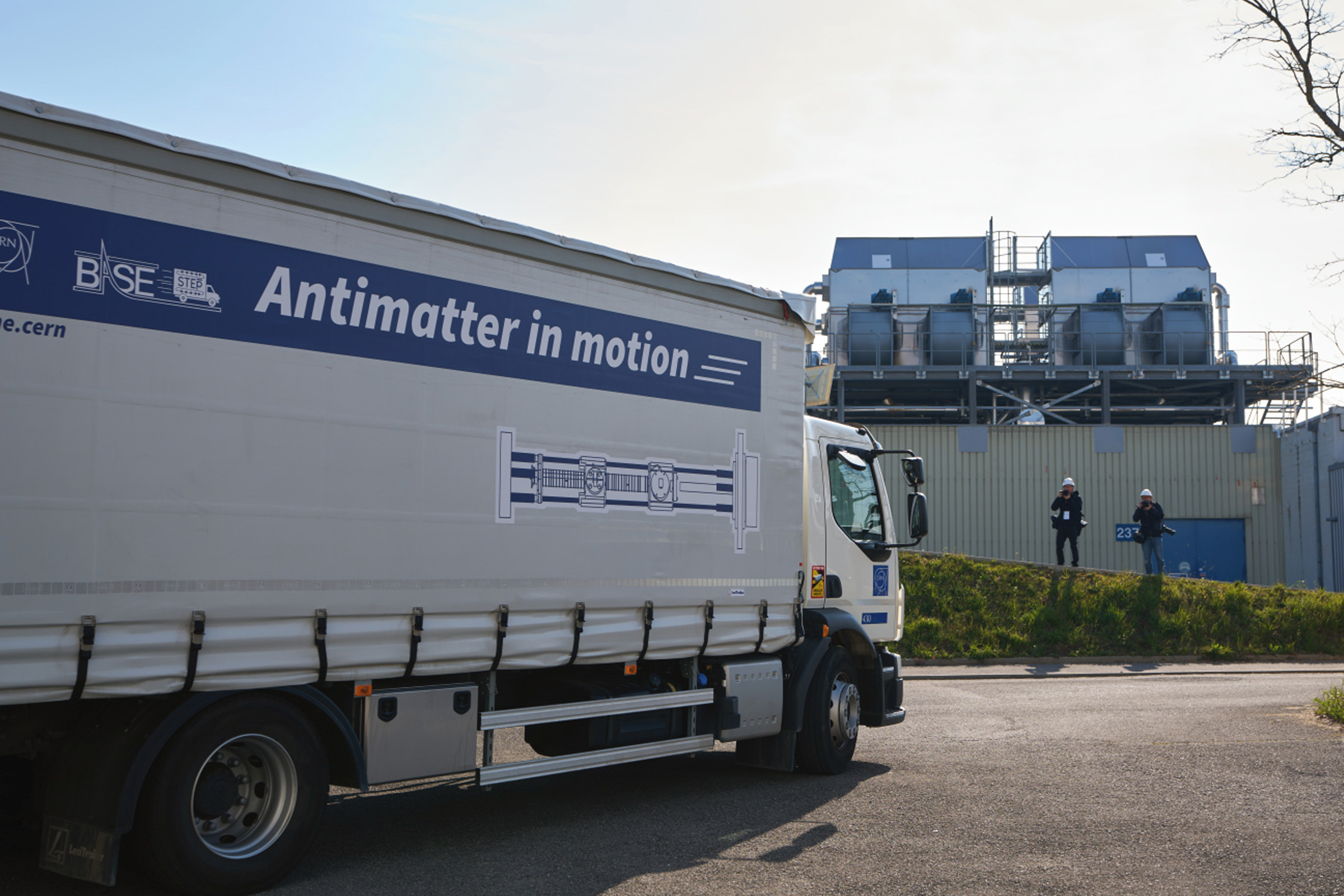
In an unprecedented achievement, a team of researchers at CERN, on the outskirts of Geneva, completed the first delivery of antimatter particles. This milestone, carried out on Tuesday, involved transporting antimatter from one production line to another lab on campus. Antimatter, known for its instability, is notoriously difficult to store, making this accomplishment even more significant. The feat required meticulous planning and execution, demonstrating science's ability to overcome complex challenges.
For the transport, physicists sealed 92 antiprotons in a specially designed vacuum bottle. This bottle was cooled to an astonishing 4 degrees Kelvin (-452.47 degrees Fahrenheit). Precision and care were crucial, given that CERN's 'antimatter factory' is the only place on Earth where antiprotons can currently be produced, and can only capture a limited amount. The successful delivery, reaching speeds of up to 26 miles per hour, is a triumph for researchers who dreamed of this achievement since the factory opened over thirty years ago.
Christian Smorra, the physicist who led the project, expressed his satisfaction with the success, saying: “Now it’s finally possible”. Stefan Ulmer, Smorra’s colleague, described the event as “something humanity has never done before, it is historic.” The celebration included the purchase of champagne and an invitation to the entire antimatter community to celebrate this achievement. This success opens new avenues for antimatter research, with significant implications for physics and science in general.
In the event of a failure during transport, the risk to human life is minimal. According to a note from CERN's antimatter hub, the energy released in the event of annihilation of the antiparticles would be approximately one millionth of a Joule. To put this in perspective, a single keystroke on a keyboard releases approximately 10,000 times more energy. Therefore, the transport of antimatter is no more dangerous than any other form of goods transportation. This low hazard allows research to continue without excessive concerns.
This breakthrough is expected to enable researchers in other laboratories to access valuable antimatter, fostering research outside of CERN's labs. Tara Shears, a physicist at the University of Liverpool, celebrated the idea of CERN becoming the 'Deliveroo of antimatter'. This development could accelerate progress in understanding antimatter and its potential applications. The expansion of research to multiple laboratories could lead to faster and more profound discoveries.