#Jane Fonda#Mindfulness#Climate Action#EcoDharma#Community#Mental Health
Jane Fonda, known for her many facets as an actress and activist, did not come to Spirit Rock to offer comfort, but to awaken attention to the inheritance we receive, what we are losing, and what we can still protect. Over the decades, Fonda has transformed and rebuilt structures and movements, from turning fitness into accessible self-care to tackling the climate crisis, demonstrating mindful leadership rooted in invitation, showing how presence, curiosity, and connection can awaken action in every generation.
Fonda has used her visibility to found media outlets, fund grassroots organizations, and engage in uncomfortable conversations in service of collective change. Today, she directs that same attention to the climate crisis, forging relationships with younger artists like Maggie Rogers and deepening her meditation practice with Roshi Joan Halifax.
Spirit Rock's EcoDharma & Transformational Culture (ETCP) program, a three-year initiative launched in January 2025, explores how mindfulness and contemplative practices can support more intentional responses to climate change. This program, which draws on Buddhist teachings, is inclusive and invites participants from diverse religions and backgrounds.
In the context of ETCP, “spiritual” refers to practices that help cultivate awareness, compassion, and resilience, tools for understanding and responding to climate-related stress. The program addresses the intersection of mindfulness, ecological issues, and the urgent need for thoughtful and effective action.
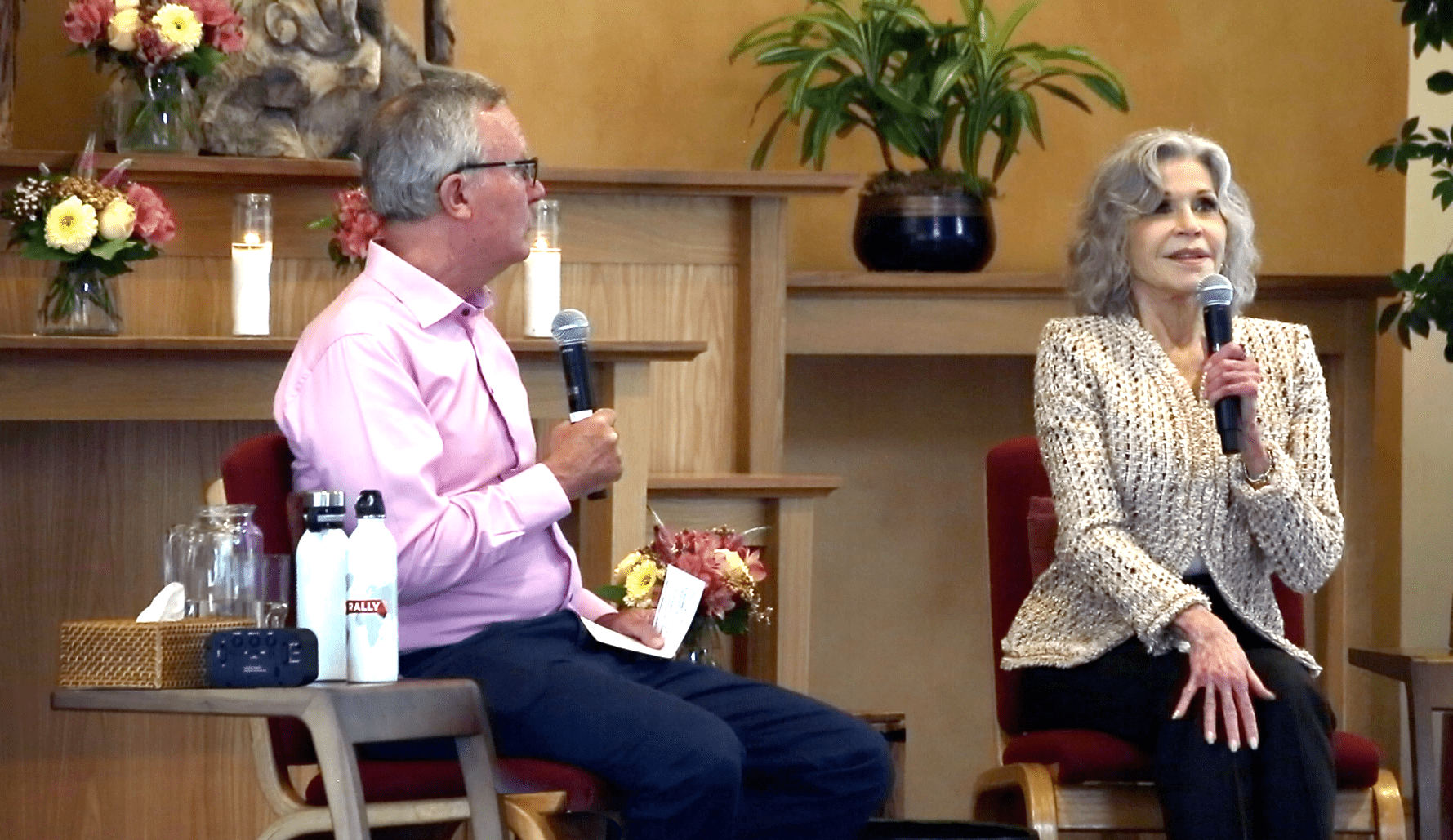
Fonda emphasizes that mindfulness is not an escape, but training, especially in the face of the climate crisis. Her presence at the Spirit Rock Meditation Center resonates with decades of activism, moral reckoning, and an unwavering belief in the connection between inner work and outer action. The conversation with climate journalist Greg Dalton served as a deep reflective inquiry into what it means to stay awake, empathetic, and engaged as time runs out.
Meditation, in this context, is not a way to evade reality, but a tool to understand and respond to the challenges of climate change.
Fonda highlights the importance of empathy as an active discipline, rooted in her life in the arts. “Acting is a profession of empathy,” Fonda explained. “We have to enter the skin of another human being and understand them… You can’t do that without empathy. And you have to have empathy even for someone you don’t like.”
Her insistence on collective action, based on relationship rather than righteousness, was a common thread throughout the conversation. Fonda also spoke about how belonging to movements, rather than acting alone, made vulnerability possible.
After years of protest through Fire Drill Fridays, Fonda and a small group of collaborators identified a gap between public pressure and political change, leading to the creation of the Jane Fonda Climate PAC, a political action committee focused on down-ballot races and state and local positions. The results have been remarkable, with hundreds of climate champions elected, many of them women and women of color.
Spirit Rock's EcoDharma program offers additional entry points and ways to participate, with an emphasis on joy-based action, interconnection, and resilience, designed for people overwhelmed, polarized, or exhausted by climate discourse.
Fonda reminds that hope is not something we wait for, but something we practice together. The conversation revolved around courage and how Fonda continues to speak openly. “It took me a long time to open my heart,” she said. What changed was not confidence, but belonging. “Being part of a movement… allows you to be vulnerable.”
Fonda spoke about care, sleep, community, and working with people she admires as essential, not as indulgences. EcoDharma invites stillness to inform our response, allowing mindfulness to expand into care and care into action.