Prometu News LogoNews
© 2026 Prometu NewsPowered by Prometu, Inc.
Politics4 min...

Trump's Oil Price Influence Fades: Why Markets & Americans Are Tuning Out

Listen
Share

Trump's strategy to influence oil markets and the US economy appears to be losing credibility, with rising prices and declining public trust.

OMNI
OMNI
#Donald Trump#Economy#Oil#Politics#United States
Trump's Oil Price Influence Fades: Why Markets & Americans Are Tuning Out

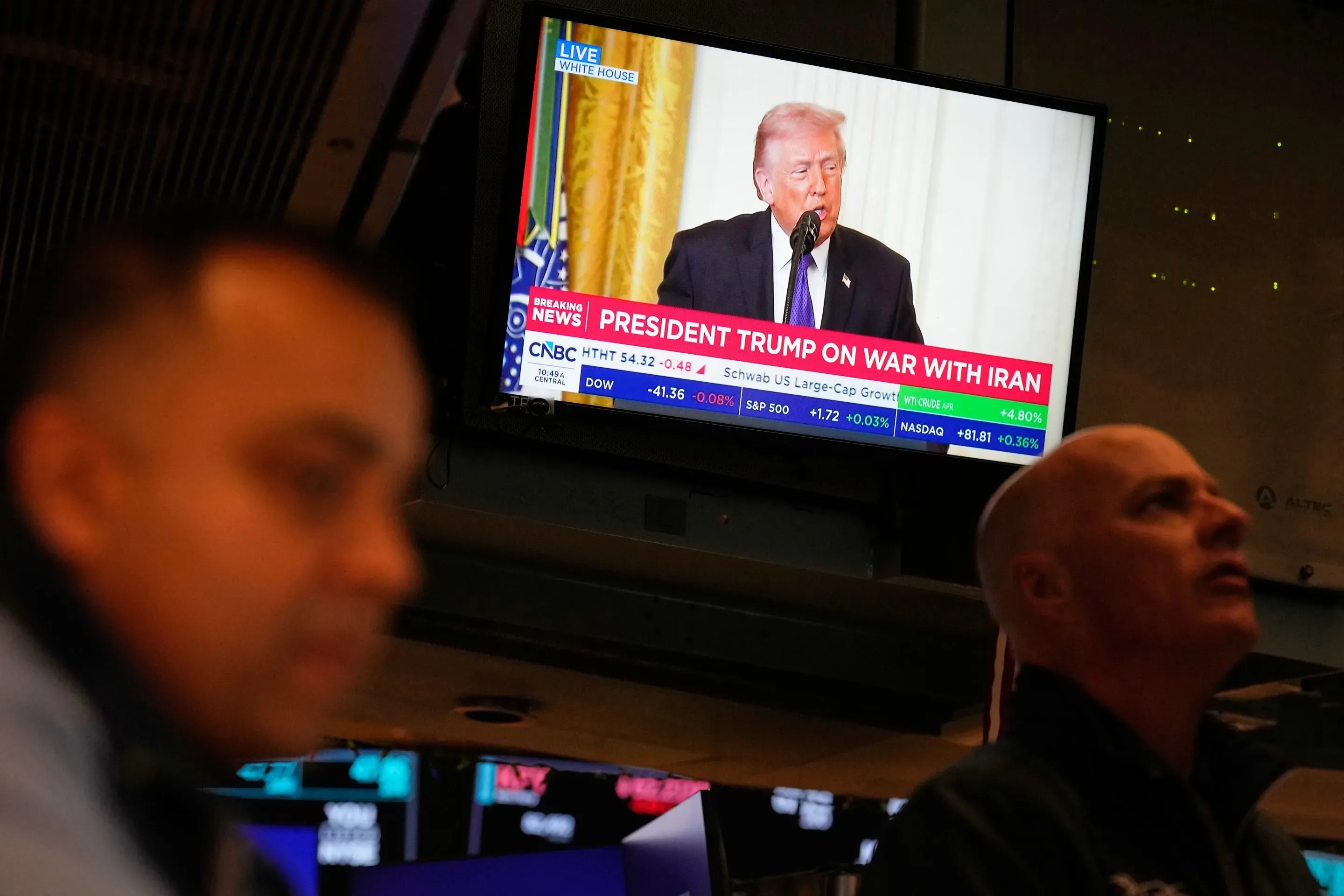
Amid the escalating conflict with Iran, former President Donald Trump has focused his efforts on calming financial markets. His primary goal has been to prevent oil prices from rising, stocks from plummeting, and interest rates from increasing. However, despite his attempts, the results have been mixed.

Trump has resorted to social media posts and public statements to minimize the impact of the situation. He has claimed that the markets are responding better than expected, despite the decline of the S&P 500 index over the last five weeks and the rise in oil prices by approximately 60%. At an investor summit, Trump stated: "I thought oil prices were going to go up higher than they are now, and I thought we would see a bigger drop in stocks. It hasn't been that bad."

The administration has avoided aggressively communicating to voters the economic consequences of the conflict with Iran. Instead, it has focused on containing any damage in the financial markets, which have experienced significant fluctuations due to expectations of a ceasefire or escalation in the conflict.

The former president has shown the extremes of his communication strategy, as demonstrated by his social media post before the opening of the US stock market, where he claimed that great progress had been made in peace talks with Iran, while also threatening civilian infrastructure, such as desalination plants, if an agreement was not reached "shortly." The White House sees the stock, energy, and bond markets as a way to indirectly reach voters. Trump has based his economic agenda on low prices at the gas pump, solid gains in 401(k) accounts, and lower mortgage rates.


Trump's strategy appears to be losing effectiveness, as his various statements have failed to change the reality that a large portion of the world's energy supply is affected by the conflict. According to a March survey by The Associated Press-NORC Center for Public Affairs Research, only 38% of adults in the United States approve of the way Trump is handling the economy, and only 35% support him in relation to Iran.

Gene Sperling, a top economic advisor in the Democratic administrations of Clinton, Obama, and Biden, noted that voters can make a direct connection between the prices at the gas stations and Trump's decision to attack Iran. Sperling stated that "simplistic jawboning" of the markets is insufficient for a public that is paying the price, with gasoline exceeding $4 per gallon nationwide.

Jeffrey Sonnenfeld, a professor at the Yale University School of Management and co-author of the book "Trump's Ten Commandments: Strategic Lessons from the Trump Leadership Toolbox," states that uncertainty is increasing. Sonnenfeld adds that "as the messaging to calm markets with false assurances is having diminishing credibility in financial markets, so, too, has Trump diminished public confidence".

Graham Steele, a Biden-era Treasury official, noted that Trump's messaging techniques "can work temporarily, but they have diminishing returns, over time," if they are detached from actual policies and results. Steele added that the markets "are no longer responding in the same way."

The University of Michigan's Consumer Sentiment Index for March fell to 53.3, its lowest level since December. Joanne Hsu, director of consumer surveys, attributed the financial market volatility "in the wake of the Iran conflict" as the cause of the reduced confidence in the economy for middle and upper-income households.

Gus Faucher, chief economist at PNC Financial Services, emphasized that low levels of consumer sentiment do not automatically signal a recession. However, he said consumers would have to see lower gas prices, a stable stock market, and reduced mortgage rates to feel better about the economy, which likely means a definitive resolution to the conflict rather than a series of Trump's pronouncements.
Editorial Note

This content has been synthesized and optimized to ensure clarity and neutrality. Based on: Fortune