
Trump Claims Iran Requested Ceasefire: What Conditions Does the U.S. Impose?
Donald Trump states Iran has asked the U.S. for a ceasefire, conditioning it on the opening of the Strait of Hormuz.

#Donald Trump#Iran#Ceasefire#International Politics#Strait of Hormuz
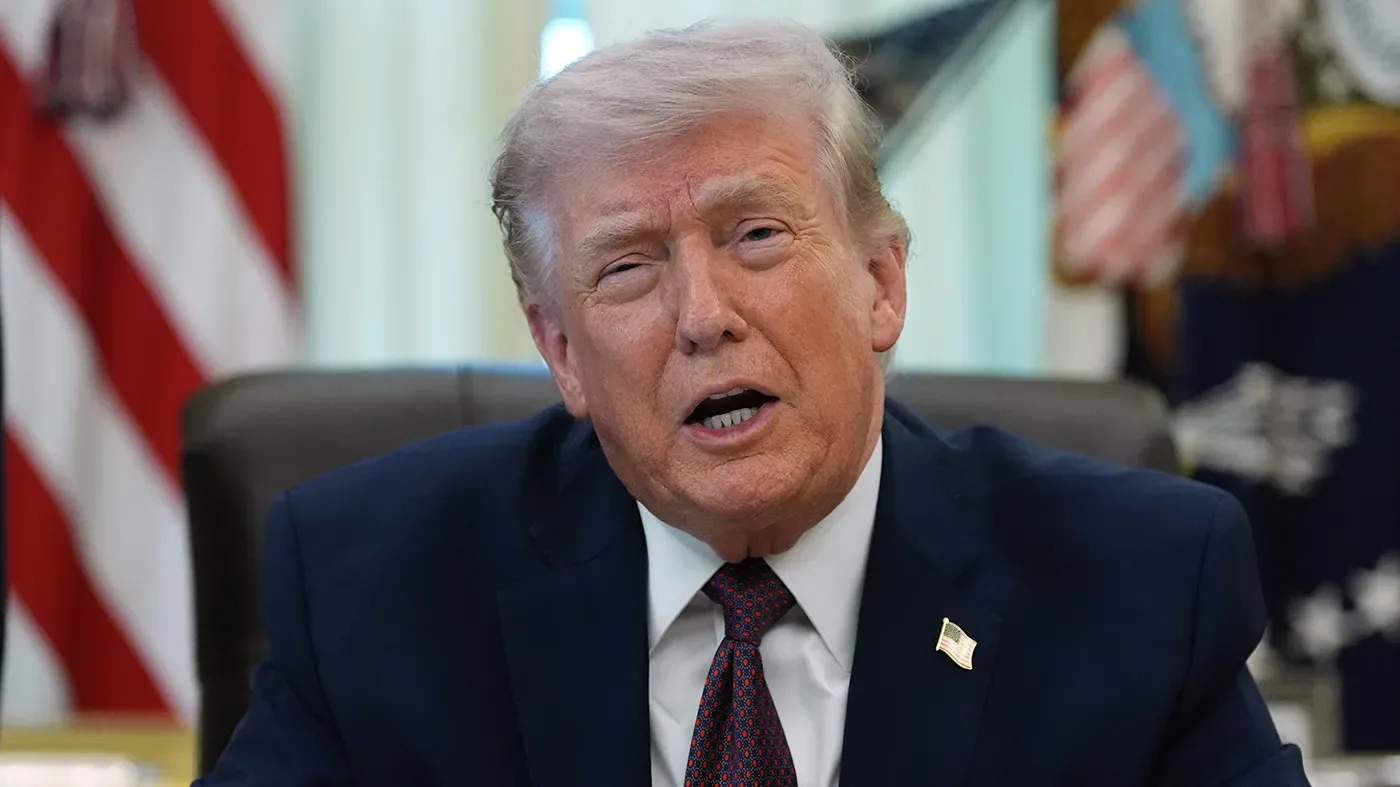
Former President Donald Trump stated this Wednesday that Iran has requested a ceasefire from the United States, an assertion that introduces a new element into the already complex dynamics between both countries. Trump made the announcement through his social media platform, TruthSocial, generating a wave of reactions and speculation about the future of bilateral relations. The Iranian request, according to Trump, is subject to specific conditions related to freedom of navigation in a key maritime route.
Trump did not reveal the identity of the Iranian leader who allegedly made the request, but he highlighted that the new president of the Iranian regime is "much less radicalized and far more intelligent than his predecessors." This characterization suggests a possible opening to negotiation, although Trump maintained a defiant tone in his statement.
Trump did not reveal the identity of the Iranian leader who allegedly made the request, but he highlighted that the new president of the Iranian regime is "much less radicalized and far more intelligent than his predecessors." This characterization suggests a possible opening to negotiation, although Trump maintained a defiant tone in his statement.
Trump's response to the alleged Iranian request was to condition any consideration of a ceasefire on the opening, freedom, and security of the Strait of Hormuz. This maritime route is of vital strategic importance, as it is a key route for the transportation of oil worldwide. Any disruption in the Strait of Hormuz could have serious consequences for the global economy, affecting oil prices and the stability of the energy market.
Trump warned that, until these conditions are met, the United States will maintain a firm stance towards Iran, using strong language when stating that, otherwise, "we are blasting Iran into oblivion or, as they say, back to the Stone Ages!!!" This aggressive rhetoric underscores the persistent tension between both countries, despite the alleged ceasefire request.
Trump warned that, until these conditions are met, the United States will maintain a firm stance towards Iran, using strong language when stating that, otherwise, "we are blasting Iran into oblivion or, as they say, back to the Stone Ages!!!" This aggressive rhetoric underscores the persistent tension between both countries, despite the alleged ceasefire request.
Trump's statement comes in a context of elevated geopolitical tensions in the Middle East, where the United States and Iran have maintained an antagonistic relationship for decades. The economic sanctions imposed by the United States on Iran, as well as Iran's support for armed groups in the region, have contributed to instability and conflict. The possibility of a ceasefire, although conditional, could represent an opportunity to reduce tension and seek a diplomatic solution to the crisis.
However, Trump's rhetoric and the lack of independent confirmation of the Iranian request raise doubts about the veracity and scope of this proposal. The international community is watching the events closely, aware of the implications that any change in the relationship between the United States and Iran could have for regional security and stability.
However, Trump's rhetoric and the lack of independent confirmation of the Iranian request raise doubts about the veracity and scope of this proposal. The international community is watching the events closely, aware of the implications that any change in the relationship between the United States and Iran could have for regional security and stability.
Despite Trump's announcement, there has been no official confirmation from Iran regarding the request for a ceasefire. This lack of confirmation has generated skepticism among analysts and experts in international politics, who point to the possibility that Trump's statement is a strategy to pressure Iran or to obtain internal political gain. The credibility of Trump's claim is further compromised by his history of controversial statements and his tendency to exaggerate or distort reality.
In this sense, it is essential to obtain independent confirmation of the Iranian request in order to assess the seriousness of the proposal and the real possibilities of a ceasefire. Meanwhile, uncertainty and distrust will continue to mark the relationship between the United States and Iran.
In this sense, it is essential to obtain independent confirmation of the Iranian request in order to assess the seriousness of the proposal and the real possibilities of a ceasefire. Meanwhile, uncertainty and distrust will continue to mark the relationship between the United States and Iran.
Political analysts and experts in international relations are debating Iran's possible motivations for seeking a ceasefire with the United States. Some theories suggest that Iran may be seeking to alleviate the economic pressure caused by U.S. sanctions, while others point to a change in strategy by the new Iranian government. There has also been speculation that Iran is seeking to improve its international image and reduce the risk of military conflict with the United States.
However, it is important to keep in mind that these are just speculations and that Iran's true motivations could be much more complex and difficult to discern. The lack of transparency in Iranian politics and the opacity of diplomatic negotiations make it difficult to understand Tehran's real intentions.
However, it is important to keep in mind that these are just speculations and that Iran's true motivations could be much more complex and difficult to discern. The lack of transparency in Iranian politics and the opacity of diplomatic negotiations make it difficult to understand Tehran's real intentions.

Related Stories


OMNI•4 min•

OMNI•4 min•