PrometuNews
© 2026 Prometu NewsPowered by Prometu, Inc.
Politics4 min...

The Decline of the Left in Central Europe: Causes and Consequences

Listen
Share

We analyze the reasons behind the decline of left-wing parties in Central Europe, exploring the ideological, political, and social causes of this phenomenon.

OMNI
OMNI
#Central Europe#Politics#Left Wing#Political Parties#Political Trends
The Decline of the Left in Central Europe: Causes and Consequences

In Hungary, the Hungarian Socialist Party (MSZP), which dominated politics for decades, has lost much of its electorate by adopting liberal positions. Balazs Bocskei, a political scientist, points out that Hungarian society was not ready for Western liberalism. Istvan Hiller, a former minister, attributes the problems to the fragmentation of the left since 2011, when Ferenc Gyurcsany created his own coalition. Hiller estimates that between 20 and 25 percent of Hungarians would vote for a credible left-wing alternative if one existed.

In Poland, the left, represented by the post-communist Democratic Alliance, also suffered a collapse two decades ago, affected by corruption scandals, internal struggles, and disorganization. Jaroslaw Flis, a sociologist at the University of Krakow, highlights that the Polish liberal center became the default political home for much of the progressive electorate.
The Decline of the Left in Central Europe: Causes and Consequences - Image 1

The inability of the left to offer a coherent alternative and internal competition weakened its position. In Poland, the left did not recover from the government of Leszek Miller between 2001 and 2005. In the Czech Republic, the collapse was even more dramatic, with the Social Democrats and Communists losing electoral support. The electoral alliance of left-wing parties failed to surpass the 5 percent threshold in the general elections last October, marking an unprecedented decline in the country's modern history, according to Patrik Eichler, head of the Masaryk Democratic Academy.

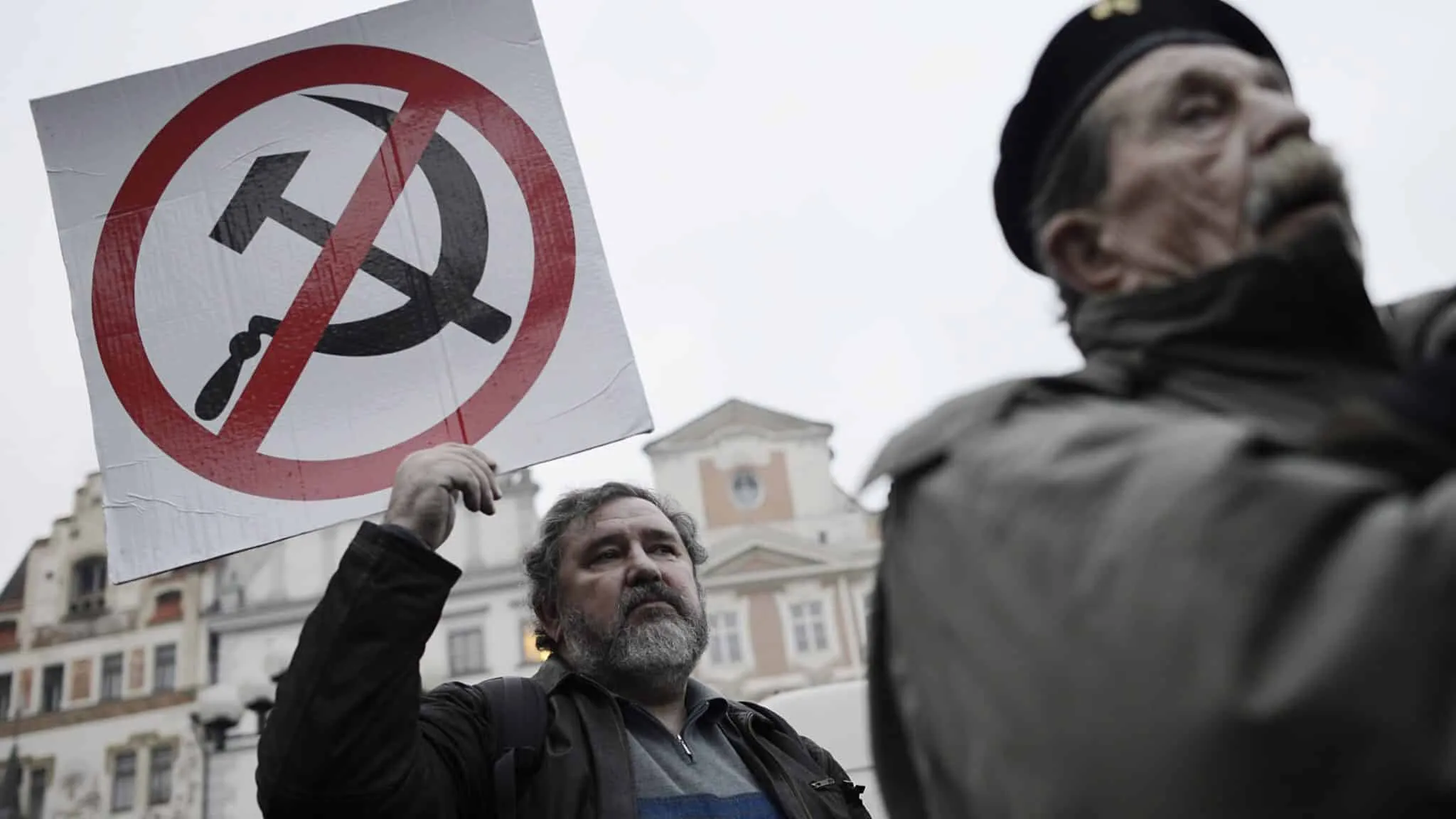
The rise of populist parties, such as Andrej Babis's ANO party in the Czech Republic, which attracted voters from the left, also played a crucial role. These parties promised easy solutions and addressed controversial cultural issues, capturing voters' discontent. The stigmatization associated with the communist past also influenced the perception of left-wing parties.
The Decline of the Left in Central Europe: Causes and Consequences - Image 2

In Hungary, Fidesz, the ruling party, captured workers and the rural electorate, who were once the base of the socialists. Fidesz promoted a social-populist agenda, attacking multinationals, banks, and globalization, resonating in Hungarian society. Political scientist Bocskei believes that Fidesz restored the state as the central caretaker, offering protection and selling the narrative of always being on the side of citizens.
The Decline of the Left in Central Europe: Causes and Consequences - Image 3


In the Czech Republic, the strategy of the ANO party, which combined welfare promises with controversial cultural issues, attracted voters who self-identify as right-wing or center, but who in reality share left-wing values. Analyst Klara Votavova noted that in Czech politics there is a strong narrative that associates the right with democracy and the left with opposition to it. The stigmatization of the communist past also affected the perception of left-wing parties.


In Poland, younger urban voters are adopting Nordic-style social-democratic policies. The Polish left has secured a visible institutional foothold, with Wlodzimierz Czarzasty, leader of the New Left, as the Sejm speaker. Dorota Olko, a member of parliament, points out that the Polish left has tried to rebuild its relevance around concrete social issues, such as housing shortages and rising mortgage costs.

In the Czech Republic and Hungary, a space opens up for the emergence of authentic left-wing parties, built from the bottom up, focusing on social justice and the improvement of public services. Andras Jambor, an independent MP from the radical left Szikra movement, believes that a new momentum could focus on a fairer distribution of wealth, addressing poverty and the housing crisis, and improving public services.
The Decline of the Left in Central Europe: Causes and Consequences - Image 4

The transformation of the left will require the reorganization of parties, the construction of coherent alternatives, and adaptation to new political priorities, such as security. The need to address social inequalities, poverty, and the housing crisis creates fertile ground for the resurgence of social-democratic ideas. Hiller believes in the need to reorganize the scattered and fragmented left-wing parties, which could successfully re-enter politics once Tisza defeats Fidesz, possibly in the April 12 election.

In summary, the decline of the left in Central Europe is a complex phenomenon with multiple causes, from strategic errors and internal divisions to the rise of populism and the stigmatization of the communist past. The future of the left in the region will depend on its ability to adapt to new political and social realities, offering concrete solutions to the problems that concern citizens.
Editorial Note

This content has been synthesized and optimized to ensure clarity and neutrality. Based on: Balkan Insight