
Supreme Court Weighs Trump's Birthright Citizenship Restrictions: Live
The Supreme Court is considering Trump's executive order to limit birthright citizenship, potentially with Trump in attendance.

#Supreme Court#Donald Trump#Citizenship#Politics#USA
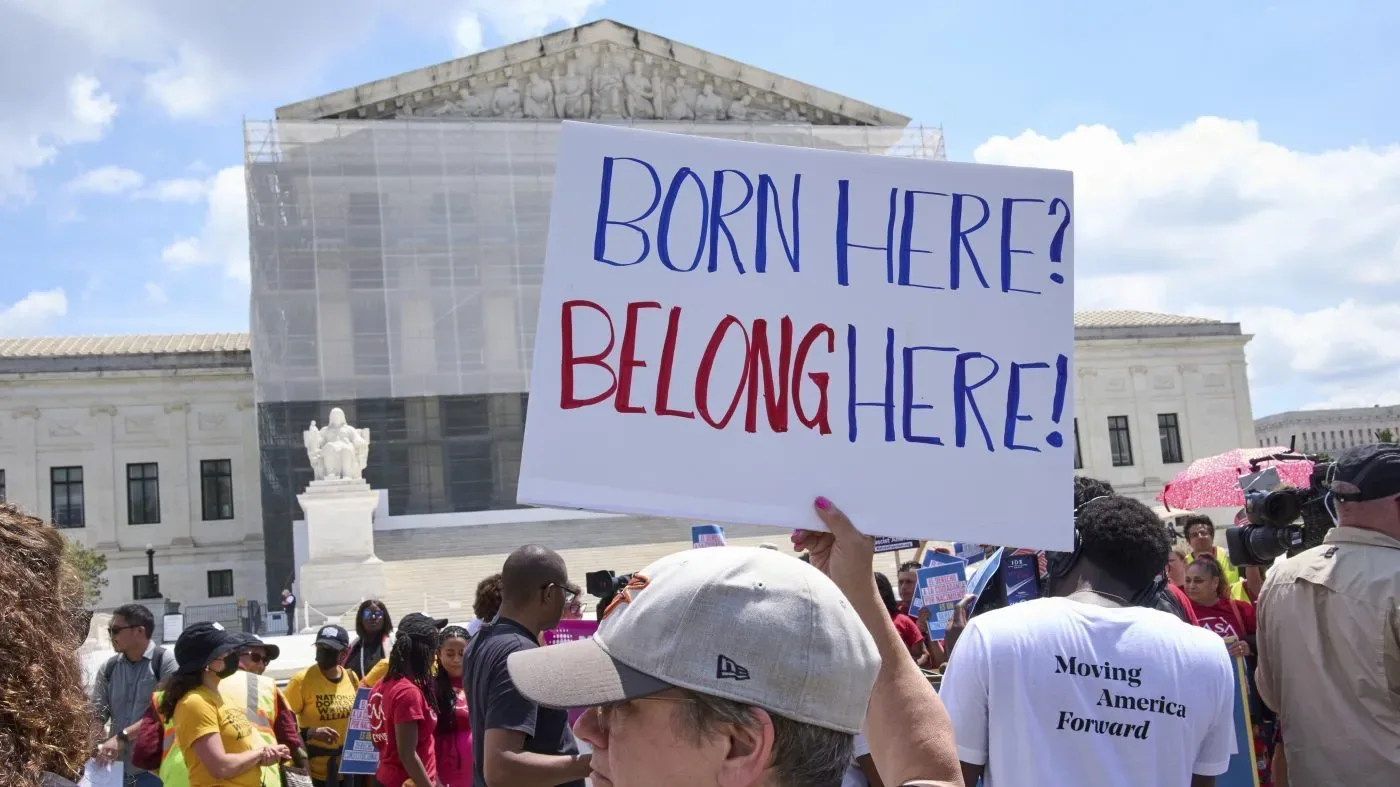
The Supreme Court of the United States is reviewing former President Donald Trump's executive order seeking to restrict the application of birthright citizenship, a principle long established in the American constitution. This review focuses on the interpretation of the 14th Amendment, which has traditionally guaranteed citizenship to almost anyone born on U.S. soil.
Trump's order, issued during his term, sought to limit this right, applying it only to children who had at least one parent with U.S. citizenship or permanent legal status. This measure represents a direct challenge to the conventional interpretation of birthright citizenship that has prevailed for more than a century.
Trump's order, issued during his term, sought to limit this right, applying it only to children who had at least one parent with U.S. citizenship or permanent legal status. This measure represents a direct challenge to the conventional interpretation of birthright citizenship that has prevailed for more than a century.
An unprecedented event could occur during these deliberations, as Donald Trump could become the first sitting president to attend oral arguments before the Supreme Court. His presence would add an additional level of attention and political significance to a case that is already of great national importance.
Trump's potential attendance underscores the importance his administration placed on this issue and his willingness to challenge established constitutional norms. This act could be interpreted as an attempt to exert pressure on the Court, although its actual impact on the judges' decisions is uncertain.
Trump's potential attendance underscores the importance his administration placed on this issue and his willingness to challenge established constitutional norms. This act could be interpreted as an attempt to exert pressure on the Court, although its actual impact on the judges' decisions is uncertain.
Trump's executive order is based on a restrictive interpretation of the 14th Amendment to the United States Constitution. This amendment, ratified in 1868, states that all persons born or naturalized in the United States and subject to its jurisdiction are citizens of the country. The Trump administration argues that this amendment should not apply to children of undocumented immigrants.
Critics of the order point out that this interpretation is contrary to the history and purpose of the 14th Amendment, which was designed to protect the rights of newly freed slaves after the Civil War. Limiting birthright citizenship could have significant consequences for millions of people and fundamentally alter the demographic composition of the United States.
Critics of the order point out that this interpretation is contrary to the history and purpose of the 14th Amendment, which was designed to protect the rights of newly freed slaves after the Civil War. Limiting birthright citizenship could have significant consequences for millions of people and fundamentally alter the demographic composition of the United States.
Solicitor General D. John Sauer, the administration's top Supreme Court litigator, will be responsible for defending the legality of Trump's executive order. His argument will focus on the idea that the traditional interpretation of the 14th Amendment is too broad and that the government has the right to regulate citizenship to protect national interests.
Sauer must convince the judges that Trump's order is consistent with the Constitution and that it does not violate the rights of immigrants. His task will not be easy, as the Supreme Court has historically maintained a broad view of birthright citizenship.
Sauer must convince the judges that Trump's order is consistent with the Constitution and that it does not violate the rights of immigrants. His task will not be easy, as the Supreme Court has historically maintained a broad view of birthright citizenship.
The Supreme Court's decision on Trump's order will have far-reaching consequences for U.S. immigration policy and for the lives of millions of people. If the Court rules in favor of the Trump administration, it could open the door to further restrictions on citizenship and immigration, which could have a negative impact on immigrant communities and the country's economy.
Conversely, if the Court rejects Trump's order, it would reaffirm the importance of the 14th Amendment and protect the rights of citizens born in the United States, regardless of their parents' immigration status. This decision could also have a positive impact on the image of the United States in the world, demonstrating that the country remains committed to the principles of equality and justice.
Conversely, if the Court rejects Trump's order, it would reaffirm the importance of the 14th Amendment and protect the rights of citizens born in the United States, regardless of their parents' immigration status. This decision could also have a positive impact on the image of the United States in the world, demonstrating that the country remains committed to the principles of equality and justice.

Related Stories


OMNI•4 min•

OMNI•4 min•