Prometu News LogoNews
© 2026 Prometu NewsPowered by Prometu, Inc.
Politics5 min...

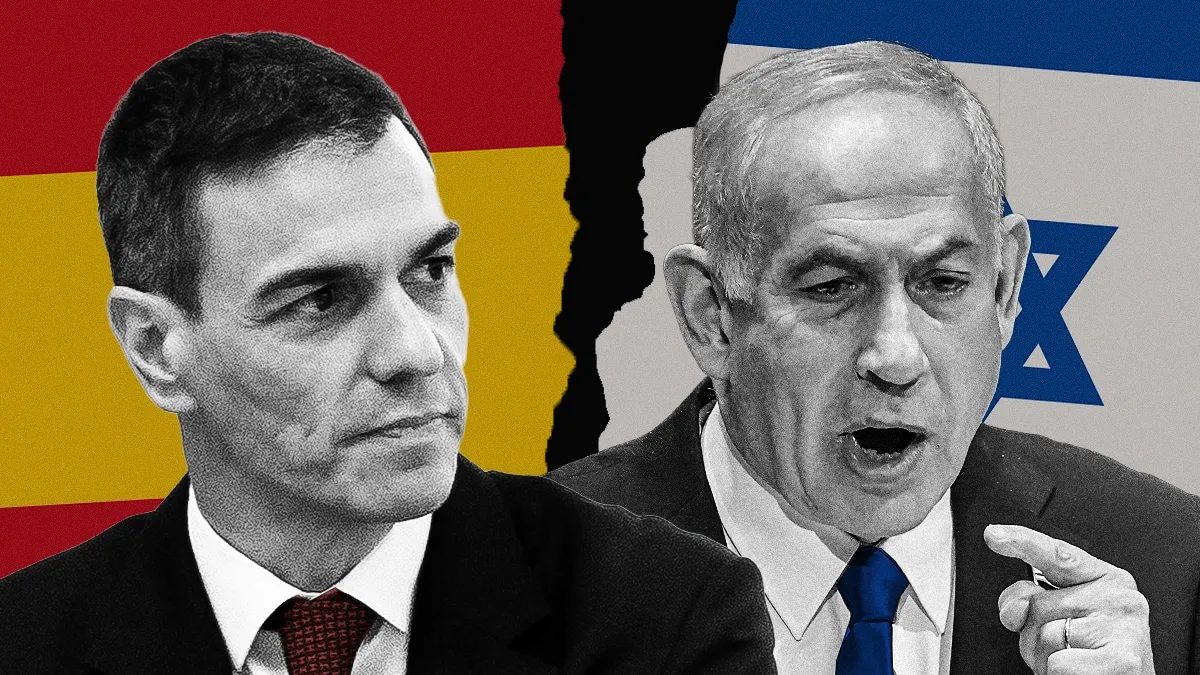
Tension Between Sánchez and Israel: Relations at a 40-Year Low

Listen
Share

Spanish Prime Minister Pedro Sánchez's criticisms of Israeli policies have strained bilateral relations to an unprecedented point in four decades, according to analysts and diplomats.

OMNI
OMNI
#Spain#Israel#Pedro Sánchez#Gideon Saar#Foreign Policy
Tension Between Sánchez and Israel: Relations at a 40-Year Low

Israeli Foreign Minister Gideon Saar's words reflect the deep diplomatic crisis between Spain and Israel. This situation has worsened after Sánchez's recent statements on the social network X, where he criticized decisions of the Israeli government, including the application of the death penalty to Palestinians convicted of terrorism.
Tension Between Sánchez and Israel: Relations at a 40-Year Low - Image 1
These criticisms have been considered a "further step towards apartheid" by the Spanish president. The current tension surpasses any previous crisis in the four decades of diplomatic history between the two countries.

Sánchez's position, however, is not unanimous in the European Union, although Germany and the EU itself have expressed similar concerns, the tone of Spain's criticism is radically different. Experts and former diplomats point out that the current situation is the product of a combination of internal and external political factors, including the influence of minority groups in the governments of both countries. Former Israeli Ambassador to Spain, Victor Harel, describes the situation as a reflection of the political interests of both leaders, who seek to ensure their political survival, and adds that Sánchez is showing himself as anti-Zionist, constantly criticizing the Israeli government.

Israeli diplomacy has responded vehemently to Sánchez's criticisms, accusing him of partiality and inciting hatred. Minister Gideon Saar has recalled that Sánchez did not speak out against attacks on holy places, and has criticized the Spanish president's inaction in other situations. This response reflects the deep distrust and deterioration of the bilateral relationship. Israeli diplomacy has even accused Sánchez of putting his words on missiles directed against civilians, citing the gratitude of the Iranian regime. This accusation underlines the seriousness of the crisis and the perception that Sánchez's actions harm the image of Israel and the security of the region.

Tensions escalated when the Israeli Foreign Ministry reacted to Sánchez's statements about the death of a blue helmet in Lebanon, accusing him of adopting a biased and inciting stance against Israel. This series of exchanges shows an escalation in verbal confrontation and a lack of willingness to find common ground.

Diplomatic relations between Spain and Israel, established in 1986, have experienced ups and downs, but the current situation is particularly worrying. Sánchez's position after the largest Hamas massacre against Israelis and Spain's announcement to recognize the Palestinian State, marked a turning point. Israel summoned the Spanish ambassador to express its discontent and, subsequently, both countries reduced their diplomatic representation to the level of chargés d'affaires. This decision is unusual and reflects the seriousness of the crisis, since the absence of ambassadors hinders discreet negotiations and constructive dialogue.

Experts and former diplomats agree that the lack of ambassadors is an error that harms both countries. The absence of effective diplomatic channels aggravates the situation and makes it difficult to find solutions. The current situation, according to Victor Harel, is due to Sánchez's pro-Palestinian stance, which does not take into account Israel's interests.

Experts in international relations warn about the negative consequences of breaking diplomatic bridges. Cosme Ojeda, professor at the CEO San Pablo University, points out that Spain has a lot to lose in this crisis, especially in terms of security and cooperation. Ojeda insists on the need to re-establish dialogue and prioritize national interests, instead of adopting ideological positions. He considers that the current position of the Spanish government is short-term and detrimental to Spain, Israel and the European Union.

Spain's dependence on Israeli security systems and Israel's influence in the region are important factors that must be considered. Ojeda emphasizes the importance of discretion and the search for constructive solutions to avoid further damage. The possibility of a change of government in both countries could open new opportunities to re-establish diplomatic relations. Victor Harel believes that a new government in Israel that demands democratic values and a government in Spain with fewer threats from the left could renew the relationship.

Tension between Spain and Israel reached a new peak after Sánchez's criticism of the Israeli authorities' ban on celebrating the Palm Sunday mass in Jerusalem. Sánchez condemned this act and demanded that Israel respect religious freedom. This intervention provoked a harsh response from Israel, which accused Sánchez of inciting against Israel. Minister Gideon Sa'ar, in a message on the social network X, recalled that Sánchez had not expressed his opinion when an Iranian missile hit near the Church of the Holy Sepulchre in Jerusalem, nor does he congratulate Spanish citizens on Christmas.

Sa'ar's message, which included a photo with a text that read: "Sánchez, who does not even wish the Spanish a Merry Christmas, never misses an opportunity to incite against Israel", reflects the deep distrust and deterioration of the bilateral relationship. The escalation of criticism and mutual accusations suggest that the diplomatic crisis between Spain and Israel is far from being resolved.
Editorial Note

This content has been synthesized and optimized to ensure clarity and neutrality. Based on: El Independiente