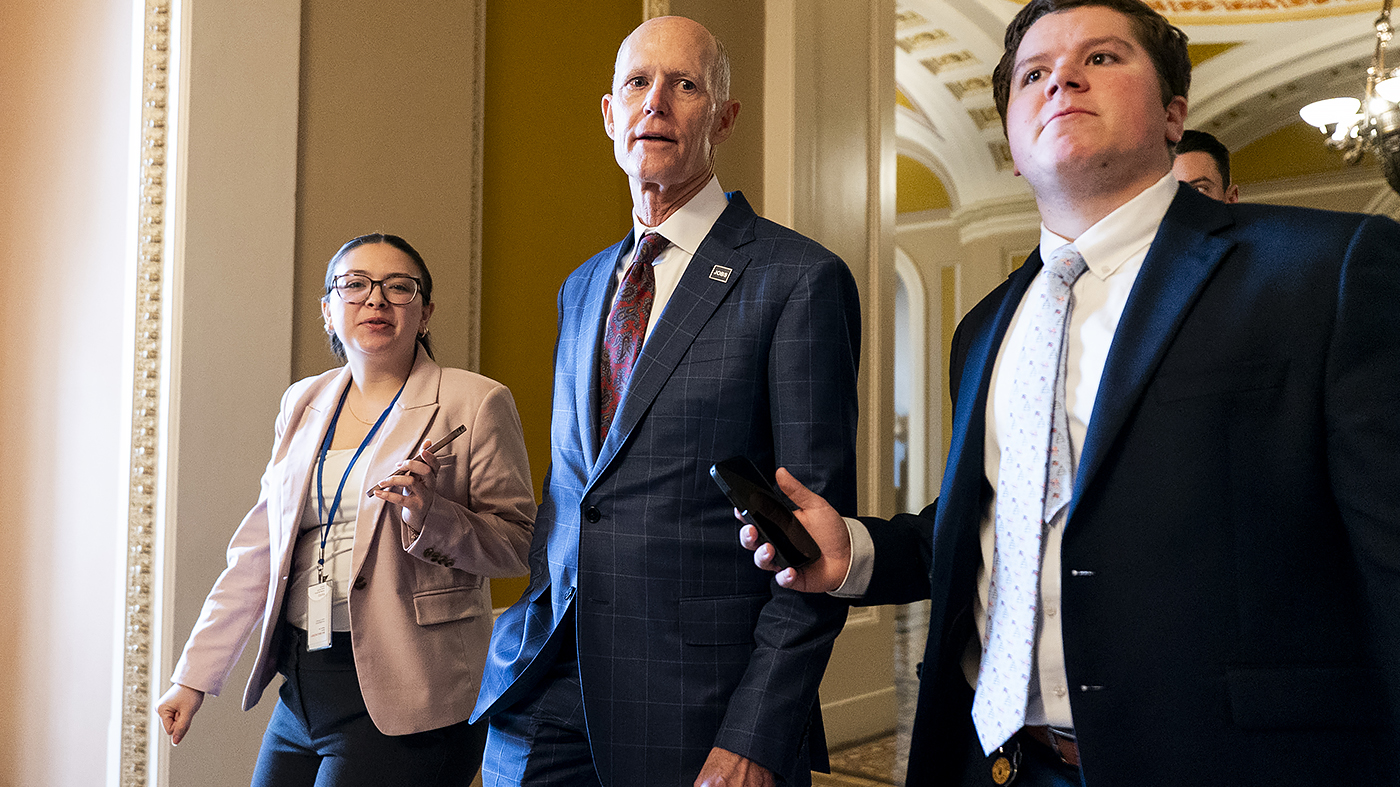
Senator Rick Scott (R-Fla.), a close ally of Trump, voiced his opposition to the Department of Homeland Security (DHS) funding bill passed in the Senate. Scott criticized the measure, arguing that it does not fully fund ICE (Immigration and Customs Enforcement) and only partially funds CBP (Customs and Border Protection). In a statement, Scott expressed his disagreement with the proposal, stating that Democrats prioritize illegal immigrants.
This stance by Scott aligns with other conservatives who question the partial funding of key agencies for border security. The Senate's decision, made in the early hours of the morning, has sparked a debate over political priorities and national security management.
The Senate deal, approved by unanimous consent, did not include full funding for ICE or CBP, which led to the rejection by several Republicans. Senator Scott joined members of the House Freedom Caucus, who also criticized the deal. The Freedom Caucus seeks for the legislation to include new voter ID requirements and fund Border Patrol and ICE's transnational crime investigative division.
Freedom Caucus Chairman Andy Harris (R-Md.) expressed concern about the lack of funding for ICE's child sex trafficking division and Border Patrol, accusing Democrats of wanting an open border.
The Freedom Caucus demands that funding be added to the bill, including voter ID requirements, and that it be returned to the Senate for review. Freedom Caucus Chairman Andy Harris stated: "The only thing we're going to support is adding that funding into the bill, adding voter ID, sending it back to the Senate, make them come back in and do their work. The bottom line is, this deal is bad for America".
This stance raises questions about the bill's approval in the House of Representatives, especially after the rejection by House Speaker Mike Johnson (R-La.), who proposed a 60-day stopgap funding measure.
Other conservative senators have expressed concern about the possibility of reducing ICE funds. Senator Josh Hawley (R-Mo.) stated: "I'm skeptical about voting to defund or to cut ICE funding." Hawley emphasized his desire for ICE to be fully funded.
These statements reflect the division within the Republican Party over immigration policy and the allocation of resources for border security, which could make it difficult to pass any funding agreement in Congress.
The opposition to the Senate deal by key figures in the Republican Party, such as Rick Scott and the Freedom Caucus, raises serious doubts about its viability in the House of Representatives. The rejection by House Speaker Mike Johnson and the proposal for a provisional funding measure suggest that negotiations could be prolonged.
If an agreement is not reached, there is a risk of a partial government shutdown, which would exacerbate political tensions and affect various federal agencies, including those responsible for border security.
Editorial Note
This content has been processed by our team to ensure neutrality and journalistic clarity. Based on:The Hill