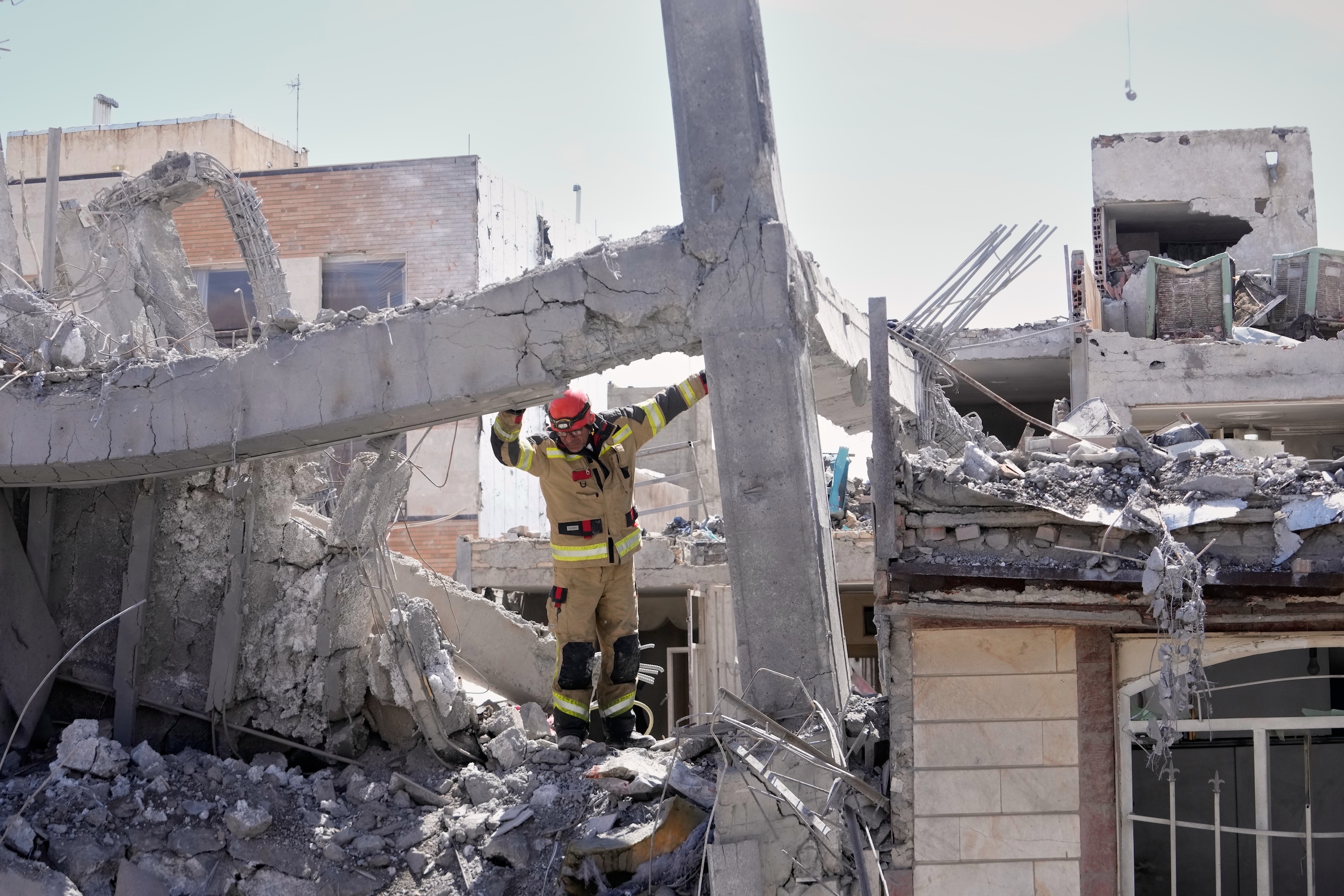
In a significant escalation of tensions, Israel launched attacks on Iranian nuclear facilities on Friday, according to state media reports. The targets included the Shahid Khondab Heavy Water Complex in Arak and the yellowcake production plant in Ardakan, Yazd province. These attacks, which Israel claimed responsibility for, triggered an immediate threat of retaliation from Iran. Iran's Atomic Energy Organization confirmed the attacks, assuring that there were no casualties or risk of contamination. The Arak plant, which had previously been attacked last June, remained inoperable. Yellowcake is a concentrated form of uranium, and heavy water is used as a moderator in nuclear reactors.
The Israeli military justified the attacks as a response to missile production, nuclear infrastructure, and targets related to the terrorist regime. It was also reported that the Yazd plant processes raw materials for enrichment, which, according to Israel, represents a harsh blow to the Iranian nuclear program.
Iran's Islamic Revolutionary Guard Corps (IRGC) issued a retaliation warning, with IRGC Aerospace Force Commander Seyed Majid Moosavi urging employees of companies linked to the United States and Israel to leave their workplaces. Moosavi stated, 'This time, the equation will no longer be 'eye for an eye', just wait.' This statement underscores the seriousness of the situation and suggests a potential escalation in military actions. Iran's threat of a stronger response increases concerns about a wider and more prolonged conflict in the region.
Previously, President Trump had claimed that talks to end the war were 'going very well,' but the situation has rapidly deteriorated.
The United States, seeking a diplomatic solution, delivered a 15-point 'action list' to Iran via Pakistan, proposing restrictions on the Iranian nuclear program and the reopening of the Strait of Hormuz. However, Iran rejected the US offer, presenting its own five-point proposal. The growing pressure on Trump to stop Iran's control over the strait, through which a fifth of the world's oil is shipped, is evident.
On the economic front, stock markets are reeling and oil prices are rising. The price of Brent crude rose 2.9% to $104.81, and US crude rose 4.4% to $98.61 per barrel. Iran's rejection of US proposals and the escalation of attacks further complicate the prospects for a peaceful resolution.
Israel has intensified its attacks, targeting Iranian weapons production, including sites in the heart of Tehran. Israeli Defense Minister Israel Katz warned that Iran 'will pay high and increasing prices for this war crime.' Air raid sirens sounded in Israel, and the military claimed to be intercepting Iranian missiles daily. The attacks also hit missile launchers and storage sites in western Iran. This escalation includes attacks in Beirut, where two deaths were reported, and in Saudi Arabia, where missiles and drones were intercepted.
In Kuwait, the port of Shuwaikh and the port of Mubarak Al Kabeer suffered material damage. The UN's International Organization for Migration reported damage to 82,000 civilian buildings in Iran, including hospitals and homes, with 180,000 people affected. The Secretary-General of the Norwegian Refugee Council, Jan Egeland, warned of a potential humanitarian disaster if the war continues.
The conflict has taken a heavy toll on lives. There have been 18 deaths in Israel, and four Israeli soldiers were killed in Lebanon. More than 1,100 people have died in Lebanon and over 1,900 in Iran. Additionally, at least 13 US military personnel were reported killed, four people in the West Bank, and 20 in the Gulf Arab states. In Iraq, 80 members of the security forces have died. Despite the military escalation, diplomatic efforts continue. Diplomats from several countries are trying to organize a direct meeting between US and Iranian envoys. Meanwhile, the United States has sent more troops to the region, including 2,500 Marines and at least 1,000 paratroopers from the 82nd Airborne Division.