PrometuNews
© 2026 Prometu NewsPowered by Prometu, Inc.
Politics4 min...

GOP Rift and Iran Conflict Dominate Political Agenda

Listen
Share

The funding fight for the Department of Homeland Security (DHS) and the conflict with Iran are creating tensions in the American political landscape.

OMNI
OMNI
#Politics#United States#DHS#Iran#Conflict
GOP Rift and Iran Conflict Dominate Political Agenda

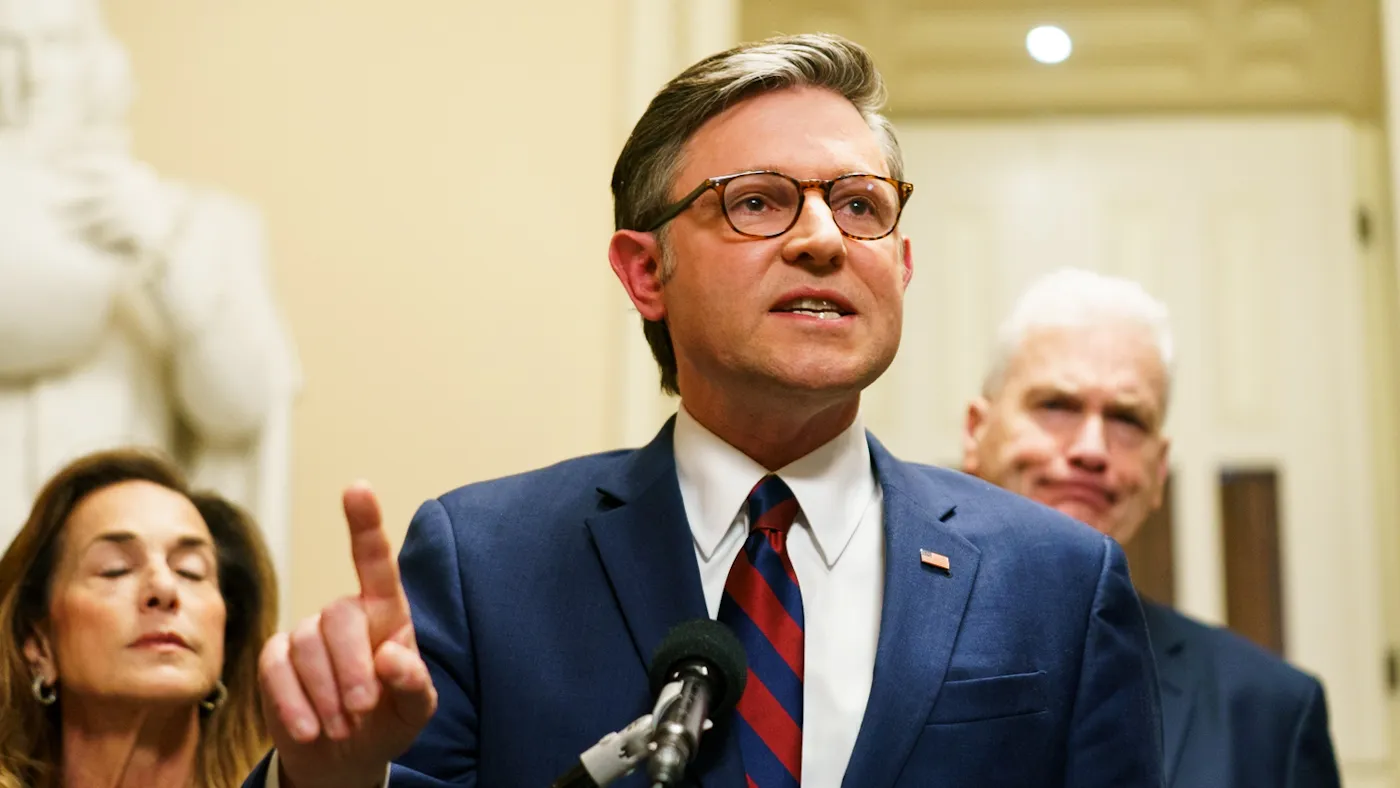
The House vote against a Senate bill to partially fund the Department of Homeland Security (DHS) has exposed a deep divide among Republican lawmakers. The Senate unanimously approved a bill to fund DHS, excluding Immigration and Customs Enforcement (ICE) and the U.S. Border Patrol, but the House rejected the proposal. This caused outrage among the Republican leadership in the House. House Speaker Mike Johnson expressed his frustration, questioning how his Republican colleagues in the Senate agreed to the bill, describing it as a 'joke'.

Johnson blamed the Democrats for the passage of the bill, even though the House bill sought to fully fund DHS until May 22, including ICE and the Transportation Security Administration (TSA). Members of both chambers left for a two-week spring break, making it difficult for the bill to pass the Senate and end the 43-day shutdown.


Senate Minority Leader Chuck Schumer slammed the bill, calling it 'dead on arrival'. Other Democrats criticized the House for passing the bill knowing that lawmakers would be on recess. Representative Katherine Clark, the Democratic whip, stated that the Senate was no longer in session. President Trump directed Homeland Security Secretary Markwayne Mullin to coordinate with the Office of Management and Budget to direct funds to TSA employees. The agency has seen around 500 workers quit since the start of the shutdown, disrupting airport security and causing flight delays and cancellations.

White House border czar Tom Homan and House Majority Leader Steve Scalise were invited to Sunday news programs to discuss the impact of the shutdown on ICE and the air travel situation.

U.S. service members deployed to the Middle East arrived at the U.S. Central Command (Centcom) area. The USS Tripoli arrived with approximately 3,500 sailors and Marines, along with fighter aircraft and tactical assets. Two other ships, the USS New Orleans and the USS Boxer, are en route to the region.

President Trump has faced bipartisan calls not to deploy ground troops as part of 'Operation Epic Fury'. Former commander of U.S. Central Command, retired Gen. Frank McKenzie, could be questioned about the military buildup in the region and the next steps of the conflict.

The Iran-backed Houthis launched a missile strike against Israel, according to reports from Al Jazeera and Houthi spokesperson Brig. Gen. Yahya Saree. The Israeli Defense Forces intercepted the missile. The Houthis warned the U.S., Israel, and Gulf partners against violating three 'red lines' they issued, calling for a diplomatic end to hostilities and warning other Middle Eastern countries against joining U.S. and Israeli attacks on Iran.

More U.S. service members were injured following an Iranian missile attack on Prince Sultan Air Base in Saudi Arabia, bringing the number of injured to 12, according to reports.

Several lawmakers and experts are scheduled to appear on Sunday news programs. These include Gary Gensler, former chair of the U.S. Securities and Exchange Commission; former U.S. Surgeon General Jerome Adams; and White House border czar Tom Homan. Other participants include Senator James Lankford, Senator Cory Booker, and Senator Tom Cotton, among others. These programs will address topics such as the government shutdown, the conflict in the Middle East, and American politics.

These programs will provide a platform for lawmakers and experts to discuss current events and their implications.
Editorial Note

This content has been synthesized and optimized by the Prometu editorial system to ensure clarity and neutrality. Based on: The Hill