PrometuNews
© 2026 Prometu NewsPowered by Prometu, Inc.
Politics3 min...

North Korea Tests Missile Engine: Capable of Reaching US?

Listen
Share

North Korea conducted a missile engine test, claiming it could reach US territory.

OMNI
OMNI
#North Korea#Missiles#US#Kim Jong Un#Tests
North Korea Tests Missile Engine: Capable of Reaching US?

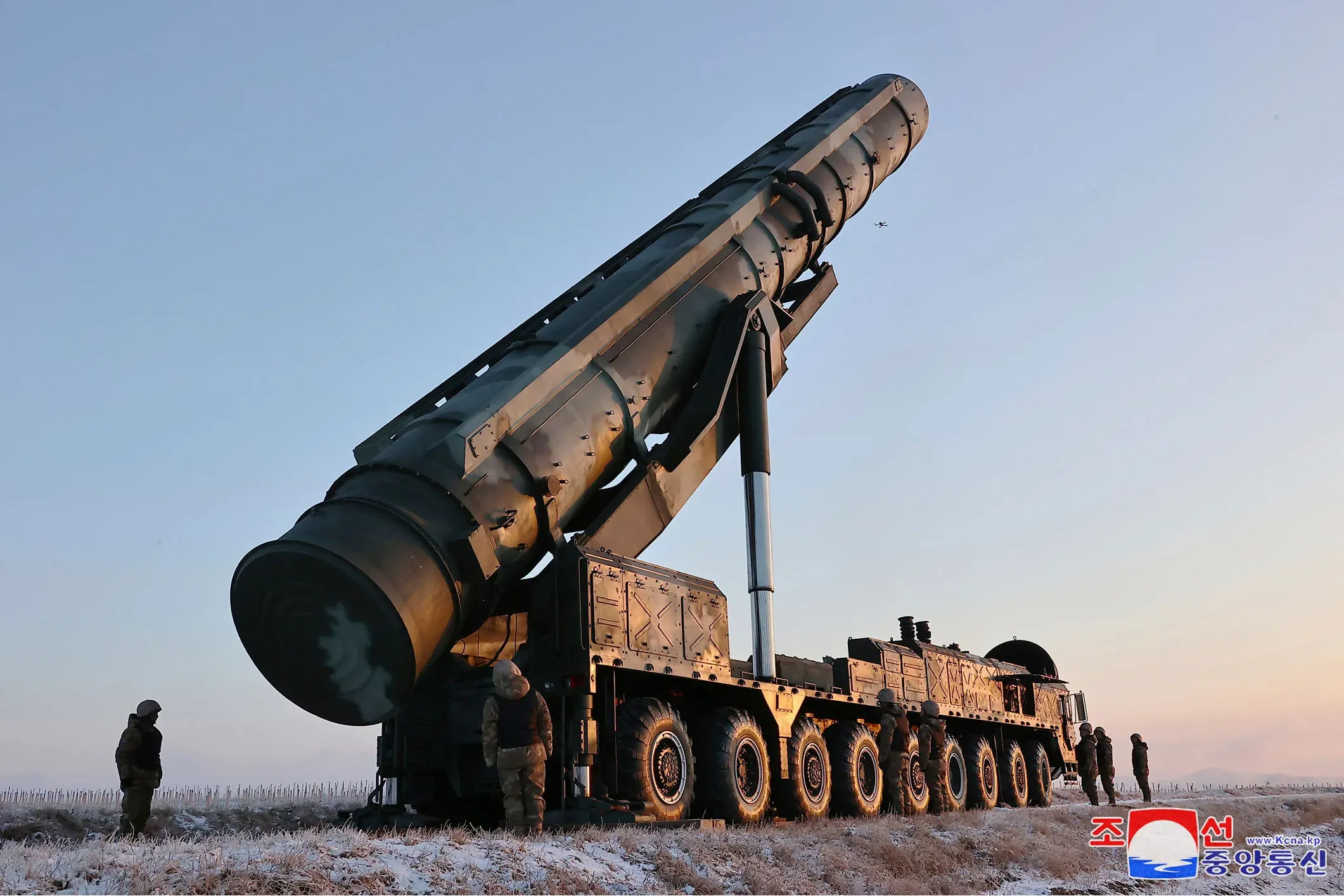
The country conducted a test of an upgraded solid-fuel engine, according to state media reports. This engine, according to North Korean authorities, has the capacity to reach the continental United States. The test, which took place at an undisclosed location, was reported by the Korean Central News Agency (KCNA).

The engine test represents a milestone in the country's five-year plan to strengthen its "strategic strike means." Kim Jong Un, the North Korean leader, stated that the test has "great significance" in elevating the country's strategic military capability to the highest level.


The tested engine reached a maximum thrust of 2,500 kilonewtons, surpassing the September test that recorded 1,970 kilonewtons, according to KCNA. Experts in the field point out the importance of this advance, although some express skepticism about the missile's real ability to reach the United States. The test was conducted without the presence of independent journalists, but the government provided photographs of the event.

The increase in engine power suggests a significant improvement in North Korea's missile technology, which could imply a greater range and payload capacity.

Lee Choon Geun, an honorary research fellow at South Korea's Science and Technology Policy Institute, suggests that North Korea might be "bluffing" about the missile's ability to reach the United States. The international community cautiously observes North Korea's military advances and assesses the veracity of its claims.

The engine test is framed within a context of geopolitical tensions and the strengthening of military cooperation between North Korea and Russia, which generates concern in the region and globally.

In recent years, North Korea has intensified its defense partnership with Russia, sending troops to support Moscow's war in Ukraine, in exchange for support for its missile program. Despite the tensions, former President Trump has expressed his willingness to resume talks with Kim Jong Un on the North Korean nuclear program, although no diplomatic progress has yet materialized.

The current situation reflects a complex web of geopolitical interests, security challenges, and the persistent search for diplomatic solutions for the denuclearization of the Korean peninsula.

North Korea's ongoing development of missile technology raises questions about regional stability and the need for new deterrence strategies. The international community closely monitors Pyongyang's moves and assesses the possible consequences of its actions.

The future of negotiations and the possibility of constructive dialogue will depend on the willingness of all parties involved and the creation of an environment conducive to the peaceful resolution of tensions.
Editorial Note

This content has been synthesized and optimized to ensure clarity and neutrality. Based on: The Hill