Prometu News LogoNews
© 2026 Prometu NewsPowered by Prometu, Inc.
Politics3 min...

Controversy Over Leaders' Prayers in War: Reactions and Criticism

Listen
Share

Press Secretary Karoline Leavitt defends military leaders' prayers, while Pope Leo XIV and social media users express criticism.

OMNI
OMNI
#war#politics#religion#United States
Controversy Over Leaders' Prayers in War: Reactions and Criticism

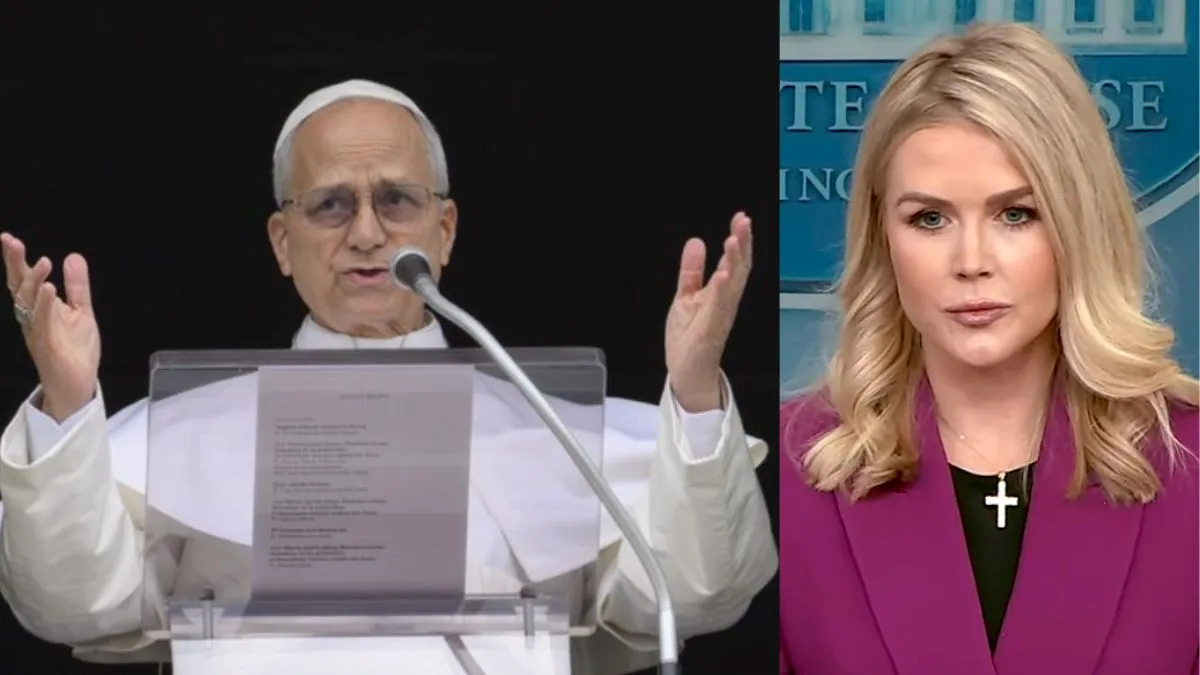
Pope Leo XIV, the first American pope, took a stern stance during Palm Sunday Mass, stating that the name of Jesus cannot be used to justify violence. In his address, the Pope said, “Brothers and sisters, this is our God: Jesus, King of Peace, who rejects war, whom no one can use to justify war. He does not listen to the prayers of those who wage war, but rejects them.” This statement came amid America's war with Iran, in its second month.

The Pope did not mention any leaders or nations by name, but his words resonated worldwide, provoking various reactions.

Karoline Leavitt, press secretary, responded to the Pope's comments, defending the prayers of military leaders and the president. Leavitt stated: “Our nation was founded nearly 250 years ago on Judeo-Christian values. We have seen presidents, leaders at the Department of War, and our troops turn to prayer during the most turbulent times in our nation’s history.”

Leavitt added, “I don’t think there’s anything wrong with our military leaders or with the president calling on the American people to pray for our service members and those serving overseas. In fact, I think it’s a very noble thing to do.”

In contrast to Leavitt's stance, many social media users expressed agreement with Pope Leo XIV. One user commented: “There’s a huge difference between praying for our military service members and forcing your personal beliefs on them. Spewing that you’re waging God’s holy war is asinine and offensive to many.”

Another user wrote: “Don’t invoke God to support violence and war.” A third added: “Imagine what a more peaceful world we would be in if there were less religious involvement in our governments and military.”

The controversy intensified with War Secretary Pete Hegseth, who invoked Christian language and prayed for “overwhelming violence of action” against U.S. enemies. His use of religious language to justify violence drew criticism, echoing Pope Leo's words, who recalled that Jesus “did not arm himself, or defend himself, or fight any war” and “always rejects violence.”

This incident highlights the tensions between faith and politics in the context of war.

In addition to the public reactions, two lawsuits have been filed against the U.S. Departments of Defense and Labor by Americans United for Separation of Church and State, according to EWTN News. The lawsuit alleges that taxpayer money is being misused for Christian prayer services, violating the separation of church and state, promoting Christian nationalism, and pressuring federal employees to participate.

This legal case adds a new dimension to the debate about the relationship between religion and government in the United States.
Editorial Note

This content has been synthesized and optimized to ensure clarity and neutrality. Based on: The Inquisitr