
Birthright Citizenship Under Scrutiny: 5 Key Points from Supreme Court
The Supreme Court is weighing Trump's attempt to restrict birthright citizenship, a polarizing issue that redefines constitutional interpretation.

#Supreme Court#Donald Trump#Birthright Citizenship#Immigration#Politics
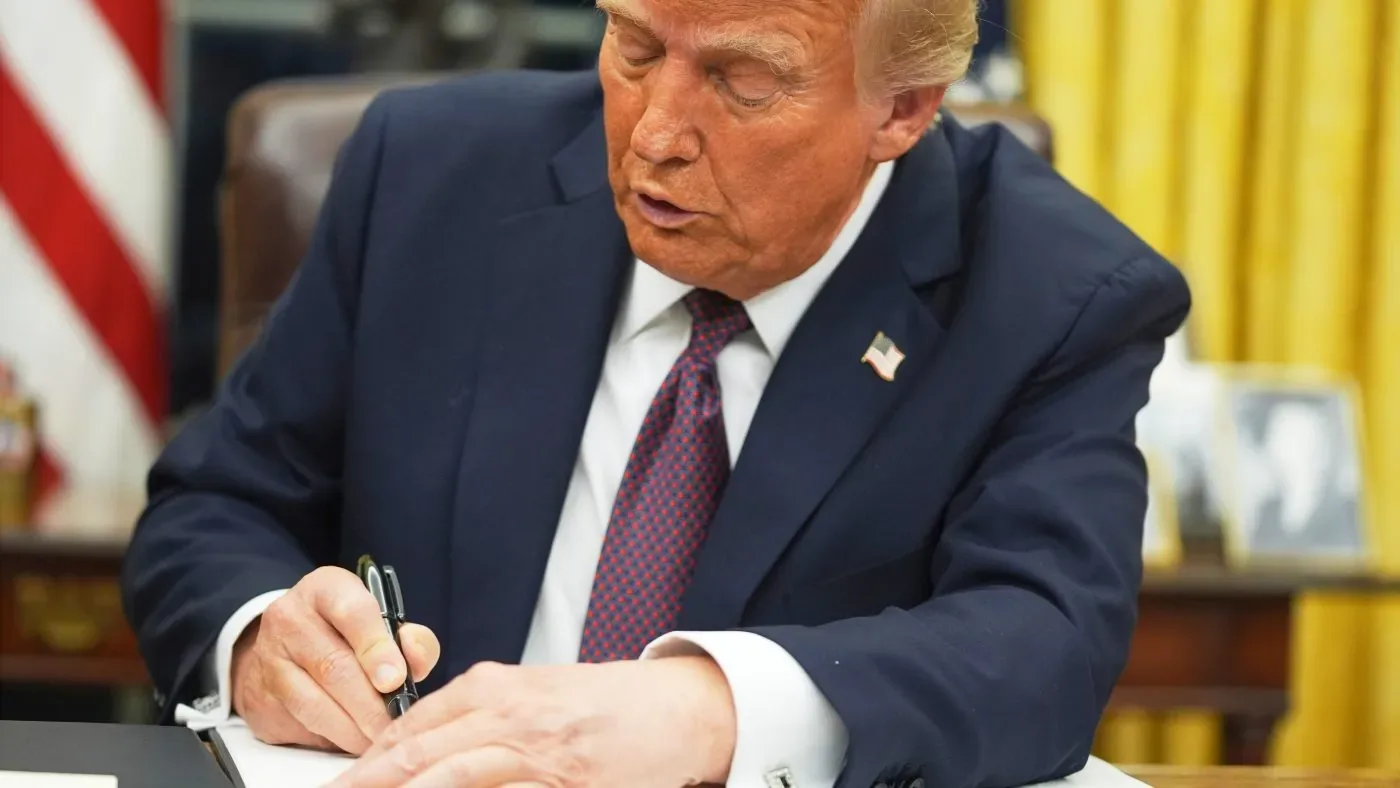
Former President Trump's attendance at the Supreme Court hearings marks a milestone, being the first sitting president to witness an oral argument. This raises the tension at a time when the Court was already facing direct challenges from Trump's agenda. The presence of the former president could influence the atmosphere, considering his previous criticisms of the judicial system and his personal interest in the outcome of the case.
President Trump has expressed in the past his desire to attend oral arguments related to his policies. Although he could not attend the presidential immunity arguments due to his trial in New York, his presence now underscores the importance he attaches to this particular case. The decision to attend could be interpreted as an attempt to exert pressure on the judges, in an already polarized political climate.
President Trump has expressed in the past his desire to attend oral arguments related to his policies. Although he could not attend the presidential immunity arguments due to his trial in New York, his presence now underscores the importance he attaches to this particular case. The decision to attend could be interpreted as an attempt to exert pressure on the judges, in an already polarized political climate.
The 1898 decision in the case 'United States v. Wong Kim Ark', where the citizenship of a person born in the U.S. to Chinese parents was recognized, is a pillar in this debate. The plaintiffs argue that this precedent is clear and favorable to their position. However, the Trump administration seeks to limit the interpretation of this case, arguing that it only applies to non-citizen parents with permanent residence in the country.
Justice Sonia Sotomayor had already expressed her opinion last year, noting that Trump's order could violate Supreme Court precedents. The Trump administration hopes to convince at least five justices that the interpretation of the precedent is wrong, arguing that the case only applies to non-citizen parents with permanent residence in the U.S., which is not the case for immigrants who are illegally in the country. Attorney General D. John Sauer has emphasized that this limit was central to the analysis of the original case.
Justice Sonia Sotomayor had already expressed her opinion last year, noting that Trump's order could violate Supreme Court precedents. The Trump administration hopes to convince at least five justices that the interpretation of the precedent is wrong, arguing that the case only applies to non-citizen parents with permanent residence in the U.S., which is not the case for immigrants who are illegally in the country. Attorney General D. John Sauer has emphasized that this limit was central to the analysis of the original case.
Trump's executive order has generated an intense debate among legal experts on the interpretation of the 14th Amendment. It will be crucial to observe whether the judges show agreement with the research of conservative professors who have defended the president's position. Names like Ilan Wurman, Randy Barnett, Richard Epstein, Kurt Lash, and John Eastman could be mentioned during the deliberations.
The ACLU, for its part, will present arguments against the order, supported by academics such as Evan Bernick, Jed Shugerman, and Anthony Michael Kreis. Groups like the Cato Institute also oppose the measure, reflecting the wide range of legal opinions on this issue.
The ACLU, for its part, will present arguments against the order, supported by academics such as Evan Bernick, Jed Shugerman, and Anthony Michael Kreis. Groups like the Cato Institute also oppose the measure, reflecting the wide range of legal opinions on this issue.
During oral arguments last year, Justice Brett Kavanaugh had already expressed concerns about the practical consequences of Trump's order. Questions about how hospitals and states would handle the issue of newborn citizenship could resurface. The lack of clarity on the procedures to be followed could raise doubts among the judges.
Kavanaugh had asked the Solicitor General about the procedures to be followed with newborns, to which Sauer replied that federal agencies would have to resolve it. The lack of details on how the order would be implemented could be a weak point in the Trump administration's argument.
Kavanaugh had asked the Solicitor General about the procedures to be followed with newborns, to which Sauer replied that federal agencies would have to resolve it. The lack of details on how the order would be implemented could be a weak point in the Trump administration's argument.
In addition to the constitutional question, the judges could consider whether Trump's policy violates a 1940 law that codifies the 14th Amendment. The plaintiffs argue that, even if Trump is right about the Constitution, the 1940 law reflects the understanding that citizenship extends to almost anyone born on American soil.
This statutory route could offer a simpler and less controversial solution for the Court. The decision to rely on the 1940 law would allow the judges to avoid a direct pronouncement on the constitutional interpretation of the 14th Amendment.
This statutory route could offer a simpler and less controversial solution for the Court. The decision to rely on the 1940 law would allow the judges to avoid a direct pronouncement on the constitutional interpretation of the 14th Amendment.
According to Cody Wofsy, deputy director of the ACLU's Immigrants' Rights Project, a Trump victory would have devastating effects. Babies born in the U.S. could lose their citizenship, facing arrest or deportation. In addition, they would be denied access to passports, Social Security numbers, and other citizenship benefits.
Wofsy also expressed concern about the scrutiny that people whose citizenship is questioned would face. He warned that this could disproportionately affect communities of color, creating a distinction between "real Americans" and others. The ACLU argues that the 14th Amendment seeks universal inclusion, not exclusion.
Wofsy also expressed concern about the scrutiny that people whose citizenship is questioned would face. He warned that this could disproportionately affect communities of color, creating a distinction between "real Americans" and others. The ACLU argues that the 14th Amendment seeks universal inclusion, not exclusion.
Faced with the stagnation in the confirmation of prosecutors loyal to Trump, Congress could pass a law that facilitates their permanence in office. A bill approved by the House Judiciary Committee would eliminate the power of district judges to appoint interim prosecutors, allowing the Attorney General to keep appointees in place longer.
This measure seeks to prevent prosecutors appointed by Trump from being disqualified for having served too long without Senate confirmation. However, it is not clear whether the bill will succeed in the Senate, where the "blue slip" process allows senators to veto presidential nominees.
This measure seeks to prevent prosecutors appointed by Trump from being disqualified for having served too long without Senate confirmation. However, it is not clear whether the bill will succeed in the Senate, where the "blue slip" process allows senators to veto presidential nominees.
The Supreme Court ruled 8-1 in favor of a Christian counselor challenging Colorado's ban on "conversion therapy," based on freedom of speech. Justice Ketanji Brown Jackson was the sole dissenter. This ruling limits the ability of states to regulate certain therapeutic practices considered harmful by many.
The case generated an intense debate about freedom of speech rights and the protection of vulnerable groups. The Supreme Court's decision could have significant implications for future laws seeking to ban or regulate similar practices.
The case generated an intense debate about freedom of speech rights and the protection of vulnerable groups. The Supreme Court's decision could have significant implications for future laws seeking to ban or regulate similar practices.
A federal judge ruled in favor of Anthropic in its dispute with the Pentagon, blocking its designation as a supply chain risk, for now. This decision allows the artificial intelligence company to continue operating without the restrictions imposed by the Pentagon.
The dispute centered on the supply chain risk assessment and the designation of Anthropic as a potential threat. The federal judge's ruling provides a respite to the company and raises questions about the criteria used by the Pentagon to assess risks.
The dispute centered on the supply chain risk assessment and the designation of Anthropic as a potential threat. The federal judge's ruling provides a respite to the company and raises questions about the criteria used by the Pentagon to assess risks.
A federal judge ordered the Trump government to preserve all records after the Department of Justice said it made a "factual error" in a case challenging the ability to arrest immigrants when they appear for immigration court hearings. This order seeks to ensure transparency and accountability in immigrant arrest practices.
The case focuses on the legality of arresting immigrants who appear in court and the possible violation of their rights. The federal judge's order underscores the importance of preserving evidence and ensuring that the government is held accountable for its actions.
The case focuses on the legality of arresting immigrants who appear in court and the possible violation of their rights. The federal judge's order underscores the importance of preserving evidence and ensuring that the government is held accountable for its actions.

Related Stories
OMNI•4 min•
OMNI•4 min•