
Birthright Citizenship in the US: Universal Right or Privilege?
The 14th Amendment of the U.S. Constitution guarantees birthright citizenship, a key principle under debate.

#citizenship#14th amendment#civil rights#immigration#USA#politics
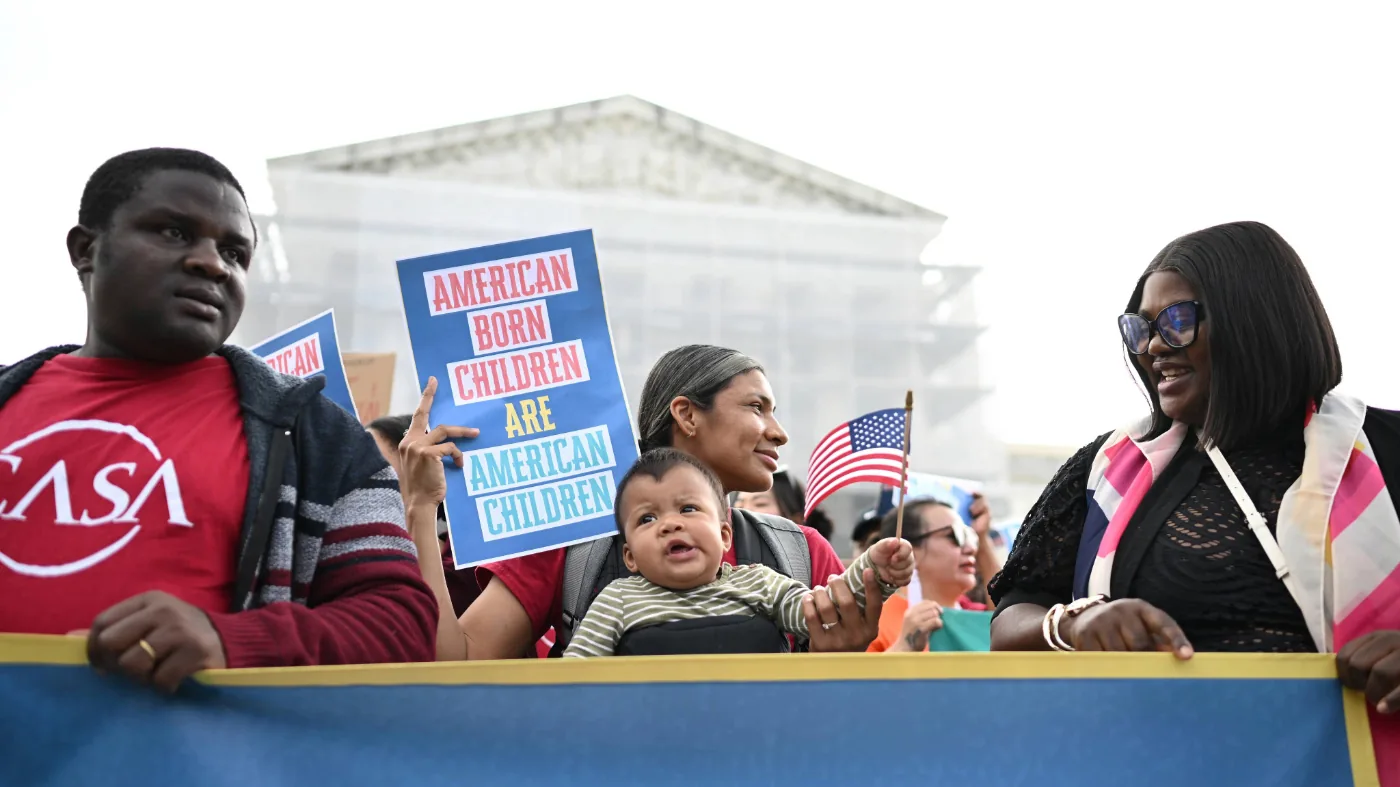
Birthright citizenship, guaranteed by the 14th Amendment to the United States Constitution, is at the heart of the current political debate. This principle, which grants citizenship to every person born in U.S. territory, has been the subject of controversy and reinterpretation throughout the country's history. The clarity of the constitutional text contrasts with the interpretations and challenges that arise in moments of political anxiety.
The 14th Amendment unequivocally states that "all persons born or naturalized in the United States, and subject to its jurisdiction, are citizens of the United States." This seemingly simple provision has been the subject of debate in relation to the children of undocumented immigrants and other complex situations.
The 14th Amendment unequivocally states that "all persons born or naturalized in the United States, and subject to its jurisdiction, are citizens of the United States." This seemingly simple provision has been the subject of debate in relation to the children of undocumented immigrants and other complex situations.
The purpose of the drafters of the 14th Amendment was to define once and for all who belongs to the American political community, including the children of former slaves. Their language was deliberately broad and positive, unlike the Civil Rights Act of 1866, which used a more restrictive formulation. The intention was to prevent citizenship from depending on ancestry, race, or inherited status.
Sen. Lot Morrill (R-Maine), a key supporter of the 14th Amendment, explained that the birthright citizenship provision was not innovative legislation, but the affirmation of a "grand and fundamental principle." He stressed that the abolition of slavery demanded a clear rule on who was an American citizen.
Sen. Lot Morrill (R-Maine), a key supporter of the 14th Amendment, explained that the birthright citizenship provision was not innovative legislation, but the affirmation of a "grand and fundamental principle." He stressed that the abolition of slavery demanded a clear rule on who was an American citizen.
The birthright citizenship clause did not invent a new idea, but constitutionalized an old one. For centuries, under Anglo-American common law, citizenship was derived from birth within sovereign territory. The rule was simple: birth on the soil conferred jurisdiction, which in turn conferred citizenship. There were well-defined exceptions, such as children of accredited foreign diplomats and children of enemy forces occupying U.S. territory.
The Supreme Court confirmed this interpretation in 1898 in United States v. Wong Kim Ark. The court ruled that a child born in San Francisco to parents who were Chinese citizens, who were barred from naturalization in the United States, was nevertheless a citizen by birth.
The Supreme Court confirmed this interpretation in 1898 in United States v. Wong Kim Ark. The court ruled that a child born in San Francisco to parents who were Chinese citizens, who were barred from naturalization in the United States, was nevertheless a citizen by birth.
In Plyler v. Doe (1982), the Supreme Court rejected attempts to distinguish between the children of those who were in the U.S. legally and illegally. The court observed that immigration status shifts with changing statutes and executive priorities: "The illegal alien of today may well be the legal alien of tomorrow," and vice versa. Constitutional guarantees do not shift.
History also reveals that when the 14th Amendment was ratified in 1868, the U.S. had not yet created the complex immigration categories debated today. There was no modern distinction between "legal" and "illegal" presence. However, Congress had already outlawed the international slave trade. Africans smuggled into the country after that ban were brought here in violation of federal law. However, their American-born children were citizens, instantly and without controversy, under the 14th Amendment.
History also reveals that when the 14th Amendment was ratified in 1868, the U.S. had not yet created the complex immigration categories debated today. There was no modern distinction between "legal" and "illegal" presence. However, Congress had already outlawed the international slave trade. Africans smuggled into the country after that ban were brought here in violation of federal law. However, their American-born children were citizens, instantly and without controversy, under the 14th Amendment.
Across generations—through nativist backlashes, racial exclusion, and changing immigration regimes—the principle has endured: If you are born here and subject to our laws, you are one of us. That rule is not a loophole. It is not an accident. It is not a modern policy choice. It is a constitutional command.
And it remains one of the clearest expressions of the American promise: that citizenship is not inherited privilege, but a status conferred by birth within a nation committed, however imperfectly, to equal protection under law.
And it remains one of the clearest expressions of the American promise: that citizenship is not inherited privilege, but a status conferred by birth within a nation committed, however imperfectly, to equal protection under law.

Related Stories


OMNI•4 min•

OMNI•4 min•