
Iran's Missile Attack Challenges Europe: Strategic Implications
The recent Iranian missile launch near the Diego Garcia base puts Europe on alert, revealing a potential expansion of its military capabilities' reach.

#Iran#missiles#Europe#geopolitics#defense
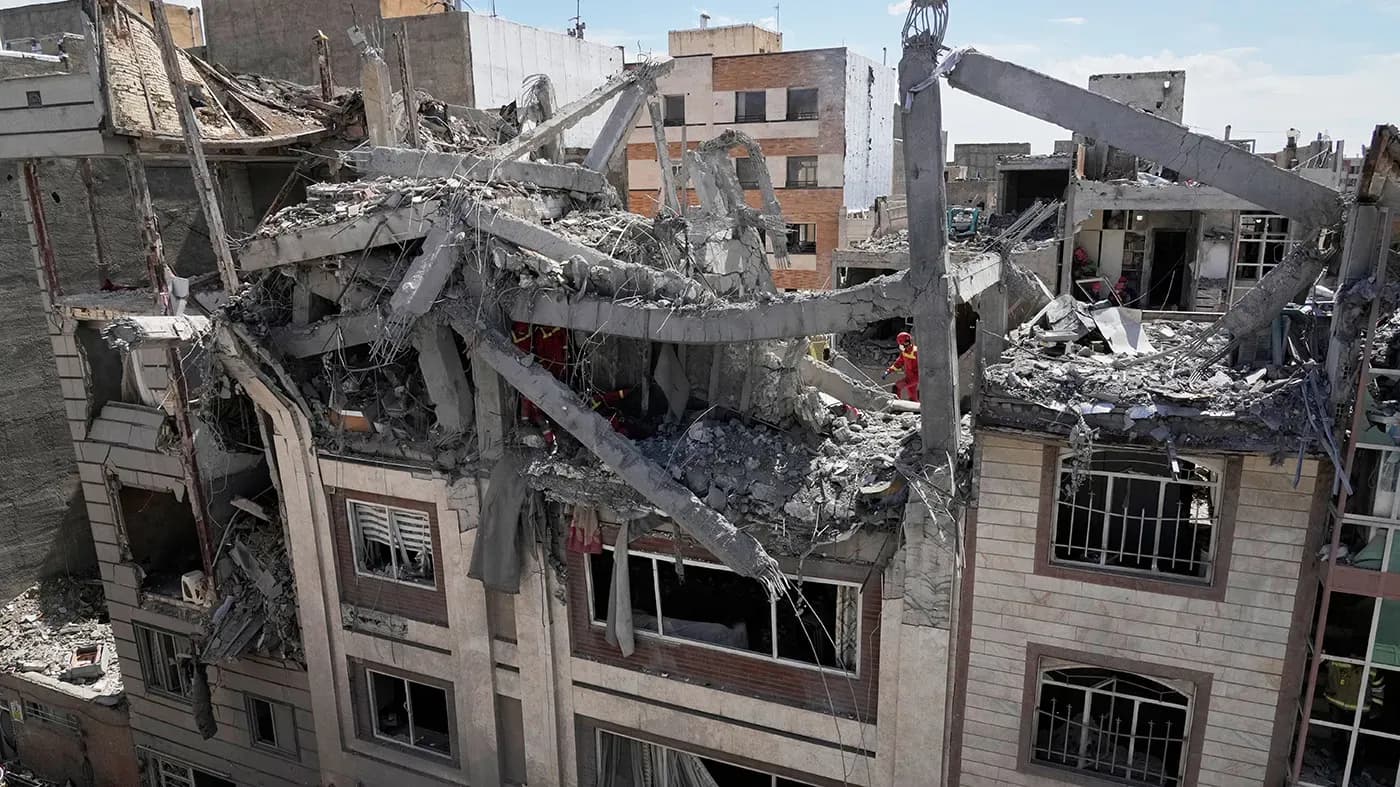
The March incident, in which Iran fired two missiles, one of which fell into the water, has highlighted Tehran's ability to strike targets previously considered beyond its reach. Analysts suggest this event could force Western officials to reconsider assumptions about the Iranian missile threat and its potential range.
Behnam Ben Taleblu, director of the Iran program at the Foundation for Defense of Democracies (FDD), stated that this incident is a 'game changer', especially for Europe, which could now be within range of Iranian missiles. Nicholas Carl of the American Enterprise Institute (AEI) agrees on the need to reassess Iranian missile capabilities.
Behnam Ben Taleblu, director of the Iran program at the Foundation for Defense of Democracies (FDD), stated that this incident is a 'game changer', especially for Europe, which could now be within range of Iranian missiles. Nicholas Carl of the American Enterprise Institute (AEI) agrees on the need to reassess Iranian missile capabilities.
Can Kasapoğlu of the Hudson Institute points out that Iran has maintained a 'convenient fiction' about its missile range, masking the true pace of its development program. This attack, with a profile extending into the Indian Ocean, demonstrates Iran's deliberate abandonment of strategic ambiguity. Kasapoğlu states that the implications for NATO are 'immediate and structural,' putting the alliance's territory within reach of Iranian missiles.
According to Israeli military assessments, Iran used a two-stage ballistic missile with an operational range of approximately 2,500 miles. NATO Secretary-General Mark Rutte indicated that the alliance cannot confirm the Israeli claims, but if true, they would be evidence of the importance of dismantling Iran's ballistic missile capability.
According to Israeli military assessments, Iran used a two-stage ballistic missile with an operational range of approximately 2,500 miles. NATO Secretary-General Mark Rutte indicated that the alliance cannot confirm the Israeli claims, but if true, they would be evidence of the importance of dismantling Iran's ballistic missile capability.
The challenge lies in determining whether Iran revealed a new capability in its attack on Diego Garcia, located about 2,360 miles from Iran, or if it employed a modified variant of an existing missile. Carl of the AEI mentions the ambiguity surrounding whether it is a modified version or something entirely different, possibly derived from its civilian space program.
Taleblu of the FDD raises two options for the missile used: the Khorramshahr, a medium-range ballistic missile, or solid-propellant space launch vehicles (SLVs). Kasapoğlu suggests that Iran likely used an SLV-derived architecture. Senator Tom Cotton, during a hearing of the Senate Armed Services Committee, asked if Iran's SLV program is a 'flimsy cover' to develop an intercontinental missile.
Taleblu of the FDD raises two options for the missile used: the Khorramshahr, a medium-range ballistic missile, or solid-propellant space launch vehicles (SLVs). Kasapoğlu suggests that Iran likely used an SLV-derived architecture. Senator Tom Cotton, during a hearing of the Senate Armed Services Committee, asked if Iran's SLV program is a 'flimsy cover' to develop an intercontinental missile.
CIA Director John Ratcliffe stated before the Senate Intelligence Committee that Iran is gaining experience in developing long-range missiles, with ranges of 3,000 kilometers, and that, if unchecked, Tehran would have the ability to strike the continental United States. Defense Secretary Pete Hegseth stated that Iran has deceived the world about its missile capabilities, and that degrading its production capabilities is crucial.
A report from the Defense Intelligence Agency last year indicates that Iran has space vehicles that it could use to develop an ICBM, but that it could take until 2035 to develop 60 intercontinental ballistic missiles.
A report from the Defense Intelligence Agency last year indicates that Iran has space vehicles that it could use to develop an ICBM, but that it could take until 2035 to develop 60 intercontinental ballistic missiles.
Carl of the AEI notes that, while Iran has worked on strengthening its missile systems, precision is not its strong suit. Taleblu of the FDD emphasizes the need to weaken Iran's missile systems, adding that actions must go beyond the destruction of launchers, also targeting production and assembly centers, as well as storage and launch sites.
Kasapoğlu concludes that Iran's reach extends 'well beyond' Europe and that Tehran's missile program has always aimed to have the continental United States within range.
Kasapoğlu concludes that Iran's reach extends 'well beyond' Europe and that Tehran's missile program has always aimed to have the continental United States within range.
Related Stories


OMNI•3 min•