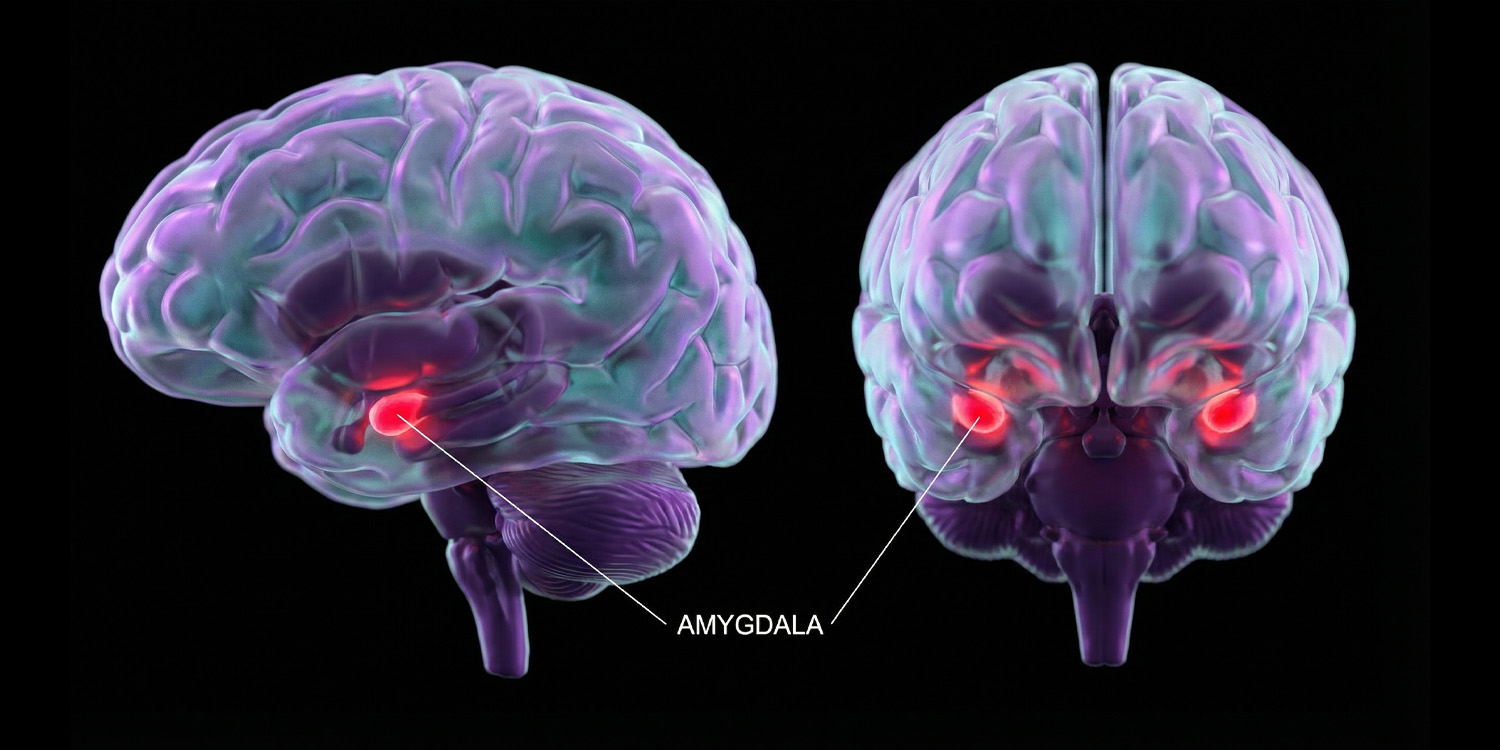
The research, led by Yu-Lu Wang, focused on 72 college students aged 18 to 25. Of these, 37 were classified as problematic smartphone users based on a standard psychological assessment. The study aimed to map the functional connectivity networks stemming from the amygdala, a key brain structure in processing emotions. Problematic smartphone use is defined by its negative impact on daily functioning, sharing similarities with addictive disorders, including withdrawal symptoms and digital dependence.
Participants completed questionnaires to assess their ability to manage negative emotions and underwent resting-state functional magnetic resonance imaging (rs-fMRI). This technique allows observation of brain activity synchronization, revealing functional connections between different areas. Analysis of rs-fMRI data allowed researchers to identify significant differences in amygdala connectivity between problematic users and the control group.
In problematic users, the right amygdala exhibited stronger connections to the right temporal pole, involved in social cognition and emotional memory. At the same time, weaker connections were observed with the right thalamus, the left precuneus, and the left cerebellum. The precuneus, a central node in the default mode network, is related to self-regulation and introspection. The left amygdala also showed differences, with stronger connections to areas of cognitive control and attention, specifically with the right inferior frontal gyrus, involved in response inhibition. These differences suggest a greater sensitivity to social stimuli and a reduced capacity for self-regulation and internal reflection.
In summary, the altered connections correlated with greater difficulties in emotional regulation and smartphone dependence.
The scan results were compared to the participants' questionnaires, revealing that less communication between the amygdala and the cerebellum correlated with greater smartphone dependence. On the other hand, increased connectivity between the left amygdala and attention-related areas was associated with greater difficulties in emotional management. The research team proposes that these brain patterns reflect an overactivation of emotional centers and a weakening of cognitive regulatory systems. This condition could make it harder to internally process negative feelings, driving individuals to seek comfort in their smartphones, reinforcing dependence.
The study, titled 'The relationship between abnormalities in amygdala functional connectivity and emotion regulation difficulties in problematic smartphone users,' was conducted by Yu-Lu Wang and a team of researchers.
The study, although revealing, presents important limitations. Its cross-sectional design only captures a moment in time, which prevents establishing a definitive causality between smartphone use and brain changes. In addition, the study is based on a relatively small sample of young adults, which limits the generalization of the results to other age groups. The human brain continues to develop until the mid-20s, especially in areas such as the prefrontal regions, which govern impulse control. Longitudinal studies are needed to better understand the evolution of these brain networks and the long-term impact of smartphone use.
The study suggests that excessive smartphone use could be linked to a harmful emotional cycle, where the difficulty in managing negative feelings drives people to seek comfort in technology, reinforcing dependence.
These findings underscore the importance of future research to better understand the relationship between smartphone use, brain connectivity, and mental health. Longitudinal studies are needed to determine whether excessive smartphone use causes changes in amygdala connectivity or if certain brain predispositions increase vulnerability to problematic use. It is also crucial to develop strategies to mitigate the negative effects of excessive smartphone use, including therapeutic interventions and education programs on the healthy use of technology.
The study published in 'BMC Psychology' offers a valuable perspective on how technology can influence our mental health and the importance of conscious and balanced use of digital devices.