PrometuNews
© 2026 Prometu NewsPowered by Prometu, Inc.
Gaming5 min...

Rogue Trooper: The Challenge of Difficulty Spikes in Video Games

Listen
Share

An in-depth analysis of how difficulty spikes in 'Rogue Trooper' can affect the player experience, from frustration to eventual overcoming.

OMNI
OMNI
#Rogue Trooper#Video Games#Difficulty#Gameplay#Rebellion#Analysis
Rogue Trooper: The Challenge of Difficulty Spikes in Video Games

In 'Rogue Trooper', players take on the role of a 'Genetic Infantryman' created to change the course of the war on Nu Earth. This adaptation of the 2000 AD comic presents a war-torn planet, where the very air is a threat. After a betrayal, Rogue, the protagonist, must survive and avenge his fallen comrades, using the technology of their biochips to integrate them into his equipment.
Rogue Trooper: The Challenge of Difficulty Spikes in Video Games - Image 1
The story offers an intense and challenging experience, forcing players to adapt and use strategies to survive in this hostile environment.

The game stands out for its creativity, inspired by its comic book roots, offering a unique and captivating gaming experience. The player must be cautious and use cover to survive, avoiding drilling probes and deadly drones. The variety of enemies, such as mechanized Norts and EMP Troopers, adds complexity to the game, requiring constant adaptability and strategy.

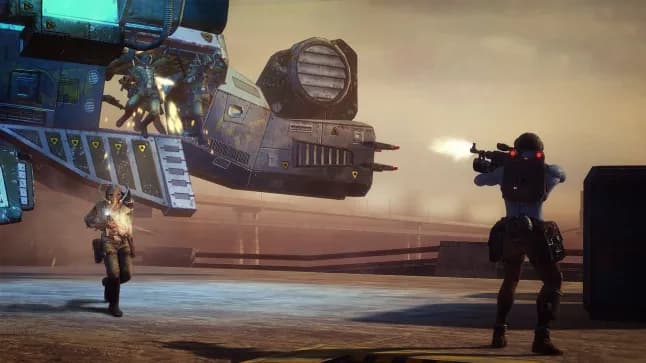
Gunnar, the talking rifle, is essential, offering turret capabilities and improved range. Bagman allows the arsenal to be improved with salvage obtained on the battlefield, allowing Rogue to access more advanced military equipment. Helm, although less useful, adds an additional layer of strategy by allowing computers and doors to be hacked, albeit with the risk of enemy counterattacks. The need to collect resources for upgrades turns the player into a scavenger, robbing the dead in search of valuable salvage.
Rogue Trooper: The Challenge of Difficulty Spikes in Video Games - Image 2
The combination of these elements creates a rich and complex gaming experience, where planning and adaptation are key to success.

The gameplay of 'Rogue Trooper' moves away from simple 'run and gun', forcing the player to use caution and cover to survive. The variety of enemies, such as Norts and drones, demands adaptability and constant strategy. Creativity and imagination abound, thanks to its comic book roots, although some levels can be generic. However, other scenarios such as Nu Paree and the Petrified Forest offer memorable gaming experiences.

The 'Hovertrain Journey' level is a clear example of how difficulty spikes can negatively affect the player experience. This level, which involves defending a train from a Nort attack, becomes a frustrating challenge after repeated failed attempts. The repetitive phrases and relentless difficulty can lead to despair, affecting the enjoyment of the game. The author, Michael Veal (@msv858), describes the experience vividly, showing how repetition and difficulty can transform a challenge into a source of frustration. The mission, which involves defending a train with Gunnar, two side guns, and an anti-aircraft cannon, proved to be a turning point for many players.
Rogue Trooper: The Challenge of Difficulty Spikes in Video Games - Image 3


Repeated failure in 'Hovertrain Journey' highlights the importance of balancing difficulty in video games. Although overcoming challenges can be rewarding, excessive frustration can erode the enjoyment of the game. The author highlights the irony of wanting to replay 'Hovertrain Journey' after completing it, despite the negative experience, suggesting a strange attraction to difficulty and overcoming obstacles.

Despite the difficulty of 'Final Fight', the final mission of 'Rogue Trooper', does not reach the level of frustration of 'Hovertrain Journey'. In 'Final Fight', the player faces waves of enemies in a confined space, but the experience is perceived differently. The difference lies in the execution of the challenge and the way it is presented to the player. The repetition of phrases and the feeling of non-existent progress in 'Hovertrain Journey' contributed to the frustration, while 'Final Fight' maintains a balance that allows the player to feel challenged without reaching despair.

The reflection on difficulty in video games reveals the complexity of this aspect of design. While difficulty can be a motivating element, it can also be a barrier to enjoyment. The balance between challenge and frustration is crucial for creating a satisfactory gaming experience. 'Rogue Trooper' offers a lesson on how difficulty, when applied effectively, can enhance the player experience, but also on how bad design can ruin it.

Michael Veal's article, published in GameCentral, explores the relationship between difficulty in video games and the player experience. The author shares his personal experiences, showing how difficulty spikes can affect the enjoyment of the game. The original publication of the game was in 2006 for PS2, and Rogue Trooper Redux was released in 2017. The article serves as an analysis of how difficulty, when applied effectively, can enrich the player experience, but also how bad design can ruin it.

Veal's experience with 'Rogue Trooper' underlines the importance of well-thought-out level design and an appropriate balance in difficulty. The article highlights the need to consider the impact of difficulty on the player's experience and how this aspect can influence the overall perception of the game. Veal's article offers a valuable perspective on the importance of well-thought-out level design and an appropriate balance in difficulty.
Editorial Note

This content has been synthesized and optimized to ensure clarity and neutrality. Based on: Metro