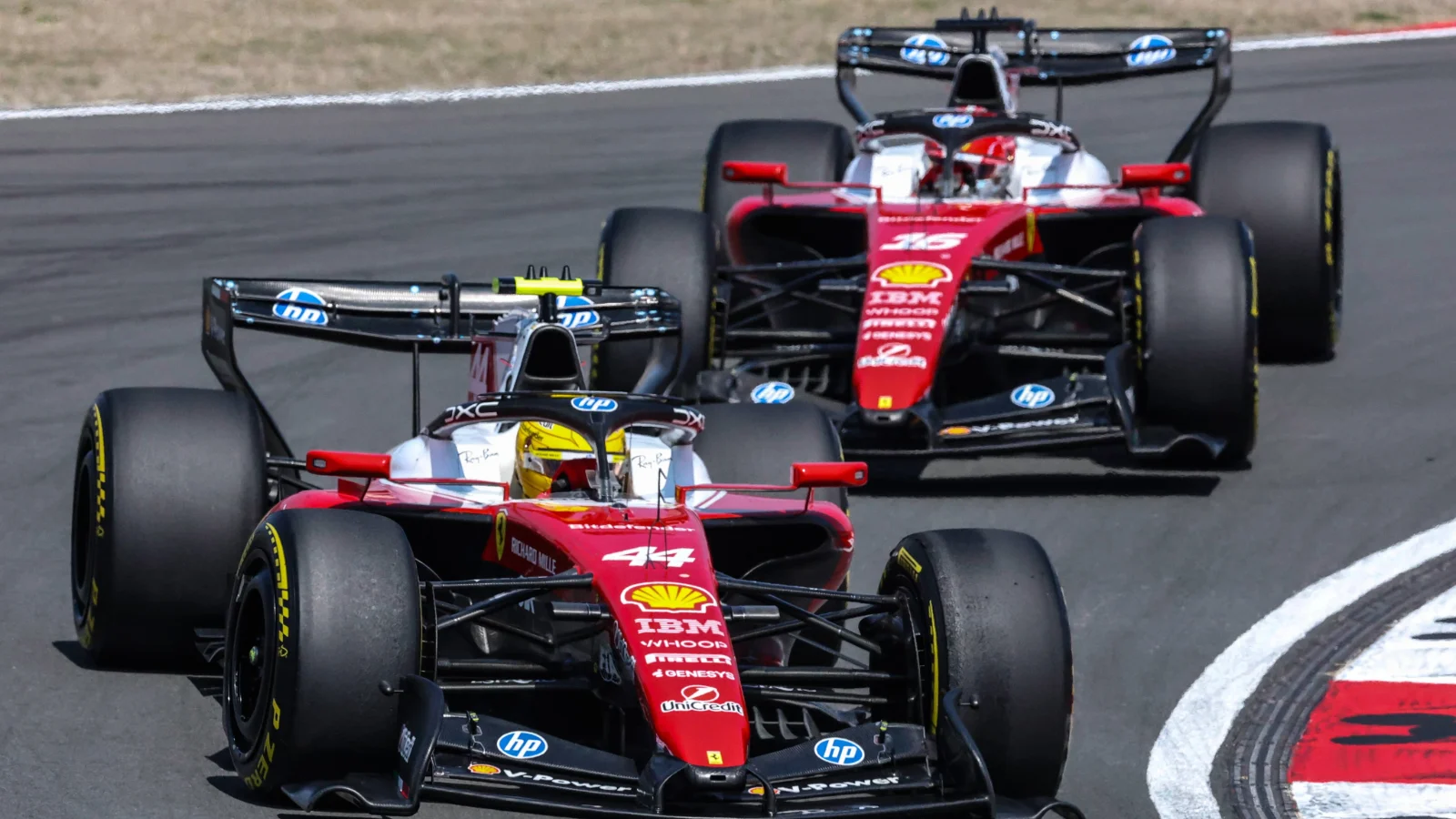
After two races, Ferrari returned to Maranello for a detailed review, aiming to extract more performance from the SF-26 and reduce the distance to Mercedes. The Suzuka circuit presents a different challenge compared to the opening rounds, with a complete resurfacing and cooler conditions adding uncertainty. Managing battery recovery will be key, though not as extreme as in Melbourne.
The Italian team is focused on improving how energy is deployed throughout the lap, especially in slow corners and transition phases. One solution under evaluation involves running lower gears to keep engine revs high and boost energy harvesting. Ferrari believes it has yet to find the optimal setup to extract maximum performance from the engine.
Mercedes excels on straights, thanks to a power unit that offers superior performance and more efficient energy recovery, managing to recharge the battery with less speed loss, a crucial advantage. Ferrari, on the other hand, focuses on its own concept, working on optimizing energy delivery on each lap, especially in slow corners and transitions. The team does not seek to copy Mercedes, but to perfect its own approach, looking for innovative solutions to maximize the performance of its single-seater.
Ferrari engineers are working on solutions that could include using lower gears to keep engine revs high and thus increase energy harvesting. The goal is clear: to find the optimal configuration so that the engine offers maximum possible performance in each race.
Aerodynamics is another central point, with the team evaluating the experimental 'Macarena' rear wing, briefly seen in China. This design seeks to increase straight-line speed, but also presents balance problems. Drivers reported instability when closing the wing, especially under braking. Engineers are refining how and when the system operates, along with adjustments to the front wing to stabilize the car.
The system offers clear advantages when open, but less so when closed, and adds weight, something the SF-26 needs to reduce. In addition, other details are being reviewed, such as a halo-mounted fin that could return in a revised version after raising concerns about visibility. Suzuka will be an important test to determine if Ferrari's direction is the correct one before a short break in the calendar.
The team faces the need to improve energy management and aerodynamic balance to reduce the gap with Mercedes. The Suzuka circuit, with its unique characteristics, presents an opportunity to evaluate the improvements implemented. Ferrari's strategy focuses on optimizing its own concept, rather than copying Mercedes, seeking innovative solutions to maximize performance.
The continuous evaluation of the 'Macarena' rear wing and other aerodynamic details are crucial to finding the right balance between speed and stability. The Italian team seeks the optimal configuration to extract maximum performance from its single-seater and demonstrate its competitiveness in the Japanese Grand Prix.
Ferrari's main objective in Suzuka is to close the gap with Mercedes, focusing on energy management and aerodynamic balance to achieve it. The team is working on optimizing energy delivery throughout the lap, especially in slow corners and transition phases, seeking innovative solutions and improving the aerodynamics of the SF-26.
The continuous evaluation of the 'Macarena' rear wing and other aerodynamic details are crucial to finding the right balance between speed and stability. Suzuka will be an important test to determine if Ferrari's direction is the correct one before a short break in the calendar.