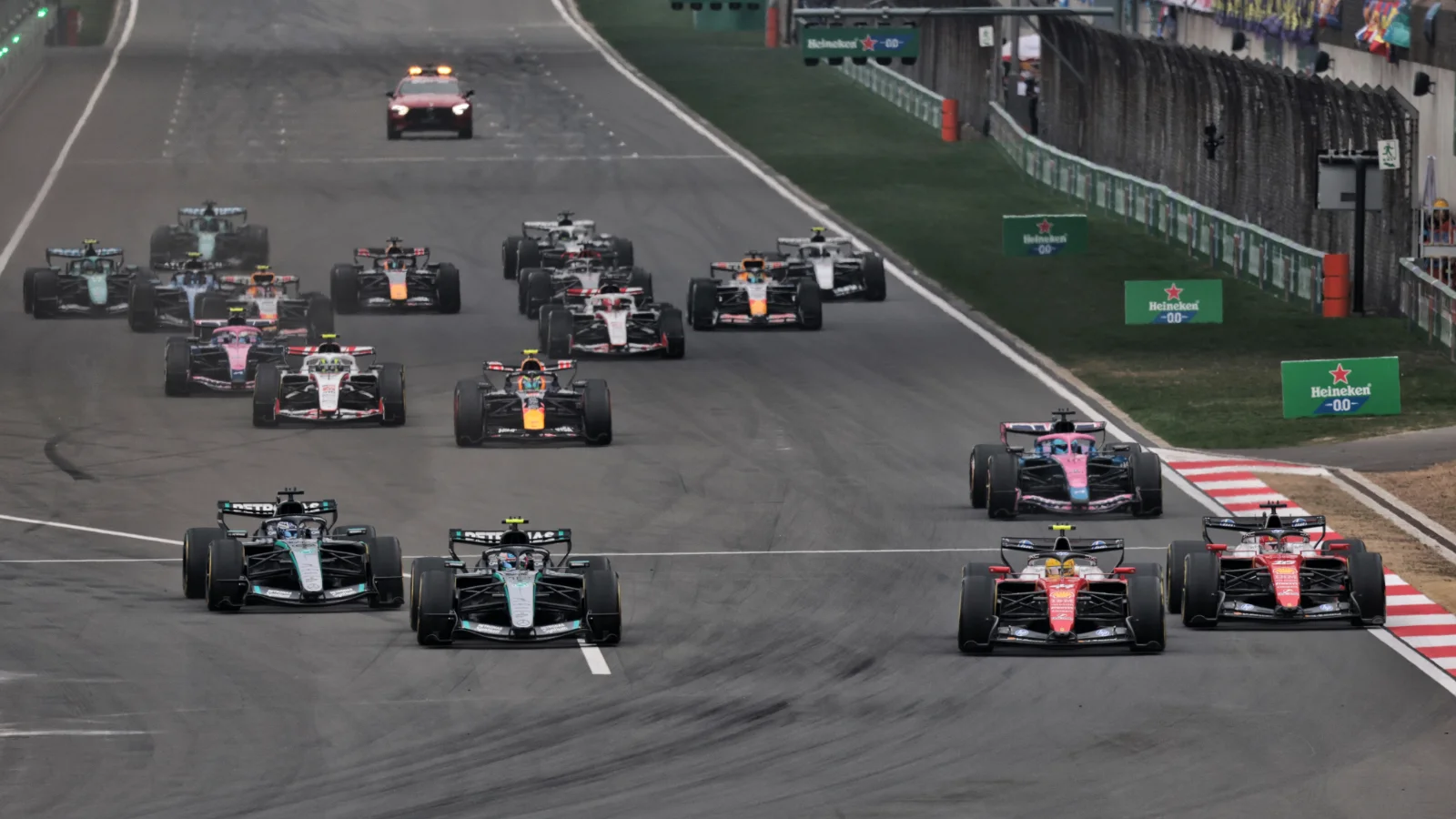
For years, Formula 1 has tried to mitigate the impact of dirty air through changes in aerodynamic rules. However, the early phases of the 2026 regulations suggest a different approach. The basic limitation is that fast cars will always create turbulent wakes, and high downforce will always be necessary. This problem cannot be removed entirely.
The innovation lies in the behavior of the new power units. Variations in power delivery have allowed drivers to stay closer and fight, even in disturbed air. While it's early, the signs are clear: the dirty air problem no longer has the same impact it once did.
Ferrari has gone toe-to-toe with Mercedes this year, but has not had the legs to continue the fight. This does not mean the current rules are perfect; there are flaws, and teams are actively working with Formula 1 to refine them. The dialogue is ongoing, and improvements will come. But even at this stage, the racing has exposed a meaningful step forward.
This does not imply that aerodynamics or tires should be ignored; both still matter. However, it points to a broader solution. Future rules may need to combine aerodynamic improvements with systems that influence power delivery.
The challenge will be to do that without creating something artificial or one-sided, like DRS. Any approach should allow both drivers to compete on equal terms, rather than giving the car behind a fixed advantage. There is no finished answer yet, but the current regulations offer a useful test case.
As more data emerges, F1 has a chance to shape a more complete and lasting fix. The key takeaway is simple: if the sport wants closer racing, it may need to overcome the effects of dirty air rather than just try to reduce them.
Formula 1 is seeking a balance, exploring how power management can help drivers compete more closely. The key is to avoid artificial solutions like DRS, which grant one-sided advantages.
The current regulations serve as a test bed for this approach. As more data is collected, the rules are expected to be refined to achieve more exciting and competitive races. The ultimate goal is a sport where the driver's skill and the car's performance are the deciding factors, regardless of turbulent air.
The new F1 regulations for 2026 represent a significant shift in how the dirty air problem is addressed. Aerodynamics, while important, is no longer the sole focus. Power management is presented as a crucial factor in enabling drivers to compete more closely.
This shift in focus could lead to more exciting and competitive races, where the driver's skill and the car's performance are the deciding factors. The ultimate goal is to create a more attractive sporting spectacle for fans and a more balanced playing field for the teams.