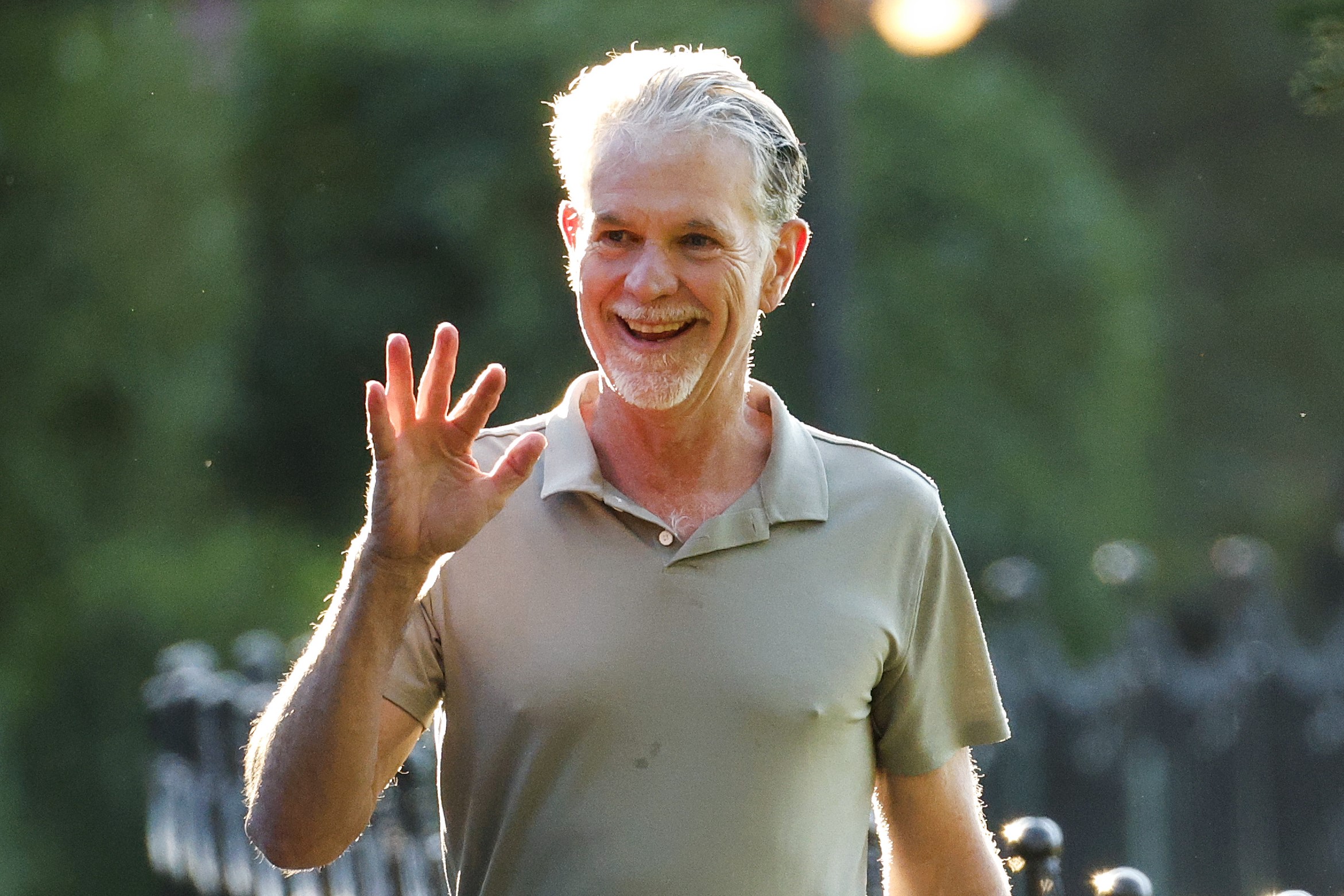
In a recent interview, Reed Hastings, co-founder and former CEO of Netflix, expressed his concerns about the potential impact of artificial intelligence on content creation, particularly on platforms like YouTube. Hastings, who now focuses on his Utah ski resort purchased in 2023, remains on the Netflix board. The interview was conducted for the syndicated TV show "In Depth With Graham Bensinger".
Hastings argues that the biggest challenge for Netflix is whether free AI-generated content on YouTube becomes compelling enough for young people to stop paying for subscription services. He emphasizes that Netflix must innovate with AI to improve its content and justify the subscription fee, much like HBO did in its early days.
Hastings' concern centers on the possibility of AI transforming content creation in a way that makes users prefer free platforms, posing a threat to Netflix's subscription-based business model.
In a strategic move, Netflix announced the acquisition of InterPositive, a startup founded by Ben Affleck, specializing in AI filmmaking tools. InterPositive's technology aims to keep filmmakers at the center of the creative process. According to the deal terms, Netflix could pay up to $600 million to InterPositive investors.
This acquisition is a clear indication of Netflix's commitment to AI as a tool to improve the quality and efficiency of its original content. The company seeks to integrate AI into its production processes to offer its subscribers more engaging and personalized experiences.
The investment in InterPositive reflects Hastings' vision of using AI to strengthen Netflix's value proposition and differentiate itself from the competition, especially platforms like YouTube.
Hastings, who stepped down as co-CEO of Netflix in early 2023 after 25 years at the helm of the company, is now the majority owner of the Powder Mountain ski resort in Eden, Utah. He bought the place in 2023, assuming over $100 million in debt, according to The New York Times.
In the interview, Hastings compares his departure from Netflix to the end of a 25-year marriage. He describes his new venture at Powder Mountain as a "rebound business," where he can have a tangible impact and participate in all aspects, from menu management to building design.
Hastings' transition to Powder Mountain represents a significant change in his professional life, moving from high-tech to a more visceral and community-oriented experience.
In addition to his reflections on the future of Netflix and his new life, Hastings shared details about personal changes. He revealed that he reduced his alcohol consumption from three glasses a day to one, admitting that he self-medicated to deal with the stress of running the company.
Hastings explained that during his time as CEO, he would resort to overeating and drinking to manage the pressure. Upon leaving the position, he was able to assess his well-being without the need for these "self-medications".
Hastings' revelation offers a personal insight into the impact of high-level leadership and the importance of mental health.
The interview with Reed Hastings underscores the need for entertainment companies to adapt to a constantly changing technological landscape. The threat of AI and free content on platforms like YouTube forces Netflix to innovate and justify its subscription model.
The acquisition of InterPositive and Hastings' vision for using AI to improve content are examples of Netflix's strategy to meet this challenge. The company seeks to offer a value proposition that justifies the payment of its subscribers.
The interview serves as a wake-up call for the industry, highlighting the importance of innovation, adaptation, and attention to mental health in an increasingly competitive business environment.