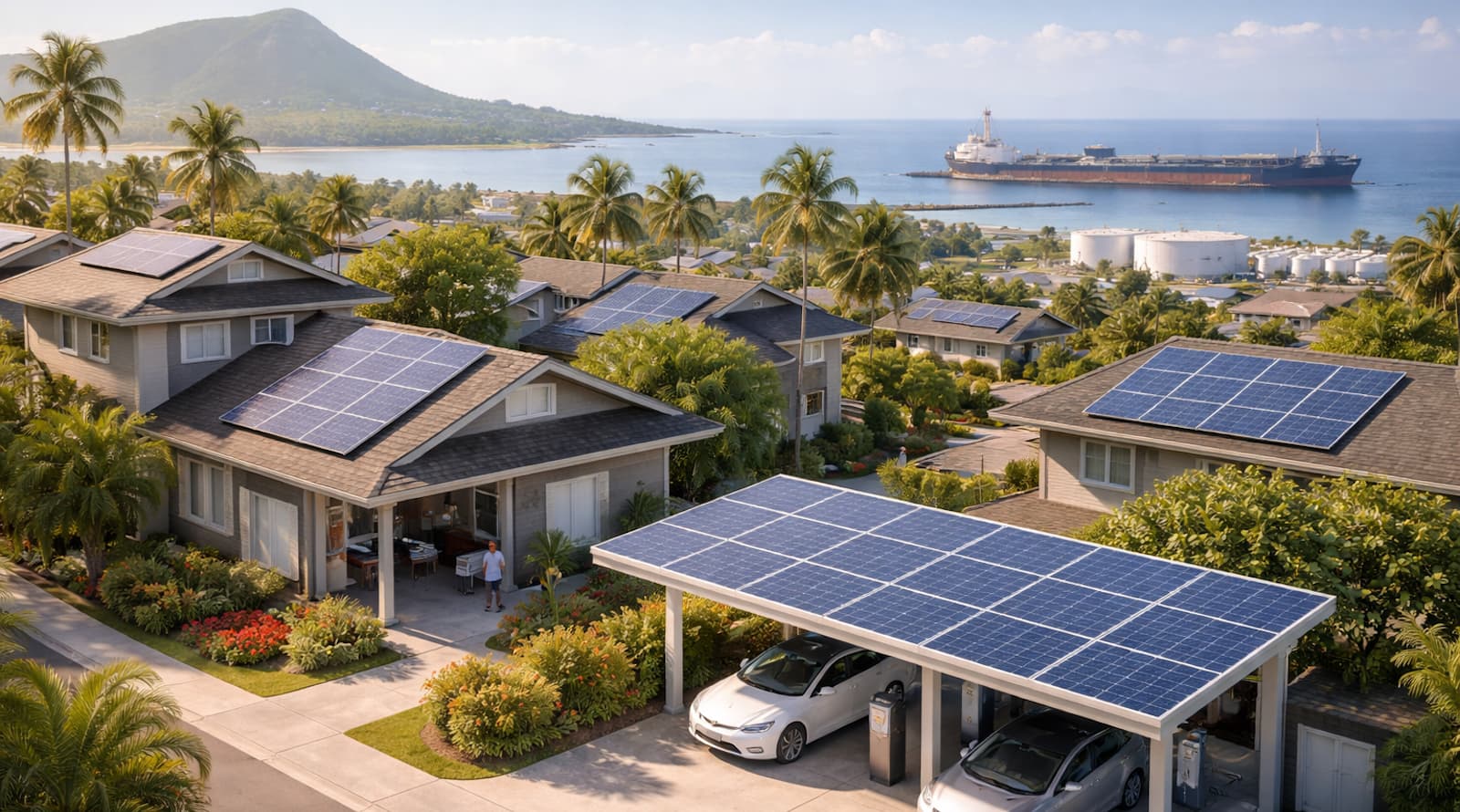
Hawaii’s bet on LNG was presented as a pragmatic response to a concrete problem: high electricity prices, aging oil-fired generation plants, isolated island grids, and political pressure to cut bills without compromising reliability. HSEO’s January 2025 alternative fuels study was built around this frame, focusing on the firm generation component of the electric grid, especially on Oʻahu. Within that framework, the study argued that an interim transition to LNG could reduce costs and emissions while supporting reliability.
In its key case, Alternative 1A, the only remaining net positive after serious modeling errors were discovered in its preferred case, HSEO stated that the benefits of an interim transition to natural gas exceeded the costs, with a net present value of approximately $150 million and levelized savings of $10.2/MWh. Governor Green’s office and JERA then built on that logic, with JERA proposing an investment of approximately $2 billion for a roughly 500 MW gas-fired plant and offshore LNG import infrastructure to address what it called Oʻahu’s affordability, sustainability, and reliability trilemma.