Why Global 'Chokepoints' Are Reshaping World Economic Power
Listen
Share
The world is rediscovering chokepoints, which extend beyond geographic borders to infrastructure, industry, and the digital world, reshaping economic competition and geopolitical rivalry.
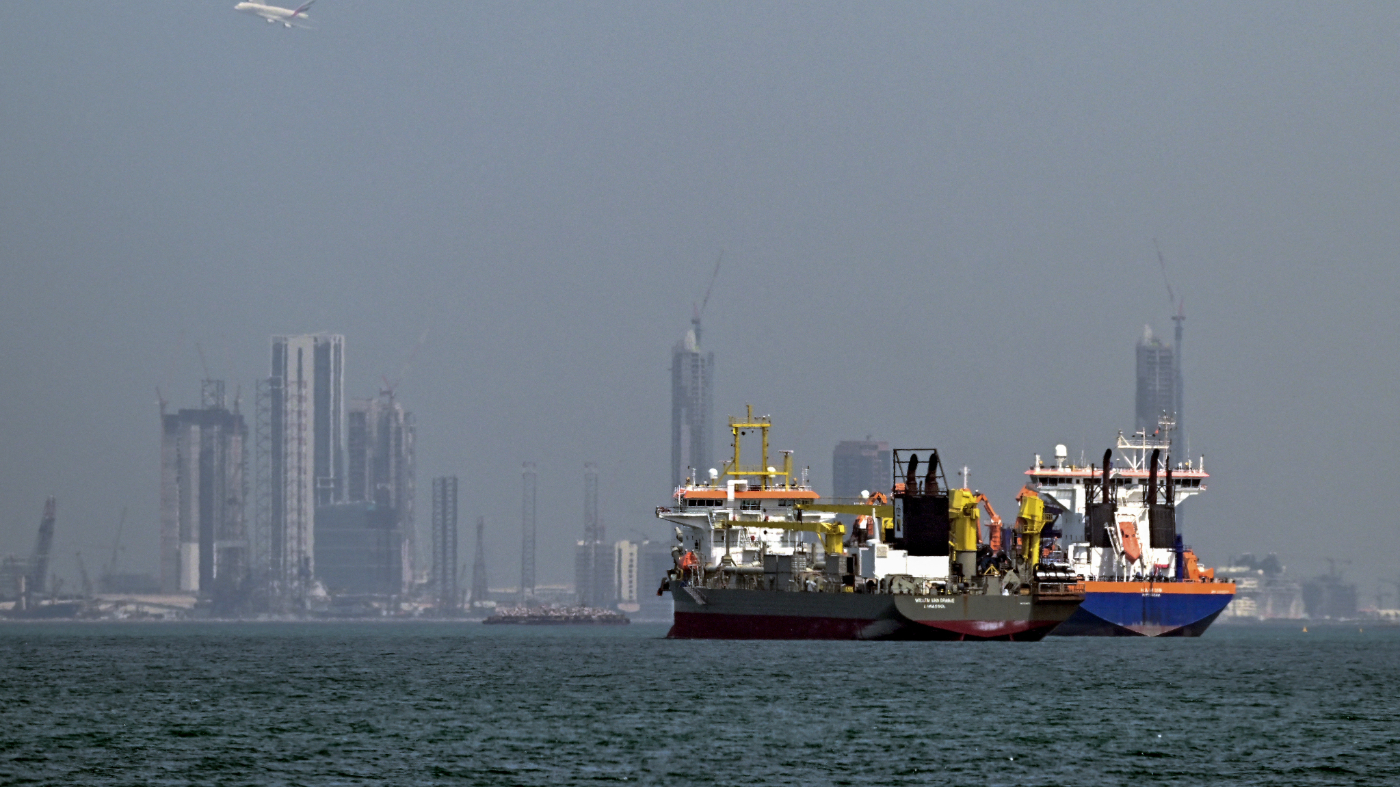
Tensions in the Middle East, as evidenced by the Strait of Hormuz, highlight the vulnerability of global trade routes; approximately one-fifth of globally traded oil passes through this waterway. Any disruption immediately affects energy prices and the wallets of consumers. However, the real story of the global economy in 2026 is not focused on a single chokepoint, but on the proliferation of these in geography, infrastructure, industry and even the digital world.
These bottlenecks constitute the hidden architecture of the global economy, becoming the terrain where economic competition and geopolitical rivalry are fought. Globalization, based on efficiency, optimized supply chains to reduce costs, concentrating production and trade routes. This led to lower prices and unprecedented economic integration, but also to vulnerabilities.
Over 80% of global trade is carried by sea, and a significant portion passes through straits like Malacca, the Suez Canal (which was blocked by a single ship in 2021), and the Panama Canal. These are not just geographical features, but strategic pressure points. Insurance premiums, cyber interference, drone attacks, and gray-zone tactics can achieve similar effects to a formal blockade, but at a much lower cost.
These vulnerabilities extend to industrial capacity, with advanced semiconductor manufacturing dominated by a few facilities in Taiwan and South Korea, and the most sophisticated chipmaking equipment produced by a single company in the Netherlands. Rare earth processing is concentrated in China.
Energy systems, although the United States has achieved some independence, remain globally interconnected, and liquefied natural gas exports depend on a limited number of terminals. Key pipeline routes continue to shape regional energy security. Around 95% of global data travels via undersea cables. Cloud computing infrastructure is concentrated in a few firms and locations, and satellite systems support everything from navigation to financial transactions.
These digital networks, although rarely discussed in traditional national security debates, their disruption would have consequences as serious as the closure of any canal or strait.
The dominance of the US dollar, the centrality of Western financial institutions, and the role of systems like SWIFT give Washington enormous influence. Sanctions have demonstrated that access to the global financial system can be restricted as effectively as access to a physical trade route. These chokepoints reveal a fundamental shift in how power operates in the global economy. In the 20th century, geopolitical competition was about territory; in the 21st century, it is increasingly about controlling the flows of goods, energy, data, and capital.
The actors that can secure, disrupt, or redirect those flows have a disproportionate influence.
For the United States, resilience must be as important as efficiency. Diversification, through nearshoring, friend-shoring, and domestic investment, is now a strategic imperative. Alliances are more important than ever, as no country can completely eliminate its exposure to chokepoints, but working with trusted partners can build redundancy. Policymakers must re-examine what constitutes critical infrastructure, as ports, pipelines, semiconductor fabs, data centers, undersea cables, and mineral processing facilities are vital.
The United States must recognize that chokepoints are sources of power, as the ability to shape access to key technologies, financial systems, and supply chains provides leverage in an increasingly competitive world.