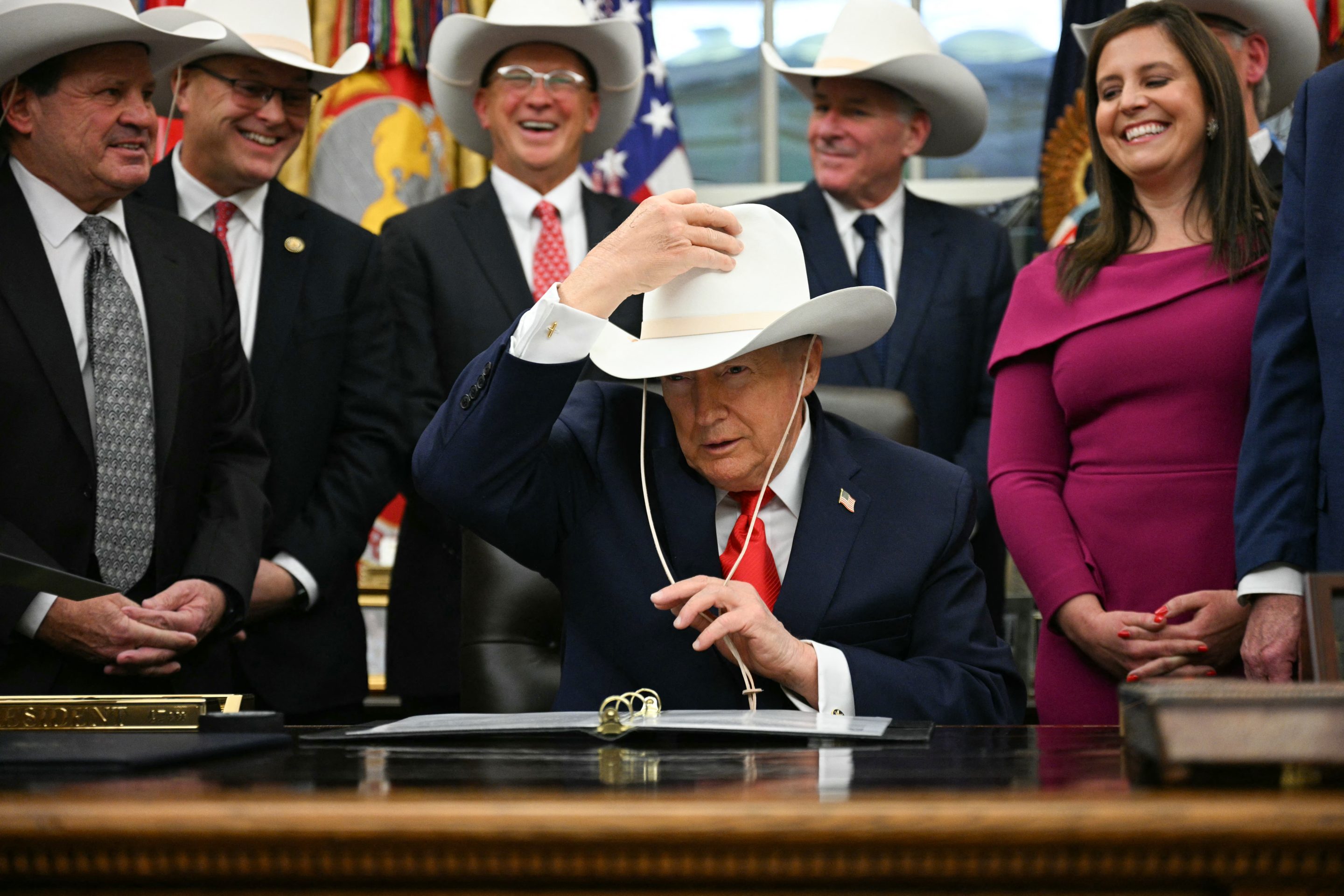
Former President Donald Trump convened what he called the largest gathering of American farmers at the White House, bringing together over 800 people. The event took place on the South Lawn alongside John Deere tractors. Trump highlighted his support for the agricultural industry, mentioning $12 billion in aid through the USDA's Farmer Bridge Assistance Program. He later requested more aid from Congress in the next funding bill.
However, much of this presidential aid is benefiting the wealthiest. An analysis by the Cato Institute reveals this disparity. The average income of a U.S. farm household in 2024 was $159,334, 32% above the national average and almost double the national median of $83,730.
Data shows that most subsidies go to the top 10% of farms. A 2023 report from the Government Accountability Office (GAO) revealed that over 1,300 farmers with an adjusted gross income of over $900,000 have received subsidies from the federal crop insurance program.
This program, established in 1938 under President Franklin Delano Roosevelt, evolved to provide financial protection against natural disasters and economic downturns. It currently covers over 120 commodities, representing most of the value of U.S. crop production.
Chris Edwards, editor at the Cato Institute, argues that the subsidies are not a safety net for poor farm families, but permanent welfare for high-income businesses. Edwards points out that because there are no income limits for crop insurance, the top 10% of farmers receive 56% of all program subsidies.
Even billionaire farmers receive subsidies. A 2015 GAO report cited four individuals with a net worth of $1.5 billion or more, who participated in the crop insurance program and received subsidies. The USDA withholds the names of subsidy recipients, so it is unclear which wealthy farmers received the aid.
Tariffs and rising input costs are putting American agriculture in a precarious financial position. The war in Iran is driving up energy costs and fertilizer prices. In addition, some farms face pressure from the AI industry, which seeks to convert farmland into data centers.
Trump claimed that American farmers have been mistreated by some countries and said he was taking action to support an industry battered by rising fuel and fertilizer prices.
Taxpayers are expected to pay $14.7 billion in 2026 for the federal crop insurance program, of which $9.6 billion goes to farmers and $5.1 billion to insurance companies. The Congressional Budget Office foresees an increase in spending.
Edwards argues that the program benefits insurers as much as it does farmers, comparing it to a system where the government subsidizes insurance premiums, benefiting insurance companies.
Editorial Note
This content has been processed by our team to ensure neutrality and journalistic clarity. Based on:Fortune