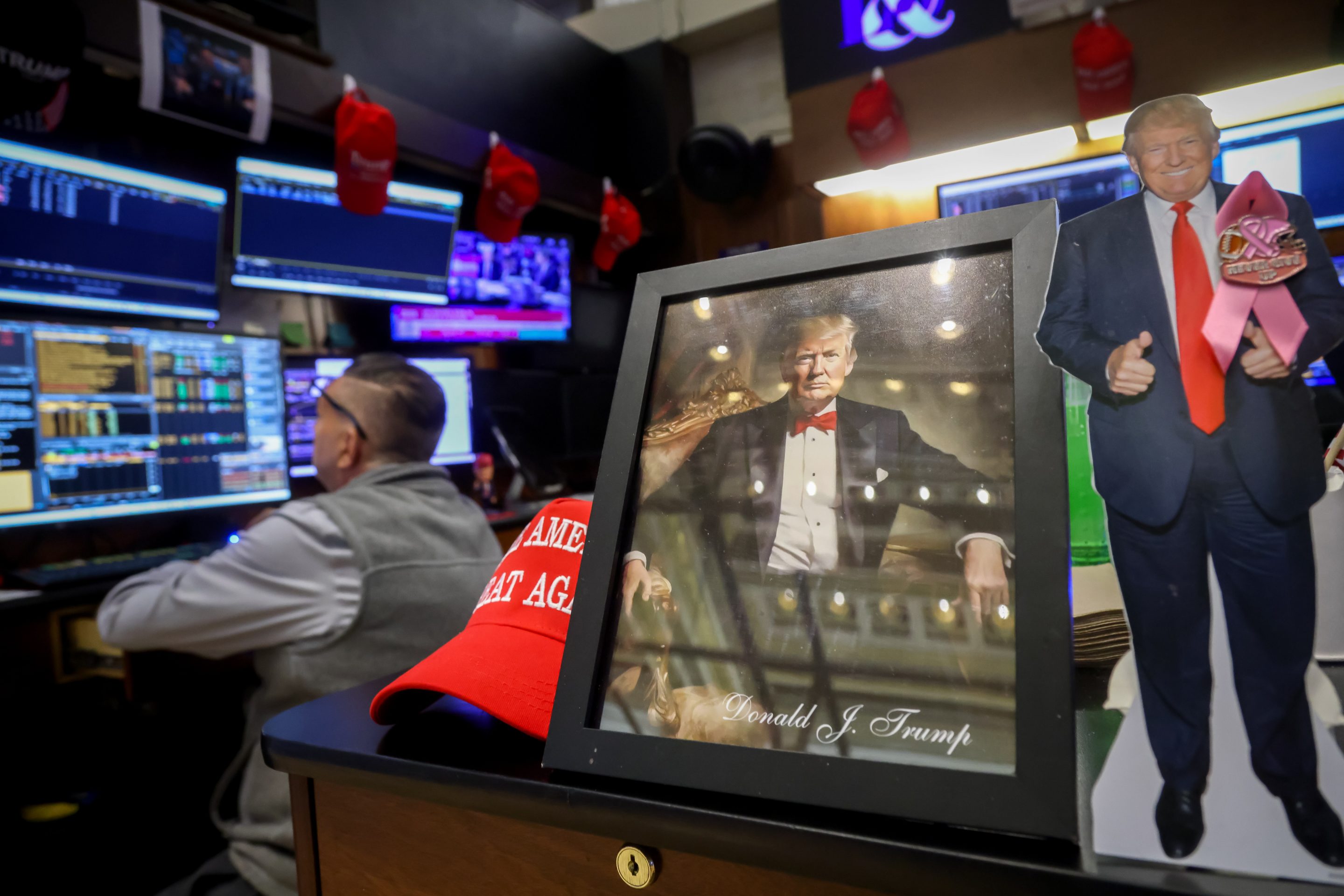
Over the past month, US financial markets have experienced extreme volatility, driven by former President Donald Trump's posts and comments on Truth Social, more than by macroeconomic data. This volatility, which has reached levels not seen since the height of the COVID-19 pandemic, has caused intraday swings of up to 15% in some assets. A prominent investor even pointed out that it is essential to understand Trump's mentality to operate in financial markets, considering it more important than speculation about the Federal Reserve, interest rates, unemployment, or inflation. This volatile environment has created what is called a 'Trump Market', where traditional investment strategies may not be effective.
To successfully navigate this 'Trump Market', it is crucial to understand the former president's way of thinking. A recent book, 'Trump's Ten Commandments', explores the patterns underlying his actions, providing guidance for investors. This analysis reveals that financial markets are the main factor conditioning his decisions.
Trump considers money as the ultimate metric of success and financial markets as a crucial indicator of his leadership. The market's reactions to his decisions, including his reversals, are a key factor in his strategy. The 'TACO trade' (Trade After Careful Observation) is a recurring pattern: when the market reacts negatively to a Trump action, he usually reverses his position, even if superficially. However, once the markets stabilize, Trump tends to return to his original position, creating a cycle of escalation and de-escalation. This strategy allows him to maintain control and initiative, even in conflict situations.
Critics suggest that these reversals may favor 'insider trading', although there is no direct evidence. Trump's boldest and riskiest actions, have often been announced near the close of the market, followed by de-escalation rhetoric at the start of the week, demonstrating the importance of markets for his decisions.
Trump is not governed by ideology, but by pragmatism and opportunity. Fluidity and inconsistency are virtues for him, which allows him to send contradictory messages and keep all options open. This creates uncertainty and forces others to react, while he maintains the initiative and the ability to maneuver. By adopting a stance of peace while controlling the escalation, Trump manages to calm the markets, strengthen public support, and maintain the military advantage.
Reversals are expected to continue, especially in a context of optimism about possible peace talks. The arrival of additional military forces in the Middle East could alter the balance of power and offer Trump new opportunities.
Instead of building trust, Trump prefers aggression as an initial strategy in negotiations, seeking to inflict maximum damage on his opponents. This allows him to create maximum leverage and achieve his goals. He is unlikely to offer generous compromises, as he prefers to seize any opportunity to gain the greatest possible advantage.
With the change in military power in sight, Trump could feel more inclined to authorize further escalation, including possible actions on Kharg Island, Iran's oil facilities, or even limited incursions into the Strait of Hormuz. As Yogi Berra said, 'It ain't over till it's over', and in Trump's world, even then, it's not always over.
A cryptocurrency investor highlighted the importance of understanding Trump's mentality for traders, above factors such as interest rates or inflation. Trump's patterns of behavior, revealed in 'Trump's Ten Commandments', suggest that markets will continue to experience disruptions driven by his decisions. Volatility and unpredictability will remain key characteristics of the 'Trump Market'.
The analysis of Trump's actions reveals discernible patterns, despite his apparent unpredictability. Understanding these patterns is essential for investors who wish to navigate the current market.