
Stellar Discovery: Olbers Finds Pallas in 1802!
In 1802, Heinrich Olbers made a crucial discovery that changed the understanding of the solar system.

#astronomy#Olbers#Pallas#asteroids#history
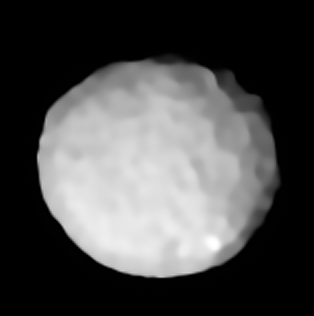
In the 18th century, an international group of astronomers, referred to as the 'Celestial Police,' devoted themselves to searching for the 'missing' planet between Mars and Jupiter.
A planet was expected in that zone based on the extrapolations of the Titius-Bode law, a mathematical formula developed by Johann Titius in 1766 and popularized by Johann Bode, both German astronomers.
This law calculated the expected spacing between planets in the solar system and had gained credibility in 1781, when William Herschel discovered Uranus exactly where the Titius-Bode law had predicted it.
A planet was expected in that zone based on the extrapolations of the Titius-Bode law, a mathematical formula developed by Johann Titius in 1766 and popularized by Johann Bode, both German astronomers.
This law calculated the expected spacing between planets in the solar system and had gained credibility in 1781, when William Herschel discovered Uranus exactly where the Titius-Bode law had predicted it.
In 1801, Giuseppe Piazzi seemed to have delivered on the law's promise when he discovered the dwarf planet Ceres.
However, on March 28, 1802, Heinrich Olbers, while attempting to observe Ceres, discovered the asteroid Pallas.
Though both were large, today we know Ceres and Pallas as the largest and third-largest objects, respectively, in the asteroid belt.
However, on March 28, 1802, Heinrich Olbers, while attempting to observe Ceres, discovered the asteroid Pallas.
Though both were large, today we know Ceres and Pallas as the largest and third-largest objects, respectively, in the asteroid belt.
Olbers realized that both Ceres and Pallas were far too small to be the mythical missing planet.
His search for the source of Ceres and Pallas would, however, lead him to discover the second-largest asteroid belt member, Vesta, on March 29, 1807.
This discovery expanded the knowledge of the asteroid belt and the composition of the solar system.
His search for the source of Ceres and Pallas would, however, lead him to discover the second-largest asteroid belt member, Vesta, on March 29, 1807.
This discovery expanded the knowledge of the asteroid belt and the composition of the solar system.
The finding of Pallas by Heinrich Olbers was a turning point.
This event challenged expectations and forced astronomers to reconsider their theories about planetary formation.
Subsequent research on asteroids and the asteroid belt continued to reveal valuable information about the history of the solar system.
This event challenged expectations and forced astronomers to reconsider their theories about planetary formation.
Subsequent research on asteroids and the asteroid belt continued to reveal valuable information about the history of the solar system.
The work of Olbers and the 'Celestial Police' laid the foundation for modern astronomy.
Their dedication to the search for new celestial objects spurred the development of observation techniques and data analysis.
The discovery of Pallas and Vesta changed the perception of the solar system and opened up new avenues for astronomical research.
Their dedication to the search for new celestial objects spurred the development of observation techniques and data analysis.
The discovery of Pallas and Vesta changed the perception of the solar system and opened up new avenues for astronomical research.
Related Stories


OMNI•3 min•

OMNI•3 min•