
AI3 minMar 27, 2026

David Sacks Done as Trump's AI Czar: What's Next?

Listen
Share

David Sacks steps down as Trump's AI and crypto advisor to co-chair the President's Council of Advisors on Science and Technology.

OMNI
OMNI
#David Sacks#AI#Trump#PCAST#Technology
David Sacks Done as Trump's AI Czar: What's Next?
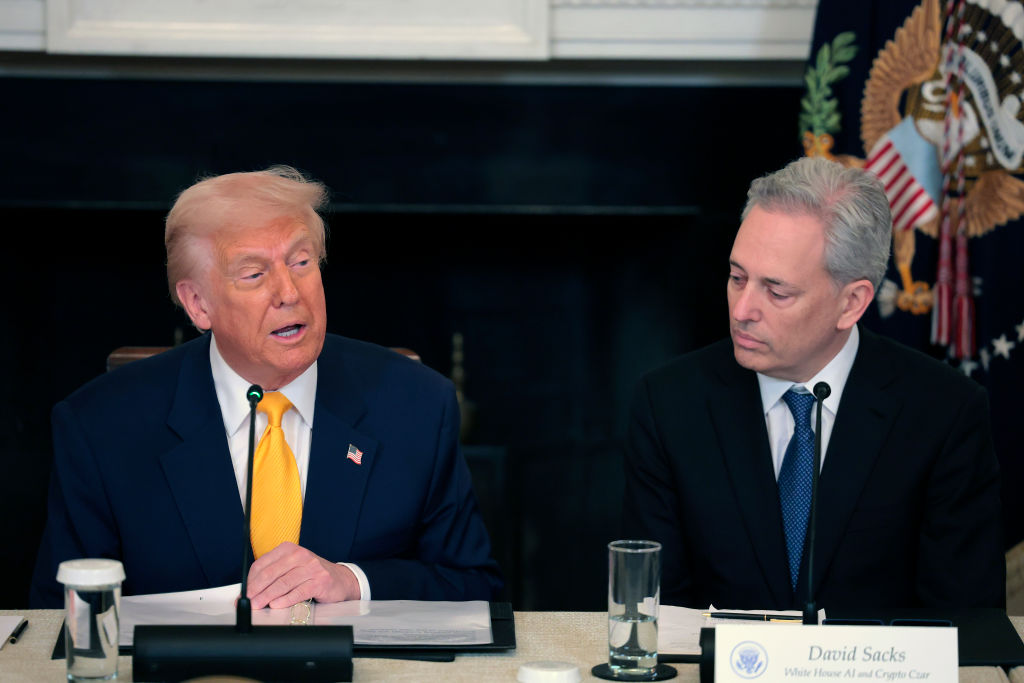
David Sacks, who served as a special government employee for 130 days, is stepping down from his role as Donald Trump's AI and cryptocurrency advisor. He will now co-chair the President's Council of Advisors on Science and Technology (PCAST), alongside Michael Kratsios, a White House technology advisor. Sacks confirmed the transition in a Bloomberg interview, indicating his focus on a broader range of technology topics.

This move means Sacks is moving away from the center of power in Washington. As the 'AI czar', he had a direct line to Trump and influenced policy, while PCAST is a federal advisory body without direct decision-making power.
PCAST, which has existed since the time of Franklin D. Roosevelt, now features an impressive list of members. These include prominent figures such as Jensen Huang of Nvidia, Mark Zuckerberg of Meta, Larry Ellison of Oracle, Sergey Brin co-founder of Google, Marc Andreessen, Lisa Su of AMD, and Michael Dell, among others. Sacks noted that this iteration of the council has 'the most star power' ever assembled.

The council will address topics such as AI, advanced semiconductors, quantum computing, and nuclear power, initially focusing on pushing Trump's national AI framework, which seeks to unify divergent state regulations.
The council will focus on AI, advanced semiconductors, quantum computing, and nuclear energy. Near-term attention will be directed towards pushing Trump's national AI framework, recently released. This framework seeks to replace what Sacks described as a 'hodgepodge' of conflicting state regulations.

Sacks noted that the different state regulations create a 'patchwork of regulation' that is difficult for innovators to comply with.
Sacks' transition comes at a time when there is speculation about the reasons behind this change. Previously, on the 'All In' podcast, Sacks publicly urged the administration to seek an exit from the U.S.-backed war with Iran. Trump responded that Sacks had not spoken to him about the issue.

Sacks clarified that his comments on the podcast represented his personal opinion and not an official stance.
The impact of PCAST has varied depending on the administration. The council under the Obama administration produced 36 reports and achieved concrete policy changes. Trump's first council took almost three years to name its first members and had no significant impact.

The current version of PCAST is composed mostly of active CEOs and investors, suggesting a focus on technological development with the goal of dominating the global market.
Sacks will now be able to resume his life as an investor and entrepreneur. Last year, TechCrunch reported on the ethical waivers Sacks obtained to maintain financial stakes in AI and cryptocurrency companies while influencing federal policy in both areas. This situation drew criticism from ethics experts and lawmakers.

A spokeswoman for Craft Ventures, the firm co-founded by Sacks, has not yet responded to inquiries on the matter.