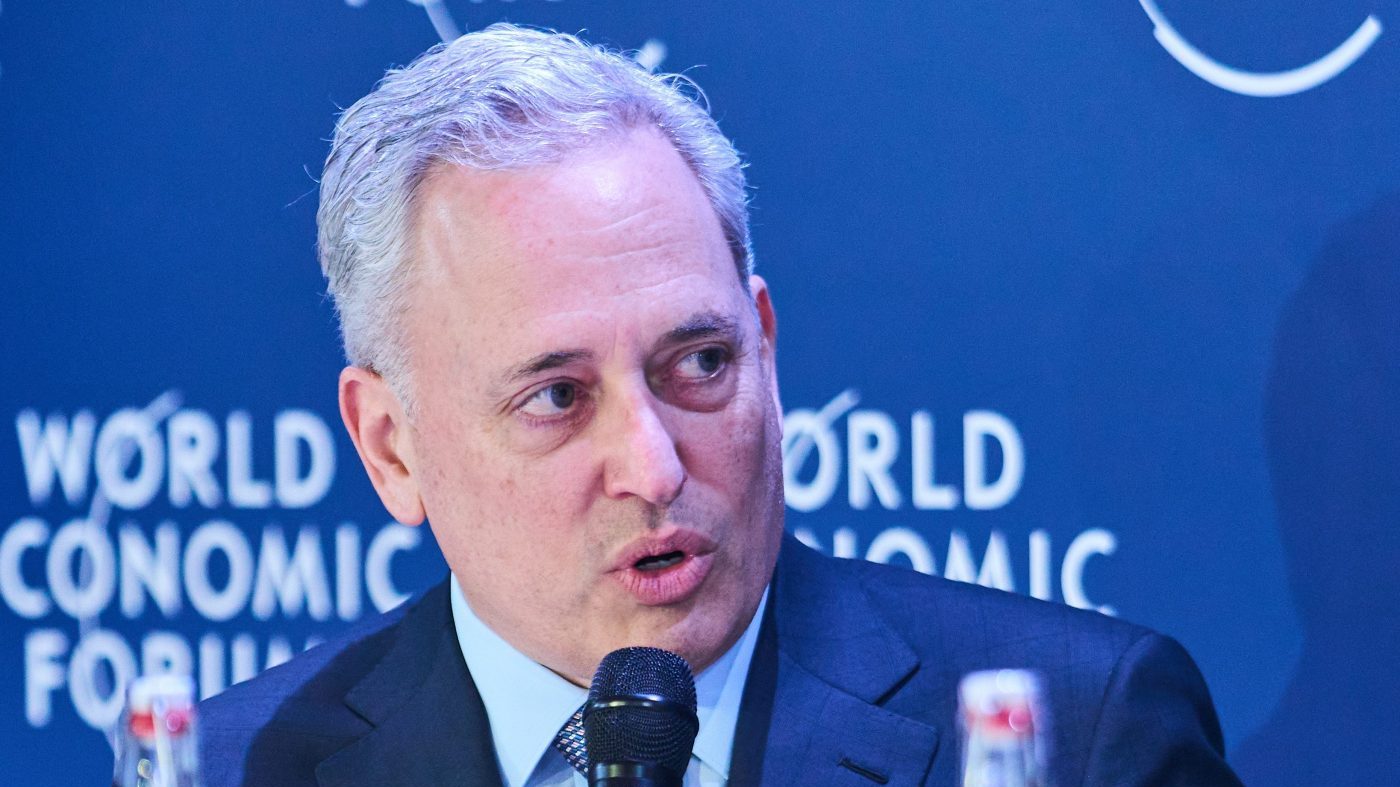
David Sacks Steps Down as White House AI, Crypto Czar After 130-Day Limit: What's Next?
Listen
Share
Venture capitalist David Sacks is leaving his role as the White House's AI and cryptocurrency czar after hitting the maximum number of days, but will continue to advise Trump on technology-related issues.
Venture capitalist David Sacks announced he is stepping down from his role as the White House's AI and cryptocurrency czar, citing that he has reached the 130-day limit. Sacks told Bloomberg in an interview that his work with the Trump administration will transition to co-chairing President Trump’s Council of Advisors on Science and Technology (PCAST), which involves technology and business leaders advising the president on policy. “I had a role as a SGE [special government employee] that was 130 days…we’ve now used up that time,” Sacks told the outlet. “I think moving forward as co-chair of PCAST, I can now make recommendations on not just AI, but an expanded range of technology topics.”
Sacks was the first to serve in the dual role, helping lead the Trump White House’s priorities around AI and cryptocurrency. SGEs are permitted to serve no more than 130 days over a 12-month period, though the days do not have to be consecutive.
The businessman, who was appointed last year at the beginning of Trump’s second term, will co-chair PCAST alongside Michael Kratsios, the director of the White House’s Office of Science and Technology Policy. Those on the 13-person panel include Nvidia CEO Jensen Huang, Meta CEO Mark Zuckerberg and Oracle executive chairman Larry Ellison. Sacks told Bloomberg that the council will “study issues together as a group” and then make official recommendations for the Trump administration. He predicted AI will be a heavy focus of the panel, along with its impact on the economy, workforce and national security.
Sacks began in the technology industry in 1999 at PayPal alongside tech moguls Elon Musk, Peter Thiel and Reid Hoffman. He went on to found Yammer, an enterprise social network platform, and launched his venture capital firm Craft Ventures in 2017.
Sacks' transition to PCAST marks a new chapter in his relationship with the Trump administration, allowing him to continue influencing the country's technology policies. His experience in the private sector, combined with his knowledge of government policies, positions him as a valuable advisor to the president. The focus on AI and its impact on various fields suggests a continued concern for technological innovation and its consequences on society. The composition of the panel, with leaders like Huang, Zuckerberg, and Ellison, ensures a diversity of perspectives and deep expertise in the technological field.
Sacks' departure from his role as 'czar' and his move to PCAST do not imply a disconnection, but an evolution of his role in the administration. The continuity of his advice, now from a broader position, reinforces the importance that the Trump government gives to technology and its development.